This post may contain affiliate links. Please see my disclosure policy for details.
Minimalist Fall Decor: How I Finally Cracked the Code to Cozy Without the Clutter
Contents
Minimalist fall decor is the art of creating warmth and seasonal charm using just a handful of intentional pieces instead of drowning your home in pumpkin-spiced chaos.
I’ll be straight with you.
Three years ago, my attempt at fall decorating looked like a craft store exploded in my living room. Orange everywhere. Plaid pillows fighting with gingham throws. Seventeen small pumpkins scattered across surfaces like refugees from a farmer’s market.
My boyfriend walked in, looked around, and asked if we were opening a seasonal gift shop.
That stung.
But he wasn’t wrong.
I’d confused “more stuff” with “more festive,” and my small apartment was paying the price.
Why Most People Get Fall Decorating Completely Wrong
Here’s the thing nobody tells you about seasonal decorating.
Adding more rarely makes a space feel better.
It just makes it feel… full.
The magazines show these gorgeous autumn vignettes, but what they don’t show you is that those stylists spent hours removing things before they added that one perfect ceramic vase with eucalyptus branches.
Minimalist fall decor isn’t about deprivation. It’s about being brutally selective.
Every piece needs to earn its place by doing one of three things:
- Adding warmth through color or texture
- Creating visual interest without demanding attention
- Serving a purpose beyond looking seasonal
If it doesn’t do at least one of these things, it doesn’t make the cut.
The Foundation: Your Color Palette Is Everything
Before you buy a single decorative gourd, let’s talk color.
This is where I see people go sideways immediately.
Traditional fall colors—bright orange, fire-engine red, deep purple—are beautiful. But they’re visual bullies in a minimalist space.
Your minimalist fall palette should whisper, not shout.
Here’s what works:
Base neutrals:
- Soft whites (think cream, not stark)
- Warm beiges and greiges
- Light taupe
- Natural linen shades
Fall accent colors:
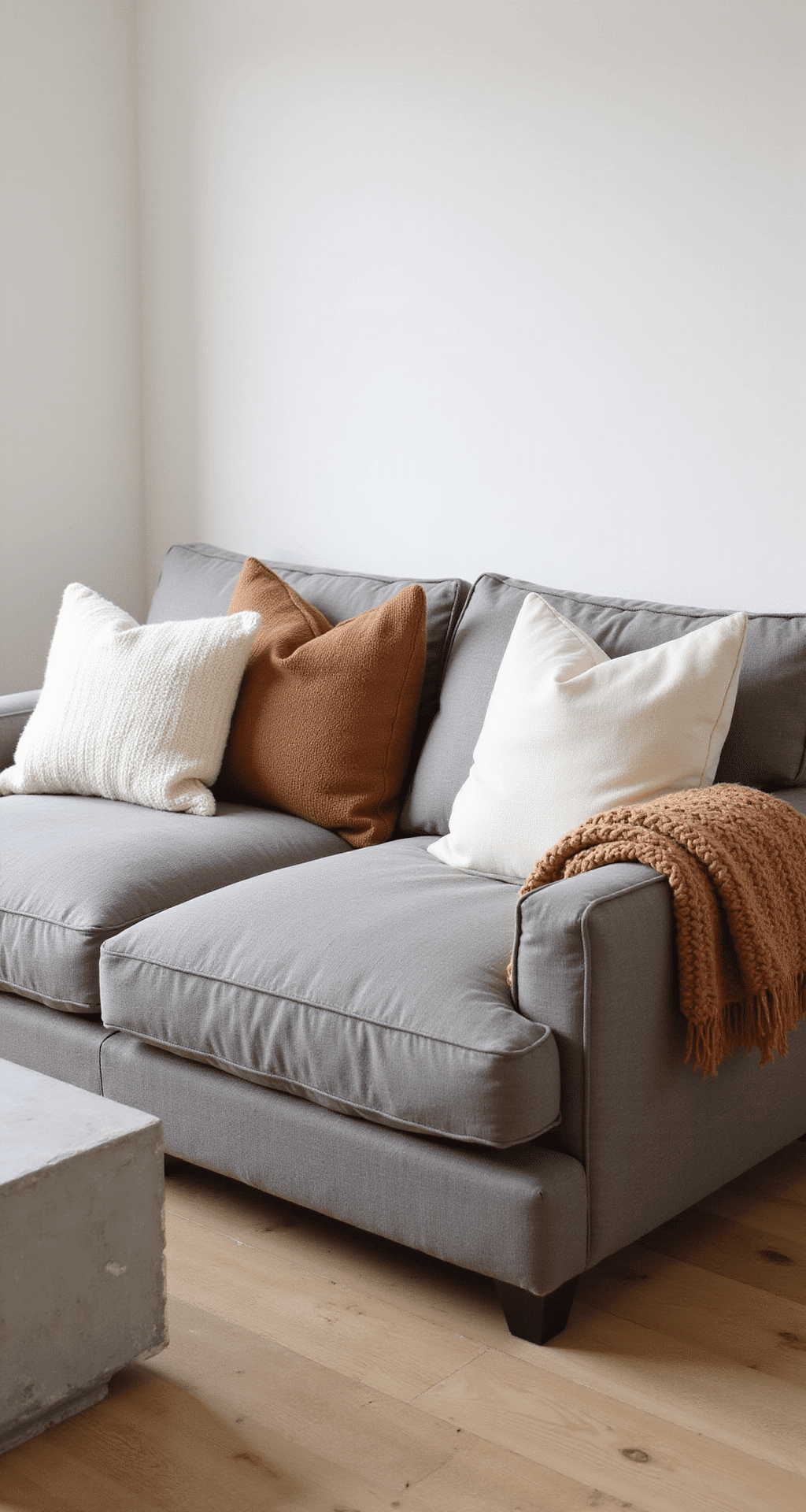
- Camel and cognac browns
- Muted rust (terracotta that’s been toned down)
- Warm ochre
- Deep olive green
- Charcoal with warm undertones
I learned this the hard way when I bought what I thought was a beautiful burnt orange throw blanket. In the store lighting, it looked sophisticated. On my neutral sofa, it looked like a traffic cone.
Now I test everything against my existing furniture using my phone camera. If it fights with the undertones of what I already own, it stays at the store.
The Three-Item Rule That Changed My Life
Ready for the simplest guideline you’ll ever get?
Style any surface with a maximum of three visual elements.
A visual element can be:
- One object (a pumpkin)
- A grouped collection (a stack of books)
- A contained vignette (a tray with candles)
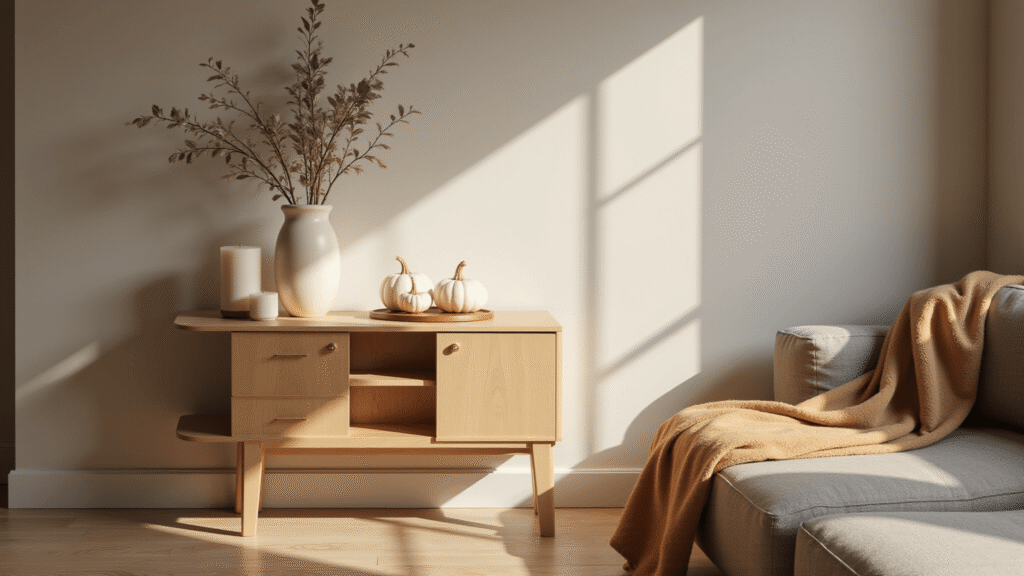
Let me show you how this plays out on my console table:
Option 1:
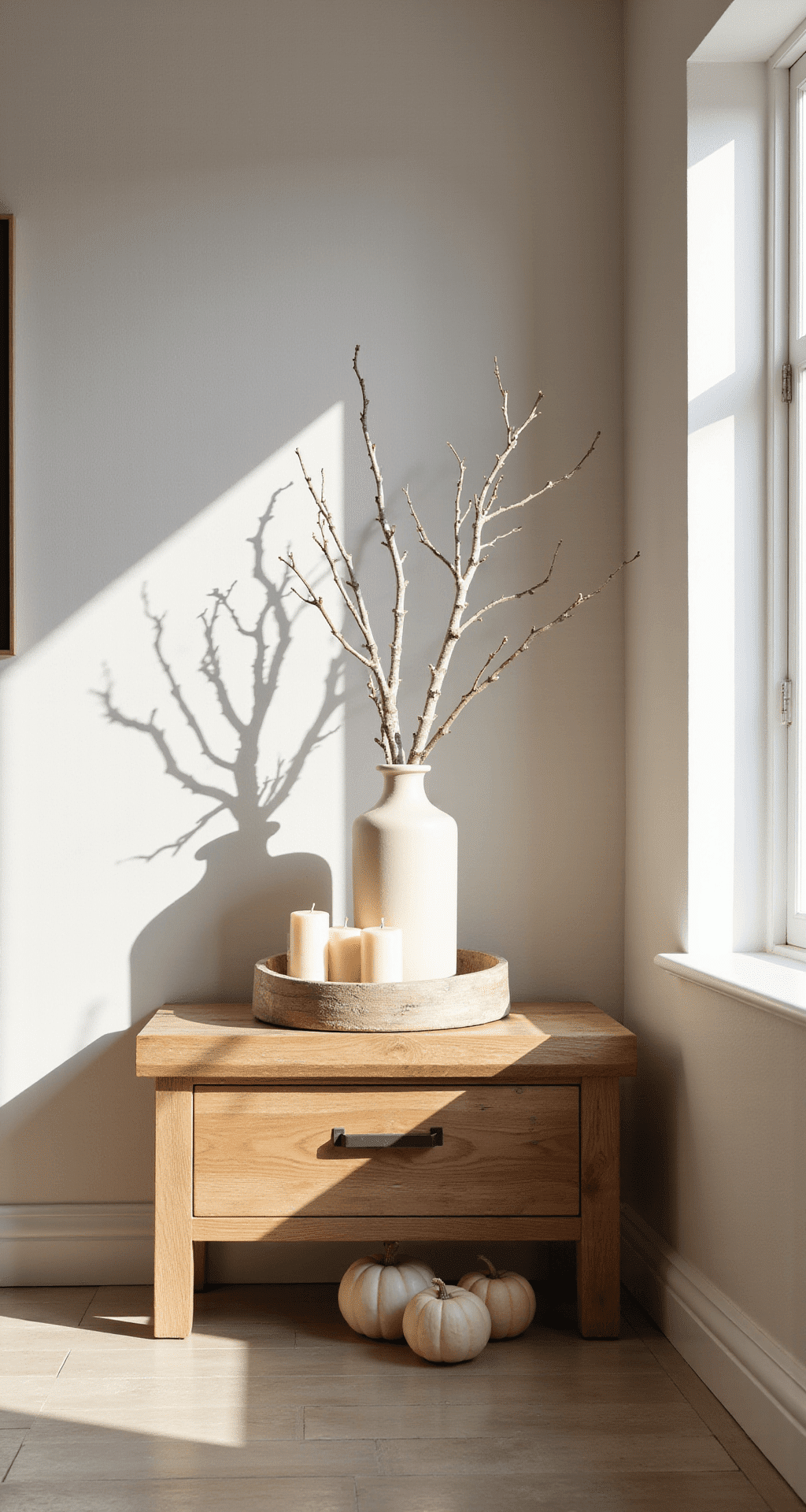
- Large white ceramic vase with dried branches
- Small wooden tray with two pillar candles
- Three mini pumpkins in muted tones clustered together
Option 2:
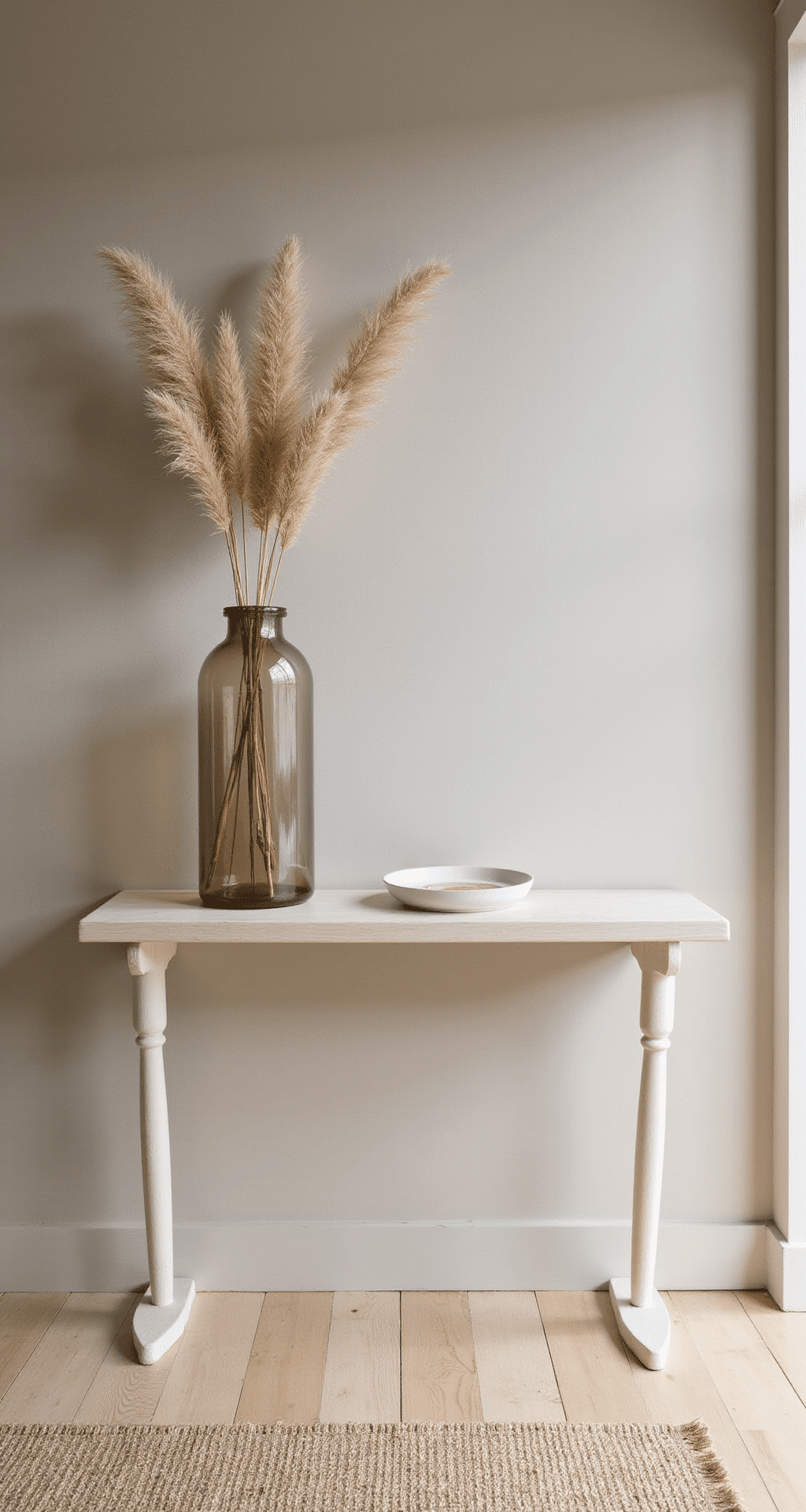
- Stack of three neutral books
- Single stem in a small glass bottle on top
- Large brass candleholder offset to the side
Notice what’s missing?
Everything else.
The framed photos I usually keep there are stored. The decorative box is in the closet. The collection of small objects is packed away.
This felt painful at first. Like I was erasing my personality.
But then something magical happened—the pieces I did choose became actually visible. People started noticing my styling instead of just seeing “stuff.”
Texture Is Your Secret Weapon
Without a lot of color or pattern, texture does the heavy lifting in minimalist fall decor.
This is where you get to have fun.
I layer at least three different textures in every space:
Smooth:
- Glass vases and bottles
- Ceramic bowls and vessels
- Polished stone
Rough:
- Woven baskets
- Rattan or wicker accents
- Raw wood surfaces
- Unfinished pottery
Soft:
- Chunky knit throws
- Linen pillow covers
- Bouclé fabric accents
- Wool textures
Natural organic:
- Dried branches and stems
- Pampas grass
- Seed pods
- Real pumpkins with interesting stem texture
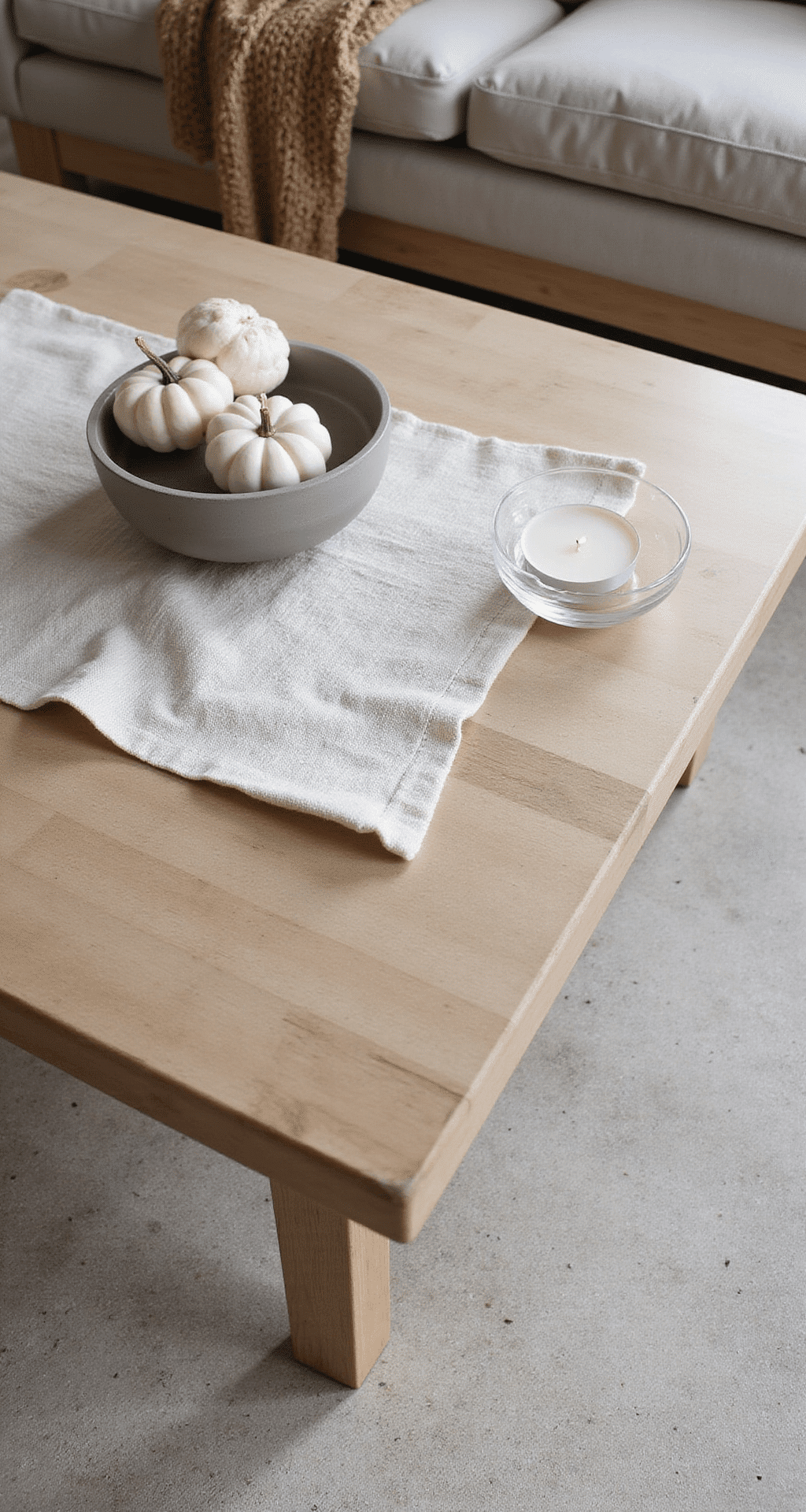
Last fall, I created my favorite coffee table vignette using only texture.
A nubby linen table runner. A smooth concrete bowl. Three matte-finish white pumpkins. A chunky knit throw draped over the corner of the sofa nearby.
Zero pattern. Basically zero color beyond warm neutrals. But the play of textures made it feel rich and intentional.
My sister-in-law actually asked where I bought the “set” because everything looked so coordinated.
There was no set.
Just me being picky about surface quality.
The Pumpkin Situation: A Minimalist’s Guide
Let’s address the elephant—or pumpkin—in the room.
Can you do fall without pumpkins? Sure.
Should you? Probably not, because pumpkins are phenomenal seasonal markers that read as “autumn” instantly.
But here’s how to do pumpkins without looking like a pumpkin patch threw up in your house:
Limit your total pumpkin count:
Use 3-5 pumpkins maximum in your entire visible living space. Not per room. Total.
Choose muted colors: