This post may contain affiliate links. Please see my disclosure policy for details.
Creating an Outdoor Dining Space That Actually Makes You Want to Eat Outside
Contents
Outdoor dining spaces aren’t just for show—I learned this the hard way after spending a fortune on patio furniture that looked Instagram-perfect but was about as comfortable as sitting on concrete blocks.
After three summers of watching that expensive setup collect pollen while we ate inside with the AC blasting, I finally cracked the code.
The secret? Comfortable furniture, smart shade placement, and enough cozy textures to make you forget you’re technically still outside with the bugs.
Why Your Outdoor Dining Space Probably Isn’t Working
Let me guess what’s happening.
You bought a cute bistro set, maybe some chairs that looked charming in the store.
Then reality hit—blazing afternoon sun turning your metal chairs into torture devices, zero privacy from nosy neighbors, and somehow the whole setup feels more “abandoned garden center” than “Italian countryside villa.”
Sound familiar?
I’ve been there, and I’m going to show you exactly how to fix it.
Planning Your Space (Before You Buy Anything)
Outdoor dining spaces start with understanding what you’re actually working with, not what Pinterest told you was possible.
Grab a measuring tape and actually measure your patio or deck.
I know, revolutionary concept.
Here’s what you need to figure out:
Sunlight patterns matter more than you think.
I spent an entire Saturday tracking how sun moved across my patio—sounds obsessive, but it changed everything.
That spot that’s perfect at 10 AM? A literal hellscape by 3 PM.
Watch where shadows fall during the times you’ll actually use the space.
West-facing seating is your golden ticket if you’re an evening dinner person like me.
You’ll catch that gorgeous sunset light without the harsh midday glare that makes everyone squint like they’re solving complex math problems.
Ask yourself the hard questions:
- Will this mostly be just you and your partner having quiet dinners?
- Are you planning to host your entire extended family for Sunday brunches?
- Do you secretly dream of hosting dinner parties that make your friends jealous?
Your honest answers determine whether you need a large outdoor dining table or something more intimate.
I initially bought seating for twelve people.
We’re a family of four.
Learn from my storage-hogging mistake.
Furniture That Won’t Make You Hate Being Outside
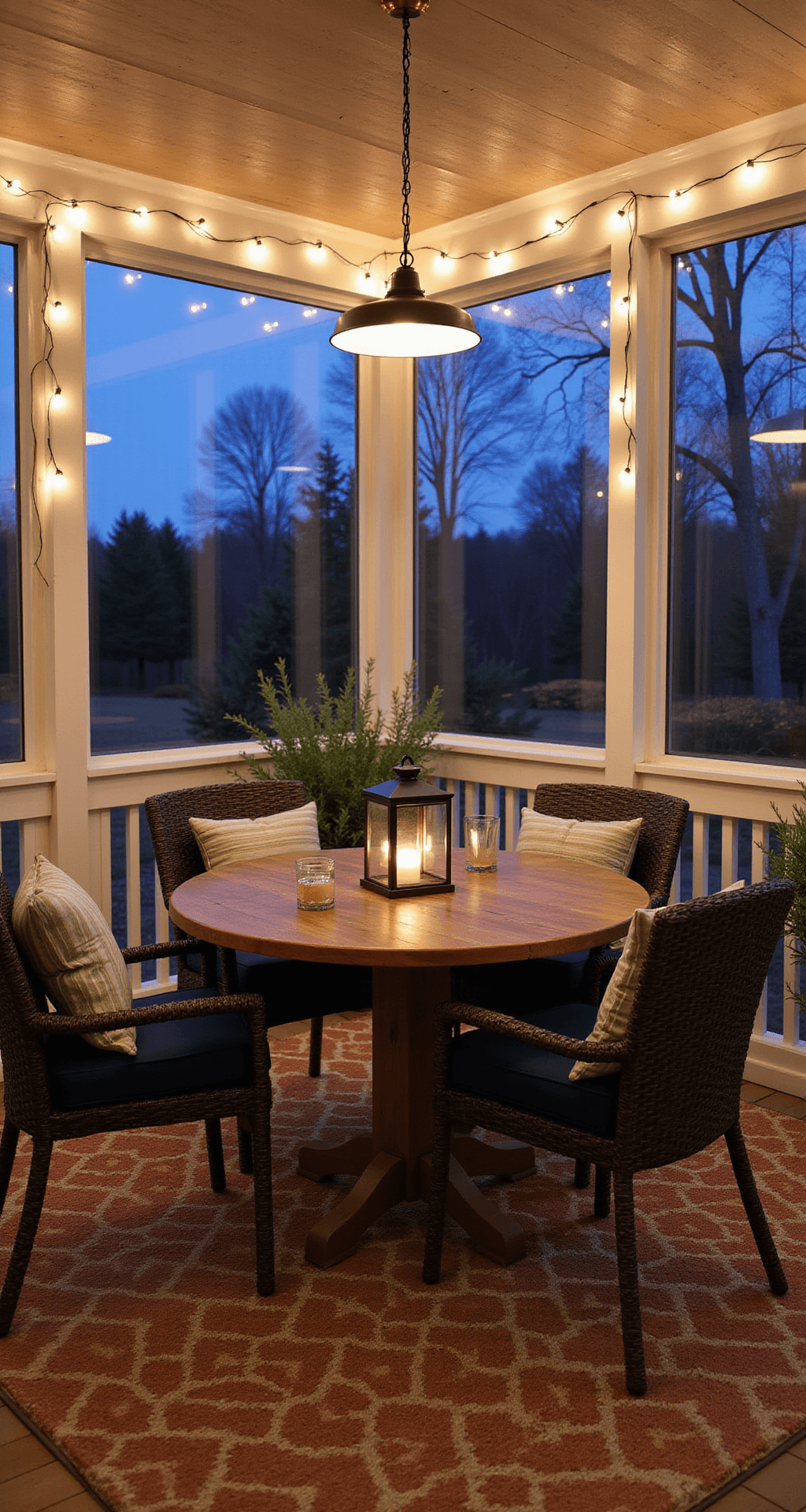
Long farmhouse tables are having a moment, and honestly, they deserve it.
I switched to one last year and the difference is night and day.
They create this communal, “pass the bread” vibe that round tables just can’t match.
Pair yours with outdoor bench seating on one or both sides.
Benches are genius because:
- Kids can squeeze in without needing another chair
- Adults can scoot together for conversation
- They tuck completely under the table when not in use
- They’re usually cheaper than buying six individual chairs
For bigger patios, create zones like you’re designing a tiny house.
Don’t just plop everything in the center and call it done.
I carved out three distinct areas:
One for actual dining with our table and chairs.
Another with an outdoor sectional sofa for lounging with drinks before dinner.
A small bar cart area that makes me feel fancy even though I’m just serving store-bought lemonade.
Tight on space?
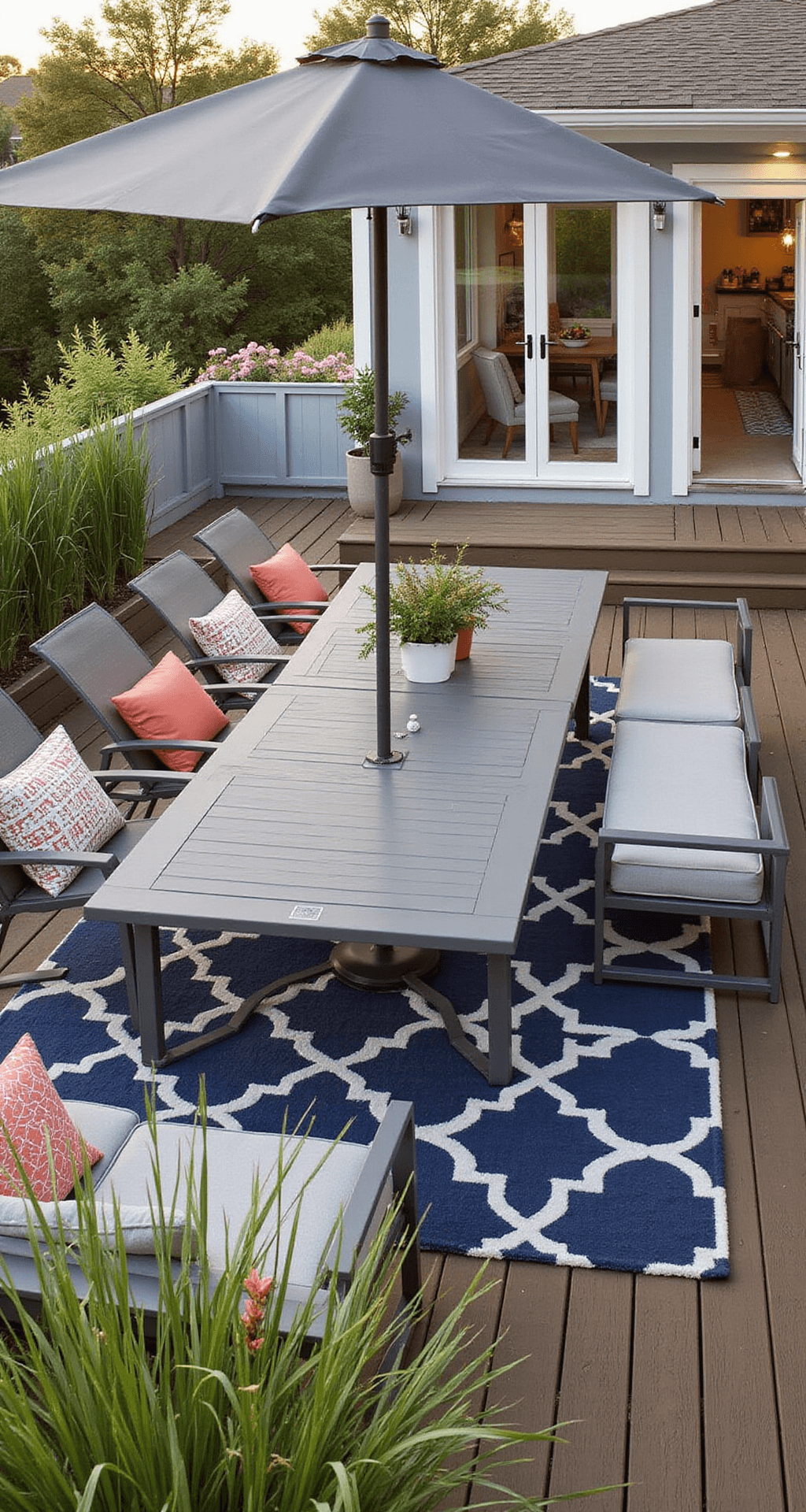
Push your table to one side instead of centering it.
This was a game-changer for our narrow deck—suddenly we had actual walking room instead of everyone doing that awkward sideways shuffle.
Mix your seating types.
Some people love the support of a proper dining chair.
Others prefer the casual vibe of a bench.
Give your guests options and you’ll seem like a hospitality genius.
Extendable tables are the unsung heroes of outdoor dining.
Most weeknights it’s just us four, but when my sister’s family visits, I need space for nine.
An extendable outdoor table means I’m not stuck with a massive surface collecting leaves all summer.
Shade Solutions That Don’t Look Ridiculous
Here’s an unpopular opinion: shade matters more than any other element.
The most beautiful outdoor setup in the world is useless if you’re sweating through your shirt and can’t see your food because of sun glare.
Umbrellas with tilt features are your flexible friends.
I resisted these for years because I thought they looked too “hotel pool,” but modern ones are actually gorgeous.
The tilt function means as the sun moves, you adjust—brilliant in its simplicity.
Look for cantilever styles that don’t require a pole right in the middle of your table.
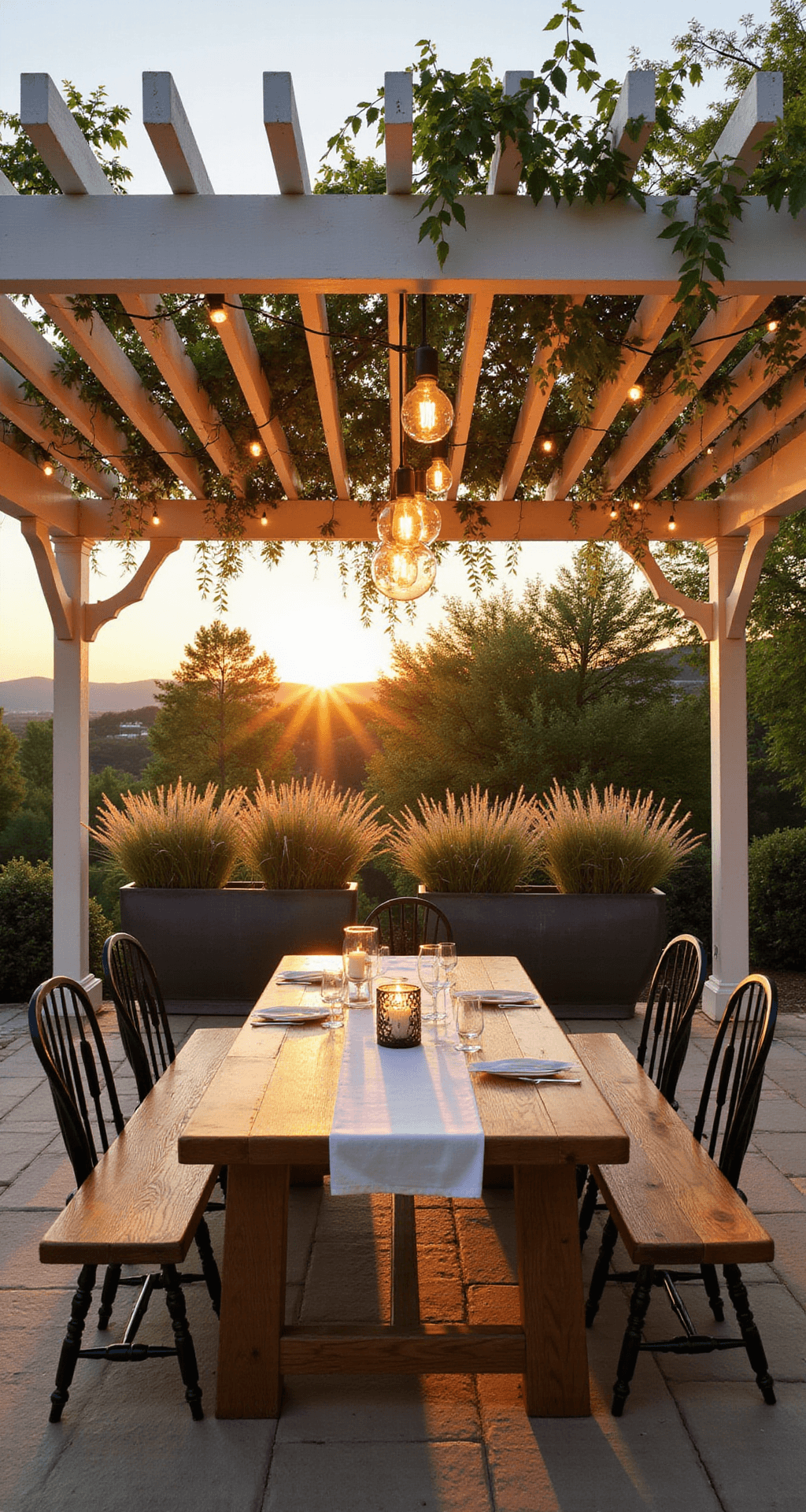
Pergolas are the permanent solution if you’re done with temporary fixes.
We installed one three years ago and I genuinely think it added more value to our lives than our kitchen renovation.
They create defined architectural interest while still letting dappled light through.
You can drape outdoor curtains from the sides for extra shade and privacy.
Or do what my neighbor did—plant wisteria at the base and let it climb over the top.
Takes a couple years, but the result is absolutely magical.
Other shade options worth considering:
- Retractable awnings (expensive but clutch for controlling exactly how much coverage you want)
- Sail shades that give modern, architectural vibes
- Large market umbrellas if you’re renting and can’t install permanent structures
My friend converted an old carport into a covered dining area and honestly?
It looks better than my fancy pergola and cost her basically nothing.