This post may contain affiliate links. Please see my disclosure policy for details.
Front porch landscaping inspiration starts with understanding one simple truth: your porch is the handshake your home gives to the world.
And right now, yours might be giving a limp, sweaty palm instead of a confident grip.
I get it. You stand there with your morning coffee, staring at your sad, empty porch, wondering why it looks more “forgotten stepchild” than “charming welcome.” You’ve seen those magazine-worthy porches with their perfectly arranged plants and you think, “How hard can it be?”
Turns out, pretty damn hard when you don’t know where to start.
Let me save you from the mistakes I made when I first tackled my own porch.
Why Your Porch Looks Like It’s Given Up on Life
Contents
Your front porch probably falls into one of these categories:
- The Bare Bones Special: Nothing but concrete and a door mat from 2015
- The Random Plant Graveyard: A collection of mismatched pots with half-dead plants you bought on impulse
- The Over-Enthusiastic Jungle: So many plants you can barely find the front door
- The “I Tried Once” Zone: That one sad fern you bought last spring, now crispy
None of these are doing you any favors.
Your porch should make people think “I want to live here” not “someone clearly lives here under duress.”
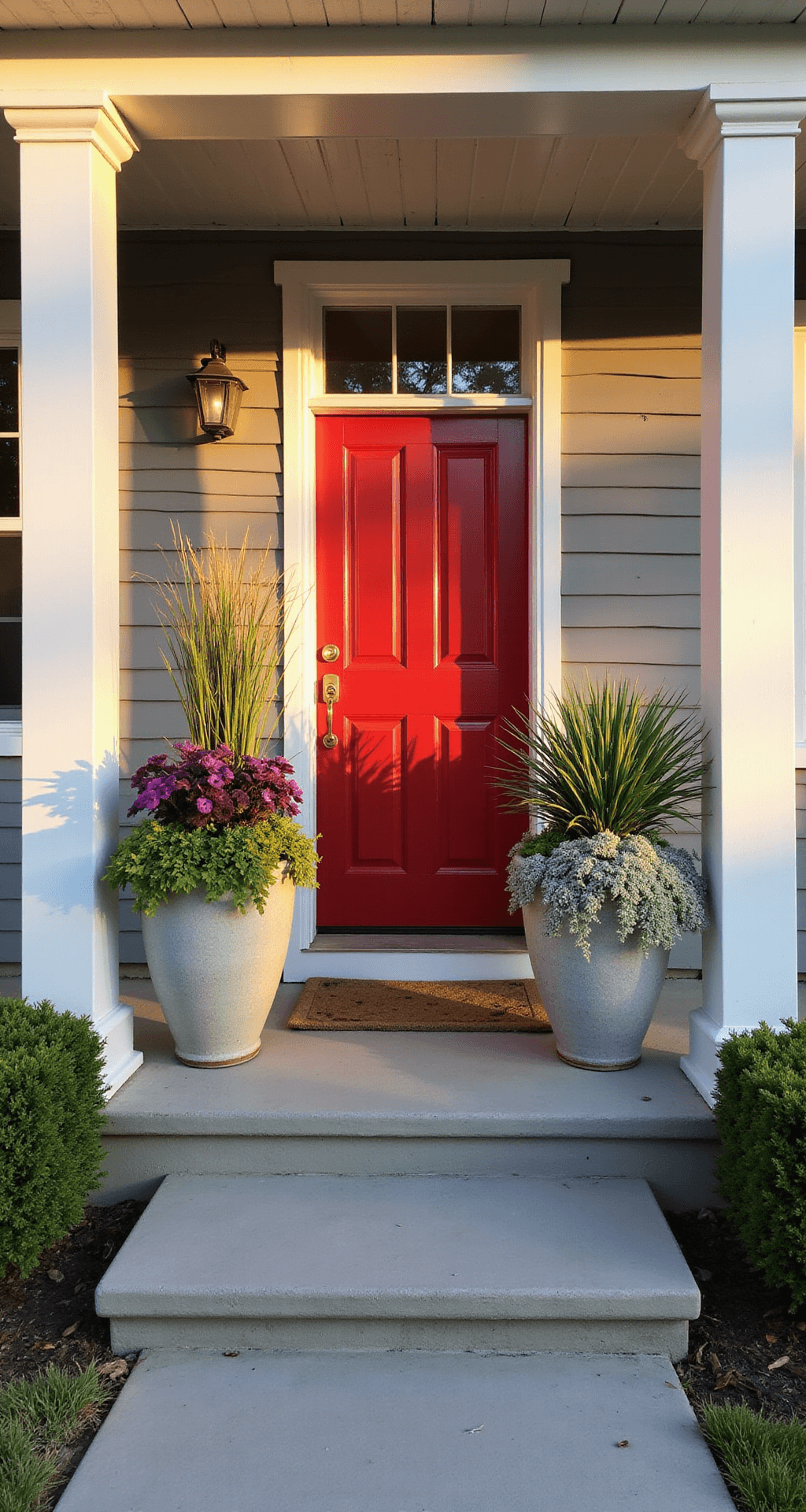
Container Plants: Your Secret Weapon
Container plants are the backbone of any successful front porch.
I learned this after spending way too much money on foundation plantings that looked ridiculous against my porch style.
Here’s why containers win every time:
- You can move them around until you get it right
- They’re perfect for renters who can’t make permanent changes
- You can swap them out seasonally without replanting your entire landscape
- They let you control soil quality and drainage
- They cost way less than hiring a landscaper to redo your beds
Start with large outdoor planters that make a statement. Don’t be timid here. Those tiny 8-inch pots look like you’re trying to decorate with thimbles.
The Three-Plant Formula That Actually Works
Stop randomly throwing plants together and use this method:
- The Thriller: One tall, dramatic plant that draws the eye upward (think ornamental grass or a small shrub)
- The Filler: Medium-height plants with interesting textures that fill the middle space
- The Spiller: Cascading plants that drape over the edges and soften the container
This isn’t my invention, but damn if it doesn’t work every single time.
I use this formula in every single container on my porch, and suddenly everything looks intentional instead of like I grabbed whatever was on sale at the garden center.
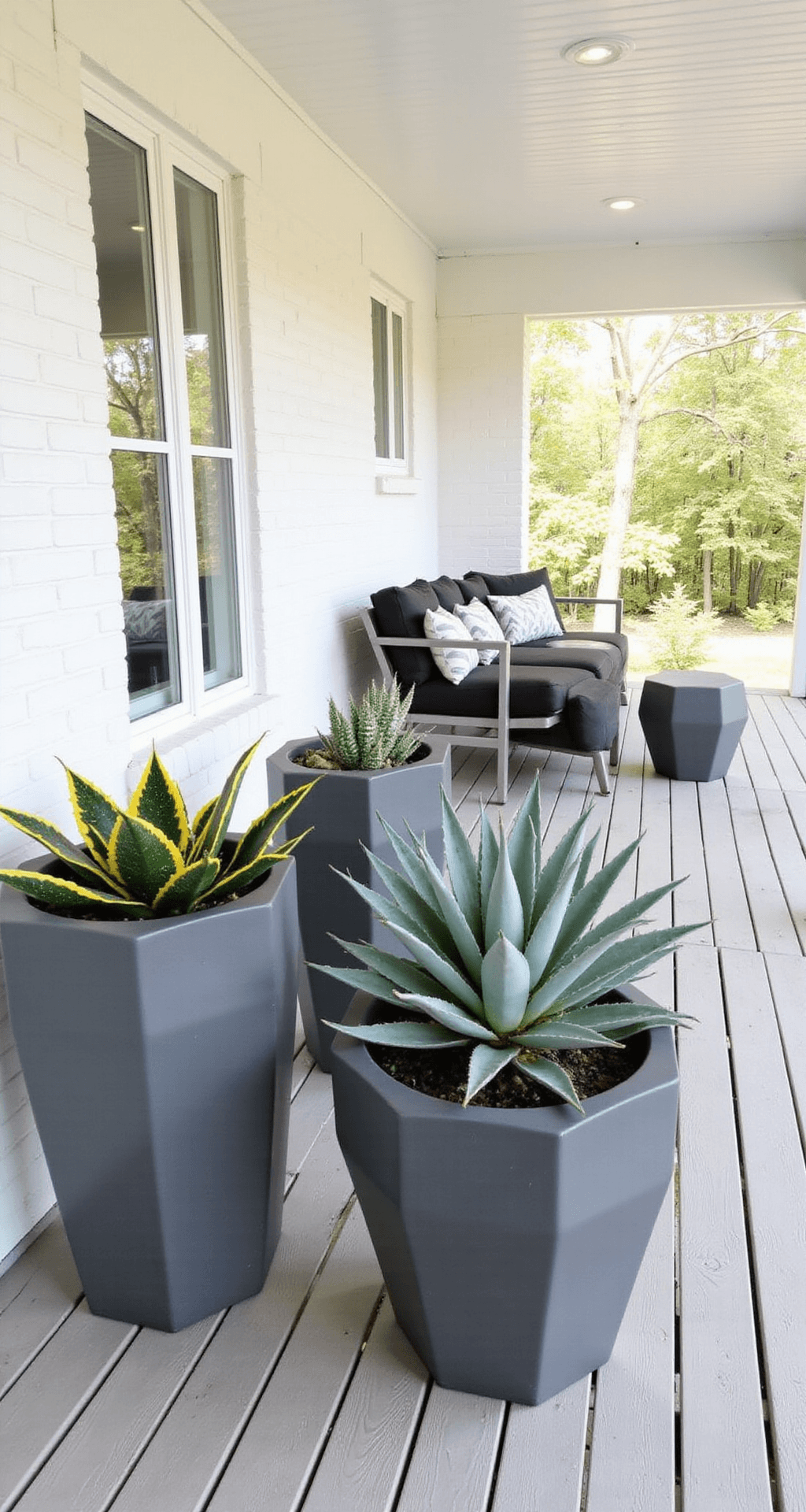
🌊 Get The Look
Creating Visual Flow (Without Overthinking It)
Your porch shouldn’t look like it belongs to a different house than the one it’s attached to.
Unity is your friend here.
Look at your yard’s hardscape—those pavers, that stone wall, the gravel path. Now repeat those materials or colors on your porch through your container choices.
Concrete pavers in your walkway? Get concrete planters. Wood deck? Choose wooden boxes or woven baskets.
Same goes for plants. If you’ve got hostas and ferns creating a shady retreat in your yard, don’t suddenly go full desert cactus on your porch. Keep the vibe consistent.
But—and this is important—don’t match everything exactly. You’re not creating a showroom. You’re creating visual connection, not identical twins.
Your Front Door Deserves Better
Your front door is begging for attention. It’s literally the focal point of your entire porch.
Yet most people treat it like an afterthought.
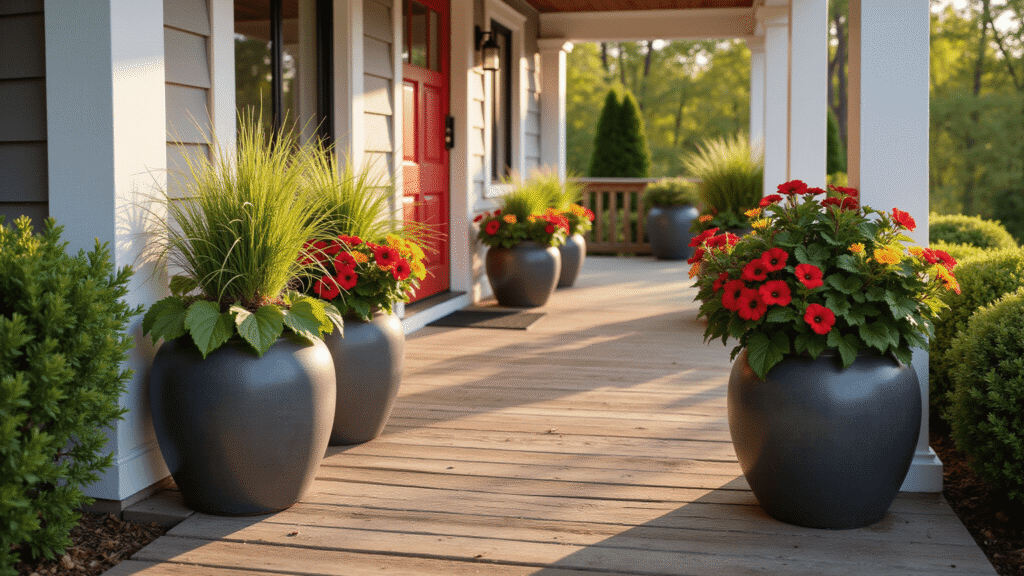
Place matching or complementary containers on either side of your door.
This is Design 101, and it works because it creates symmetry and frames your entrance.
I keep two large ceramic pots flanking my front door year-round. I swap out the plants seasonally, but those pots stay put.
In spring: flowering bulbs and pansies. Summer: tropical-looking plants with big leaves. Fall: ornamental kale and mums. Winter: evergreen branches and berry stems.
The containers provide structure. The plants provide change. Together they make my front door look like I actually care about my home.
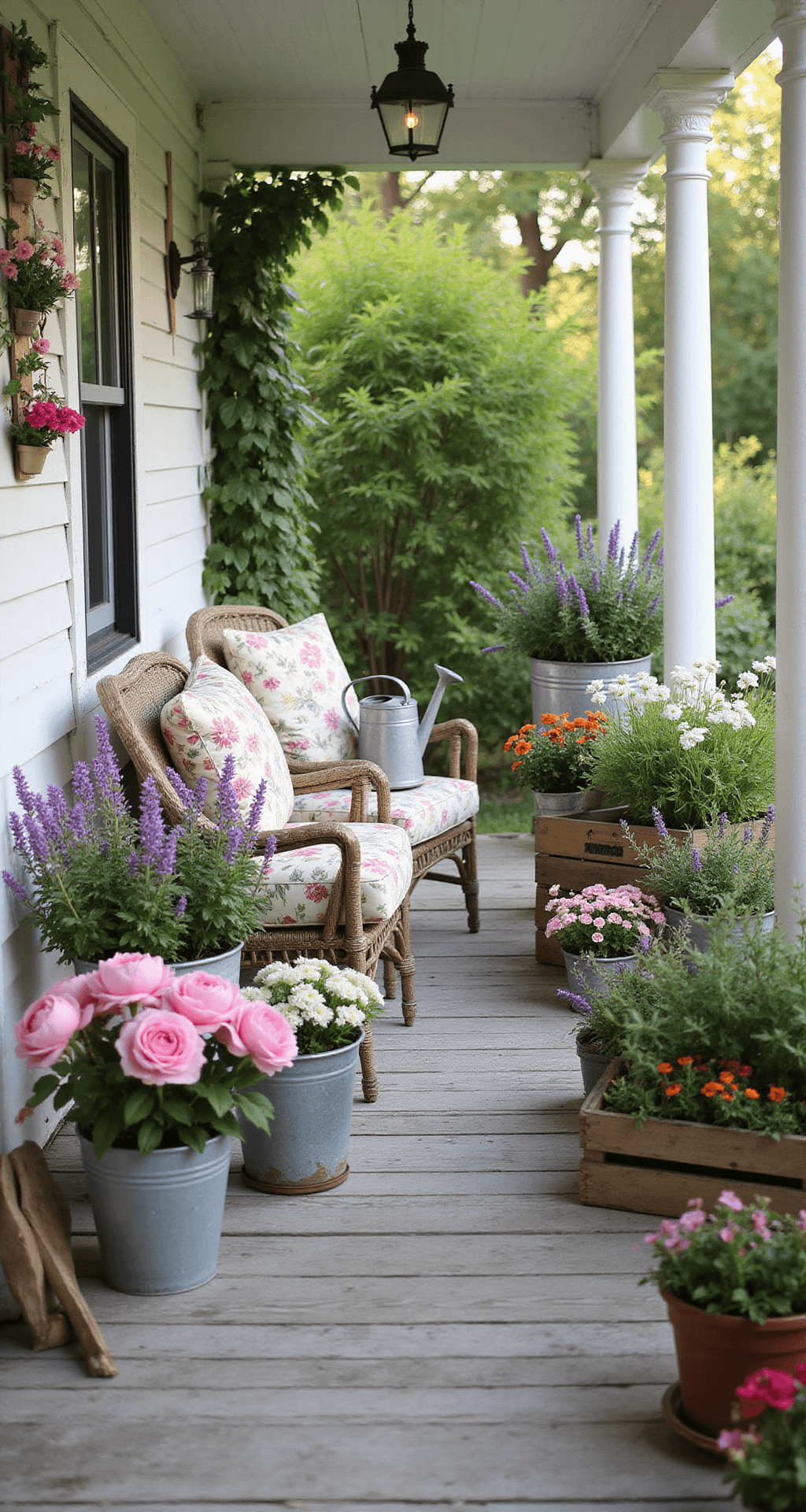
Color Strategy for Your Door Area
Choose container colors that:
- Complement your front door color (not match—complement)
- Echo perennial flowers elsewhere in your landscape
- Contrast enough to stand out but not so much they look bizarre
My red front door pairs beautifully with dark gray containers filled with plants that have burgundy or purple foliage. It’s cohesive without being matchy-matchy.
Foundation Plantings: The Supporting Cast
While containers do the heavy lifting on the porch itself, foundation plantings connect your porch to the ground.
Traditional choices include:
- Boxwoods (classic but borderline boring)
- Hydrangeas (gorgeous but thirsty)
- Azaleas (beautiful for two weeks, green blobs the rest of the year)
I went a different route after killing my third round of hydrangeas.
Drought-tolerant alternatives that actually look good:
- Dwarf Myrtle
- Ornamental grasses like Gulf Muhly (that pink fall color is chef’s kiss)
- Russian Sage
- Lavender
- Dwarf Alberta Spruce for year-round structure
Layer these by height. Low plants in front, medium in the middle, tall in back. This creates depth and makes your porch look professionally designed instead of randomly planted.