This post may contain affiliate links. Please see my disclosure policy for details.
Black and White Christmas Decor: The Modern Monochrome Holiday Look That Actually Works
Contents
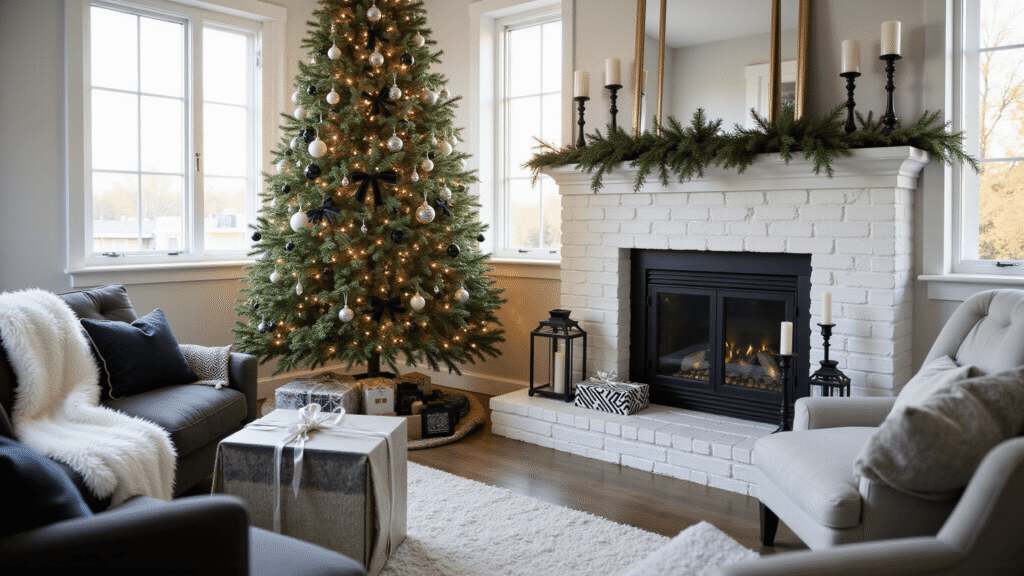
Black and white Christmas decor is having a moment, and honestly, I’m here for it.
I remember the first time I stripped my holiday styling back to just black and white. My mother-in-law walked in and stood there, mouth slightly open, like I’d committed some festive crime. “Where’s the red?” she asked, looking genuinely concerned for my holiday spirit.
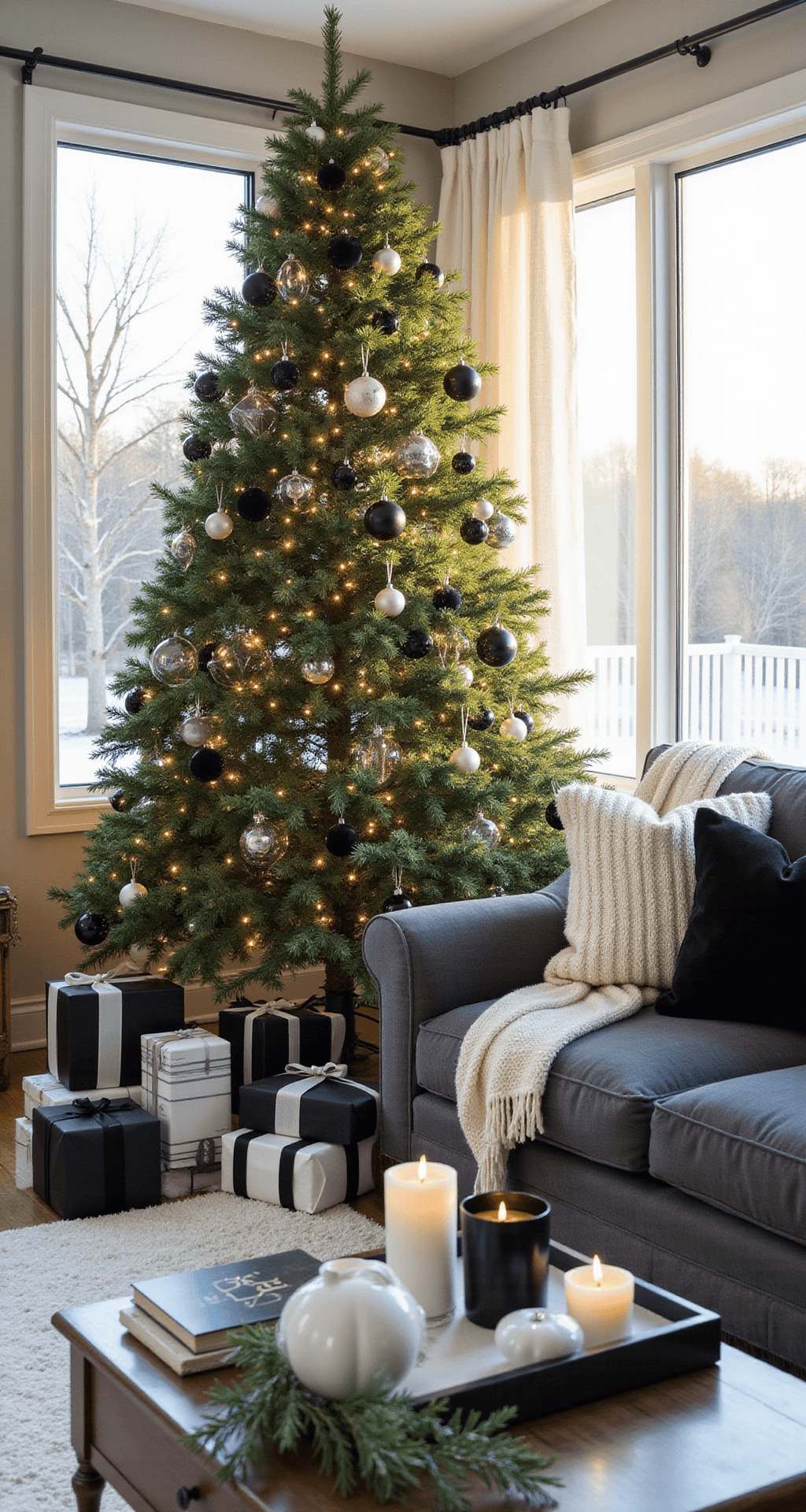
But here’s the thing. That monochrome Christmas tree I’d spent three hours perfecting became the most photographed corner of my home that season. Friends asked for styling tips. My Instagram lit up. And suddenly, everyone wanted to know how to pull off this chic, graphic holiday look without their home looking like a sad newspaper.
Why Black and White Works When Traditional Red Feels Tired
Look, I love a classic Christmas as much as the next person. But after years of the same red-and-green routine, I craved something different. Something that felt grown-up, sophisticated, and frankly, more “me.”
Black and white Christmas decor gives you:
- A modern edge that photographs beautifully
- Versatility to shift from minimalist to glam to full “Gothmas” vibes
- The freedom to reuse your regular home decor alongside holiday pieces
- A cohesive look that works in small apartments or sprawling living rooms
- Budget-friendly options since you’re working with two core colors
The secret isn’t just slapping black ornaments on a white tree and calling it done. It’s about contrast, texture, and enough visual interest to keep things festive rather than flat.
Getting Started: What You Actually Need
Time Investment (Let’s Be Honest)
Styling one main space—your tree plus a mantel or dining table—takes about 2 to 4 hours. I’m not one of those people who pretends you can transform your entire home in twenty minutes while sipping cocoa.
If you’re creating content (because let’s face it, if it’s not on Instagram, did it even happen?), add another 2 to 3 hours for shooting, editing, and writing captions.
Total time commitment: 4 to 6 hours for a space that’ll make your guests stop and stare.
Budget Reality Check
Here’s where black and white becomes your best friend.
Low budget approach:
- Wrap existing boxes in plain black or white paper
- Spray-paint old ornaments (I’ve done this, works brilliantly)
- Make simple black velvet ribbon bows for about $8
- Print black-and-white gift tags and garlands
- Use what you already own and just remove the colorful bits
Mid-range investment:
- Pick up black and white Christmas ornaments in mixed textures
- Add white ceramic candle holders and vases
- Invest in quality black and white striped throw pillows
- Get fresh greenery or realistic faux garlands
I’ve done both approaches. The low-budget version can look just as stunning if you nail the styling principles I’m about to share.
The Core Elements That Make Monochrome Feel Festive
Your Christmas Tree: The Main Event
This is where most people either crush it or create something that looks like a corporate office lobby during the holidays.
The formula that works:
Start with your tree base. I prefer a traditional green tree because that natural color keeps things from feeling sterile. Flocked white trees can work, but they’re trickier—you need more black to balance them out.
Layer your ornaments like this:
- 40% glossy black baubles (the shine matters)
- 30% white frosted or matte white ornaments
- 20% clear glass or smoked glass pieces
- 10% metallic (silver or even a touch of gold)
I learned this the hard way after my first attempt looked like a sad checkerboard. The key is mixing textures—glossy next to matte, smooth beside ribbed, round with geometric shapes.
Add black velvet bows throughout the tree. Not just at the top. I’m talking substantial bows scattered through the branches, creating visual weight and drama.
Texture Is Everything (Seriously)
This is the difference between “wow” and “why does your Christmas look like a Tim Burton movie gone wrong?”
Mix these textures in every vignette:
- Glossy (ceramic, glass ornaments)
- Matte (chalk-painted items, paper)
- Soft (faux fur, velvet, chunky knits)
- Natural (real greenery, pinecones, wood)
- Metallic (just enough shine)
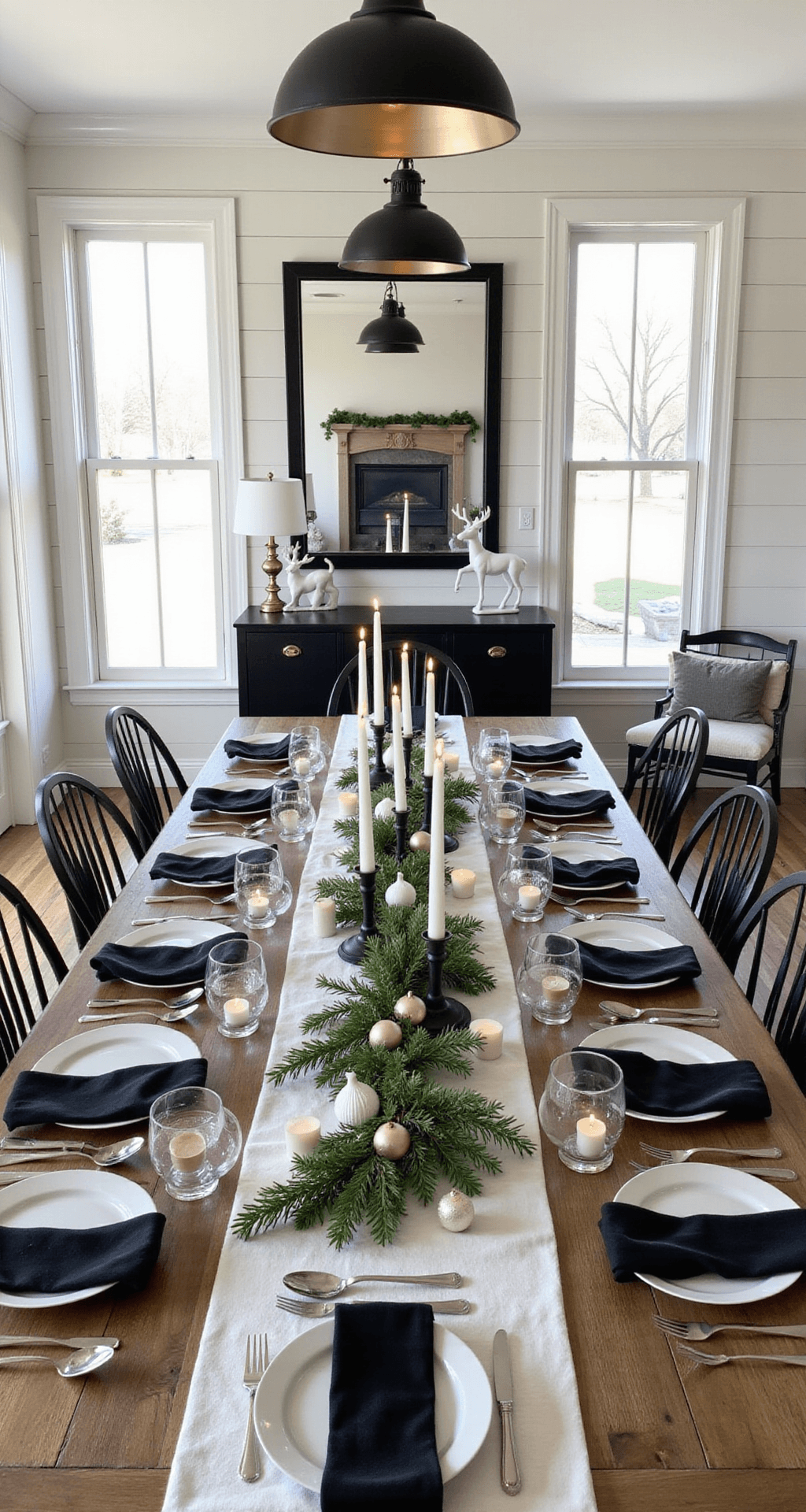
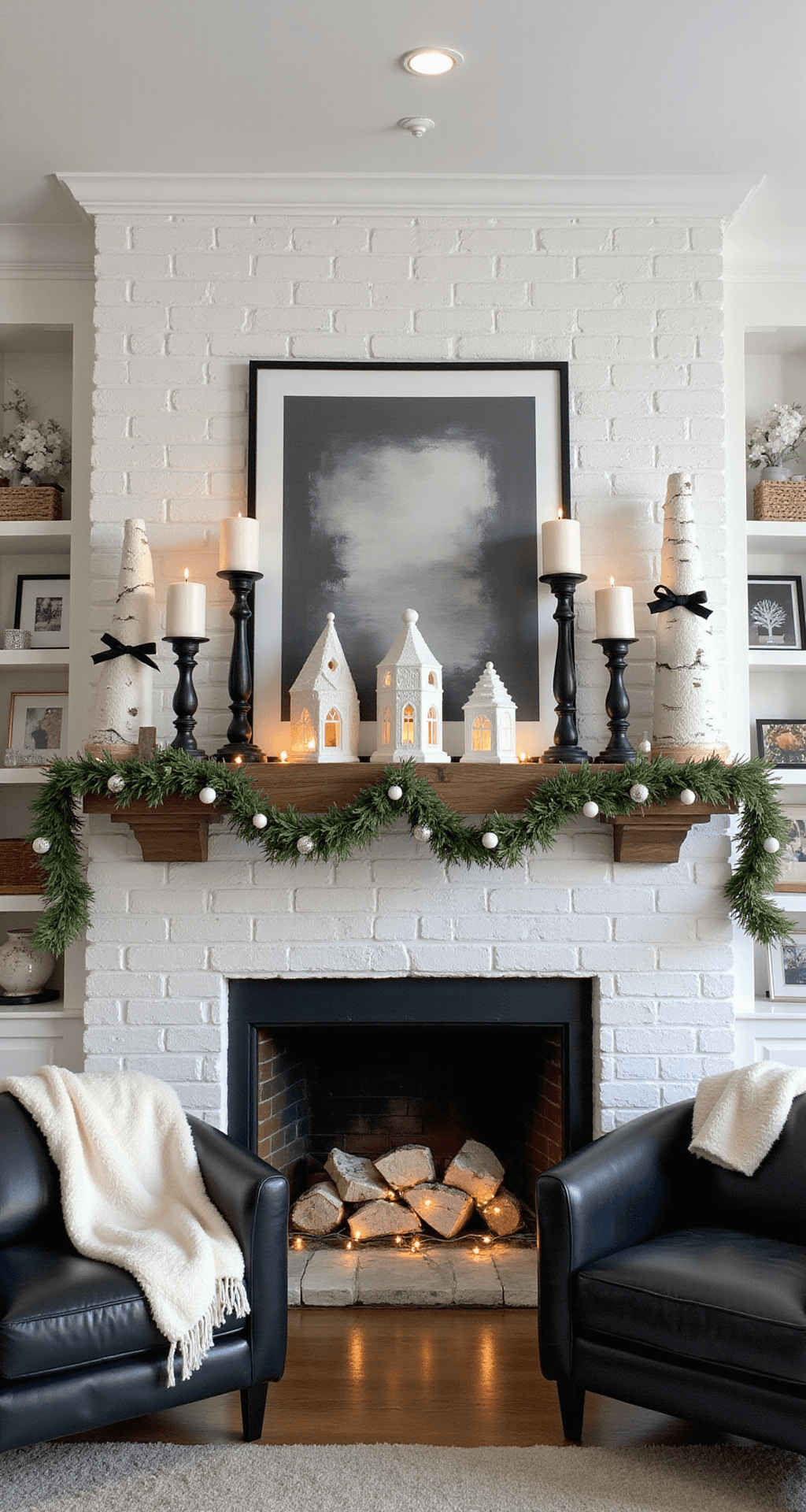
I style my mantel with white ceramic houses, a chunky knit white throw draped casually, black matte candlesticks, and fresh eucalyptus. The variety in texture makes your eye move around the display instead of glazing over.
The 60-30-10 Color Rule
Designers use this for every room, and it works for holiday decor too.
- 60% white (your dominant color—ornaments, linens, candles)
- 30% black (your secondary—ribbons, some ornaments, frames)
- 10% accent (greenery, silver, or a touch of gold)
This ratio keeps things balanced and prevents the space from feeling either washed out or too dark.
I eyeball it rather than actually counting ornaments like some kind of festive accountant. But when something feels “off,” I usually realize I’ve gone too heavy on one color.
Room-by-Room Breakdown: Where to Focus Your Energy
Living Room: Your Main Stage
The tree area:
Position your tree near a window if possible. Natural light during the day, tree lights glowing at night—chef’s kiss.
Underneath, pile gifts wrapped in black paper with white ribbon and white paper with black ribbon. I keep a consistent wrapping style all season, and it makes even Amazon boxes look intentional