This post may contain affiliate links. Please see my disclosure policy for details.
Thanksgiving Table Settings That Actually Make Your Guests Say “Wow”
Thanksgiving table settings stress me out every single year. I stand there staring at my dining table, wondering how those Pinterest-perfect tablescapes happen while I’m contemplating whether paper plates would really be that bad.
Spoiler alert: they would be.
But here’s what I’ve learned after years of trial and error—creating a stunning Thanksgiving table doesn’t require a design degree or a trust fund. It just needs a solid game plan and some strategic layering.
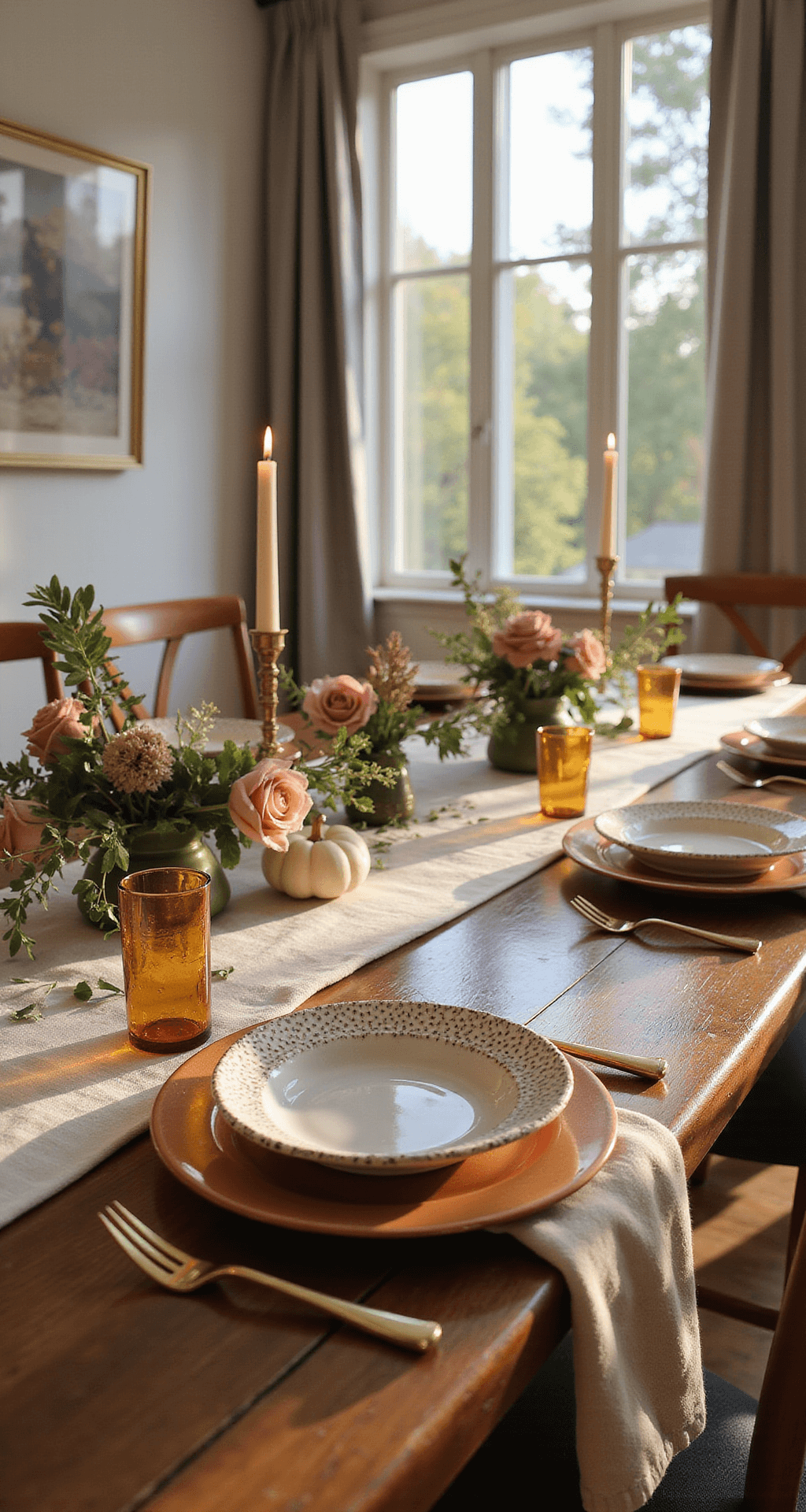
Start With Your Foundation (Because You Can’t Build on Nothing)
Your tablecloth is like the canvas for a painting. Mess this up, and everything else looks wonky.
I always reach for a neutral linen tablecloth in cream or soft gold tones. Natural linen has this effortless elegance that screams “I have my life together” even when you’re frantically defrosting the turkey at 6 AM.
Here’s my layering trick:
- Tablecloth goes down first (obviously)
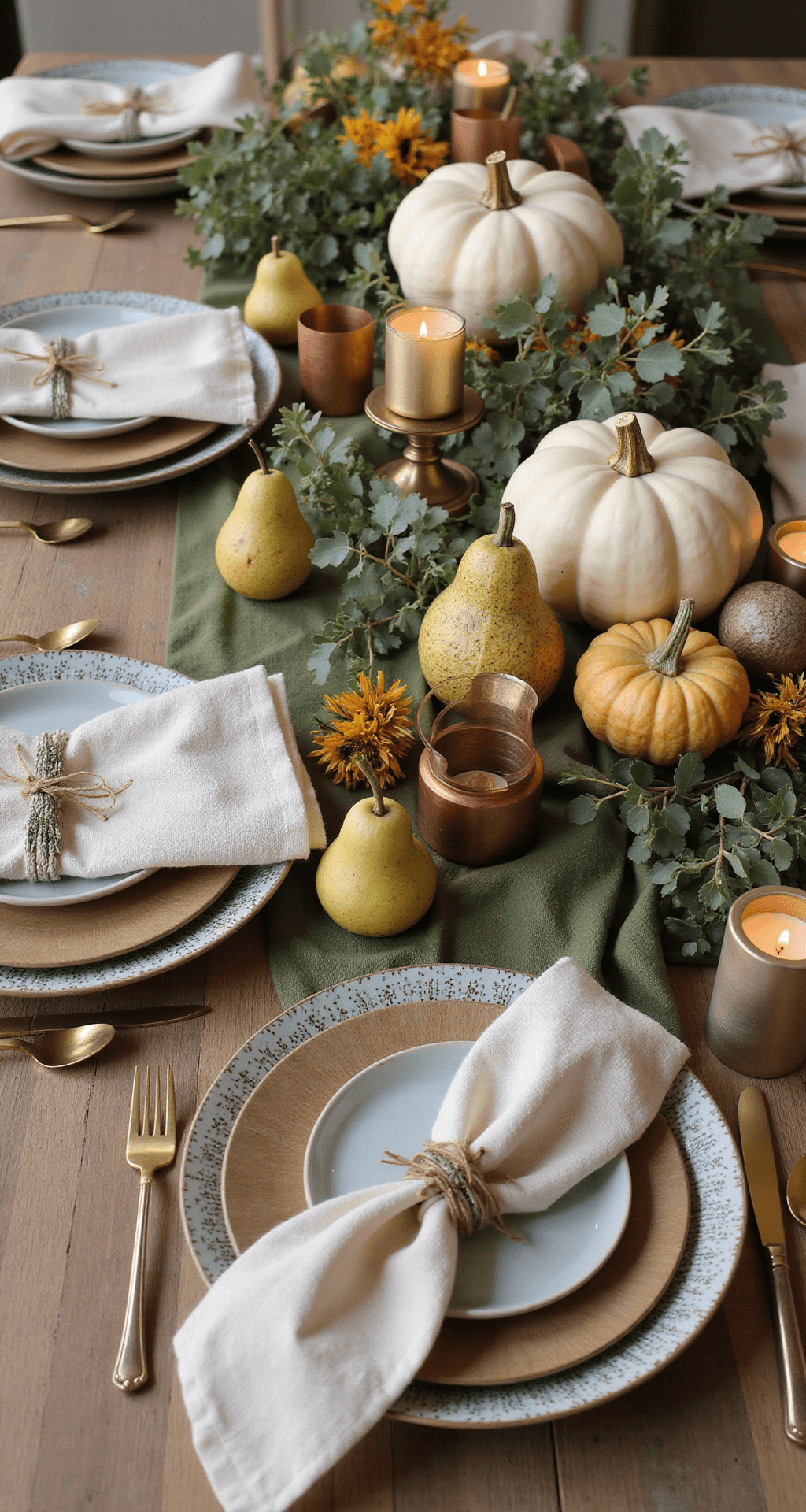
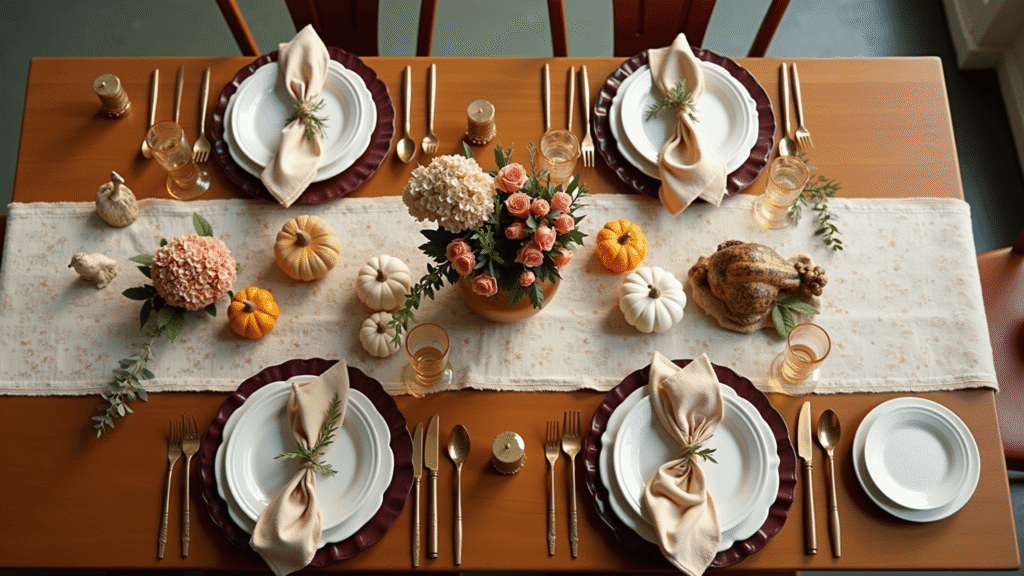
- Add a patterned runner down the center—hand-blocked florals or damask in greens and natural tones work beautifully
- Keep it flat and smooth (wrinkles make everything look rushed)
If you’re joining tables together for the extended family chaos, grab an extra-long tablecloth. Nothing says “amateur hour” like a visible gap between two tables.
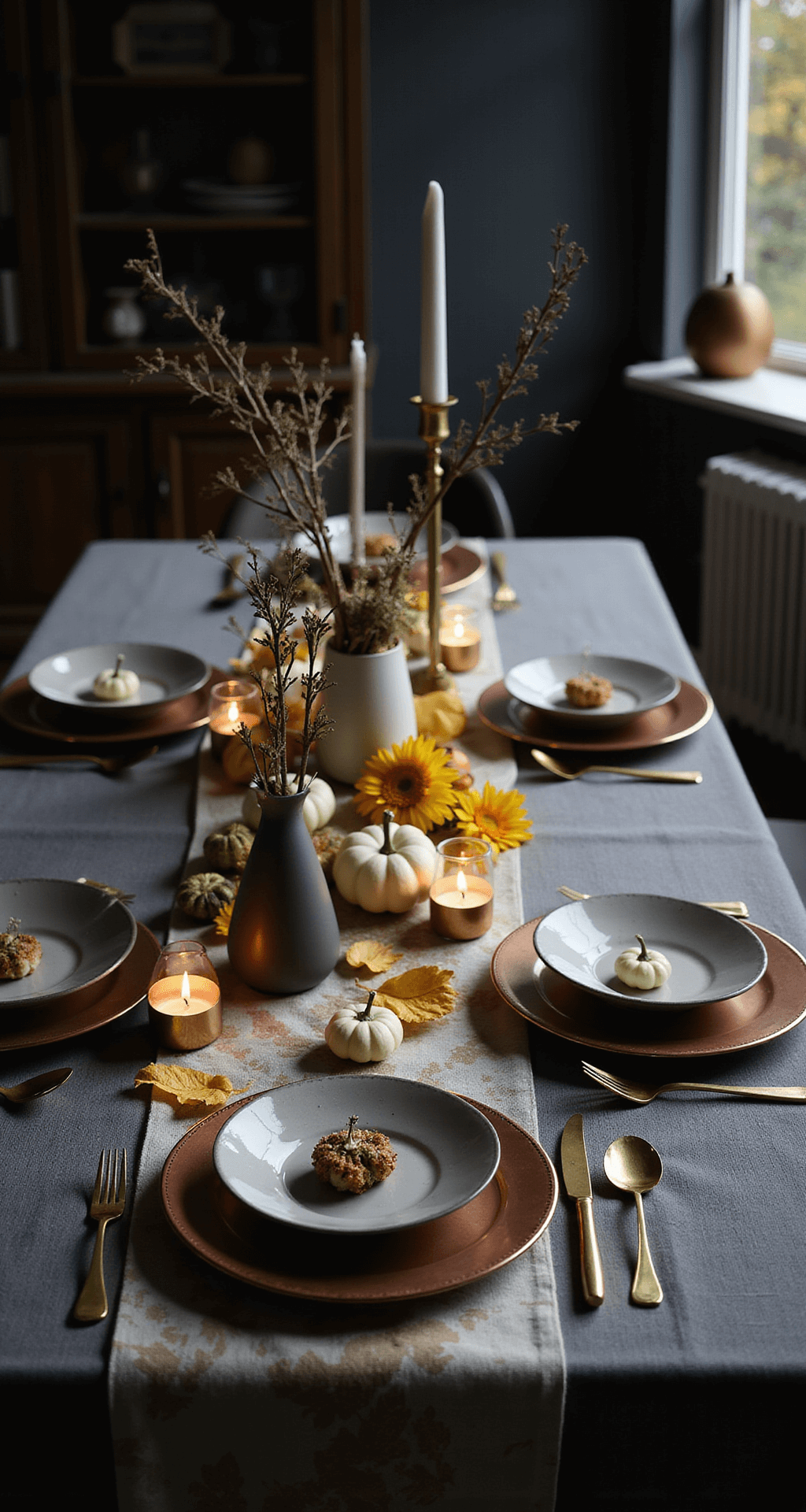
Building Each Place Setting (The Money Shot)
This is where most people panic. Don’t.
The Charger Plate Strategy:
Start with decorative charger plates as your anchor. These babies ground the entire look and instantly add sophistication.
I love deep wine tones or scalloped-edge stoneware—they feel festive without screaming “I bought this at a Spirit Halloween.”
My layering order:
- Charger plate on bottom (metallic or wooden)
- Dinner plate in the middle
- Salad plate on top (this is where you can go wild with patterns)
Mix textures here. A wooden charger under cream ceramic plates with a patterned salad plate in amber and rust tones creates visual interest without looking like a craft store exploded.
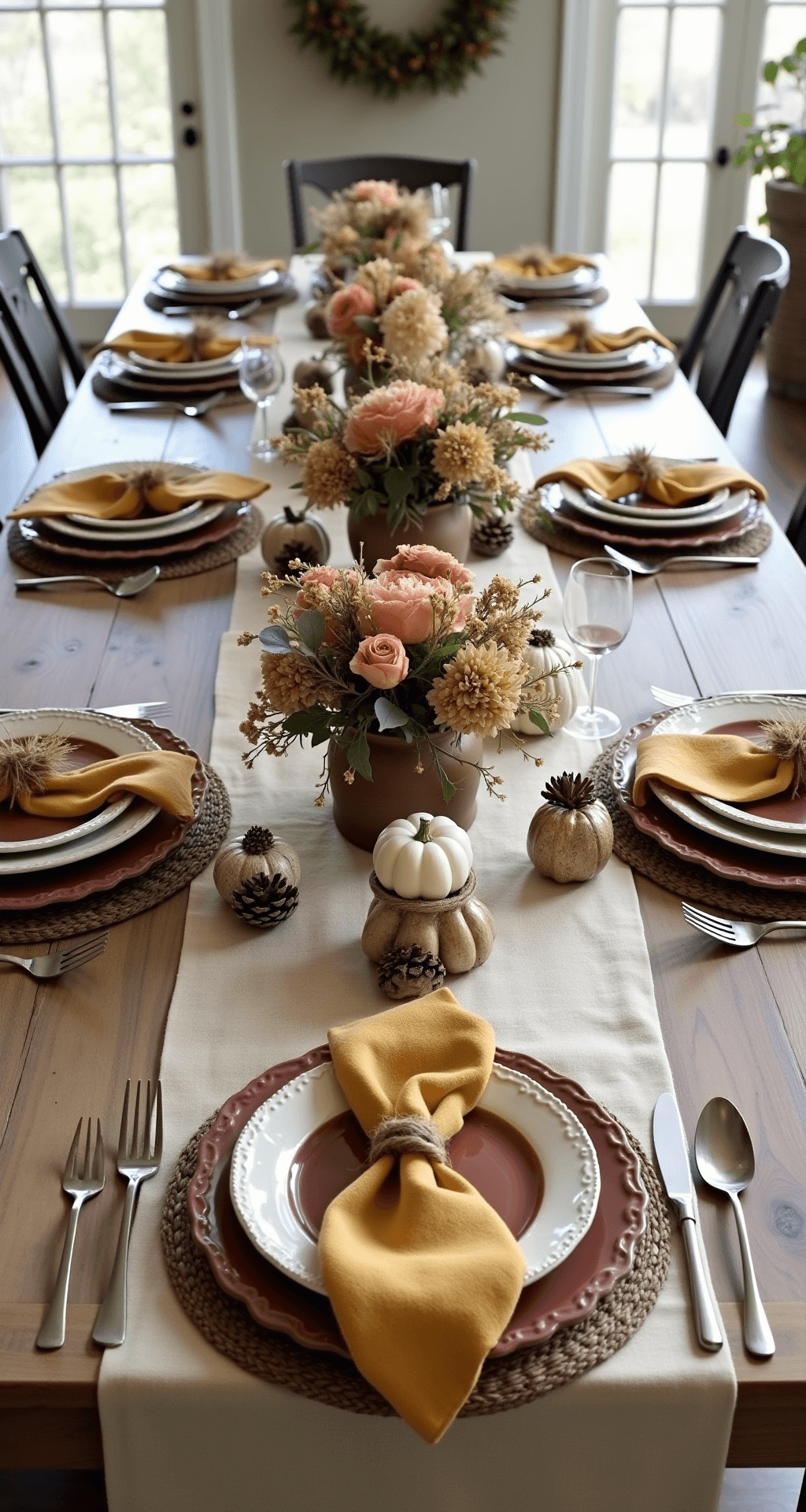
The Napkin Situation (More Important Than You Think)
Forget paper. Just forget it exists.
Linen napkins are the difference between “dinner party” and “Thanksgiving feast.”
Color choices that actually work:
- Olive green (earthy and unexpected)
- Mustard with embroidered edges (adds personality)
- Cream with contrasting borders (classic and clean)
Placement options:
- Traditional: folded to the left of the plate
- Creative: centered on the dinner plate with a rosemary sprig on top
- Fancy: tied with twine and tucked into a mini pumpkin
I usually go with the centered approach because it looks intentional and takes zero extra effort.
Color Palettes That Won’t Make You Look Basic
Let’s talk about avoiding the Pinterest trap of orange-everything.
My go-to palette combinations:
The Warm Traditional:
- Deep plums
- Soft rusts
- Warm amber
- Burgundy accents
This works with both silver and brass metallics, giving you flexibility with what you already own.
The Modern Twist:
- Earthy browns
- Sunflower yellows
- Copper accents
- Natural wood tones
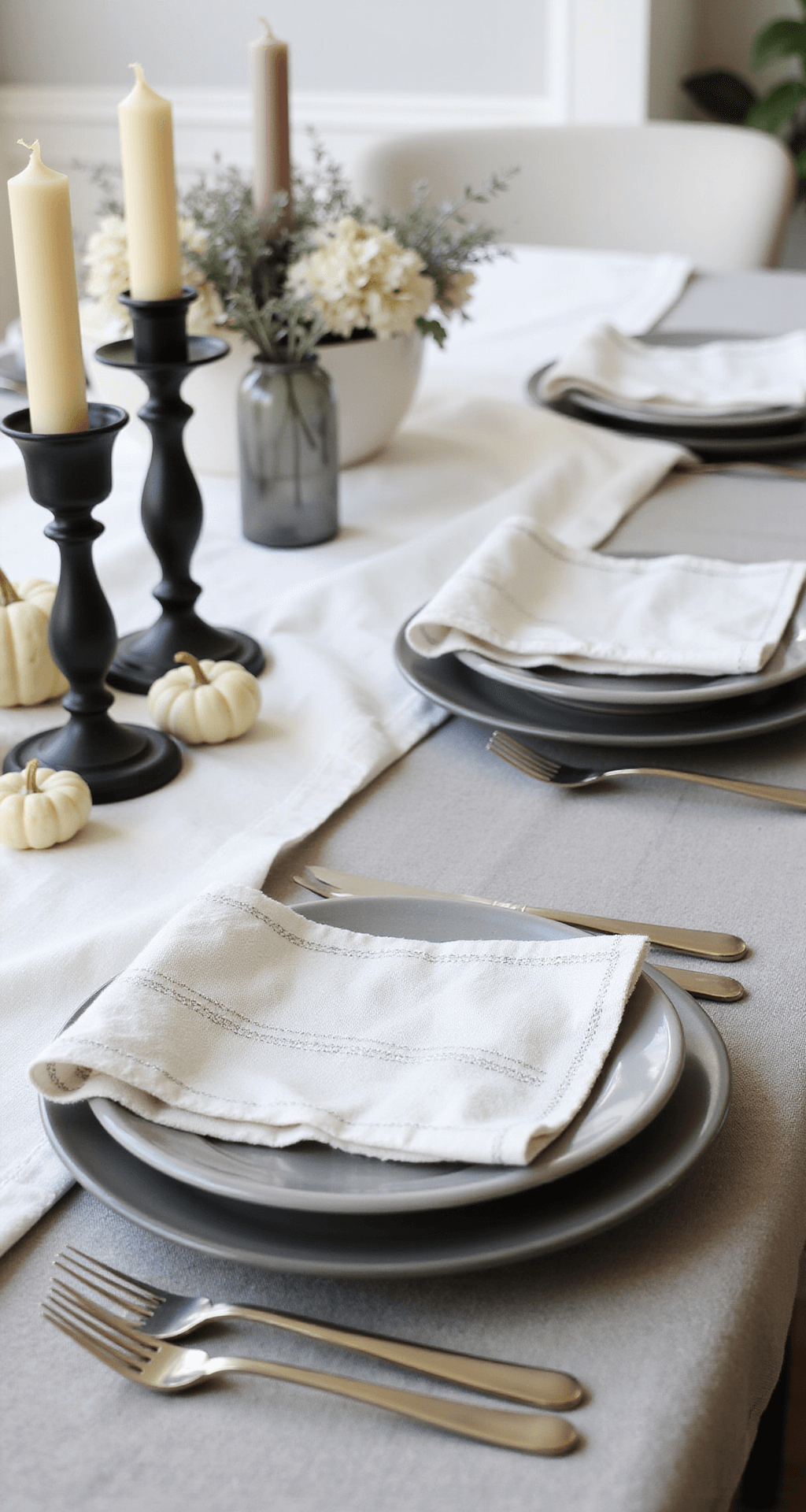
The Sophisticated Neutral:
- Gray tones as your base
- Pops of traditional fall colors
- White pumpkins
- Matte black candle holders
Pick your palette before you start shopping. This single decision will save you from that “I bought seventeen different things and none of them match” nightmare.
Centerpieces That Don’t Block Conversation
Nothing kills dinner conversation faster than a centerpiece so tall your aunt has to lean sideways to ask about your job.
The Floral Route:
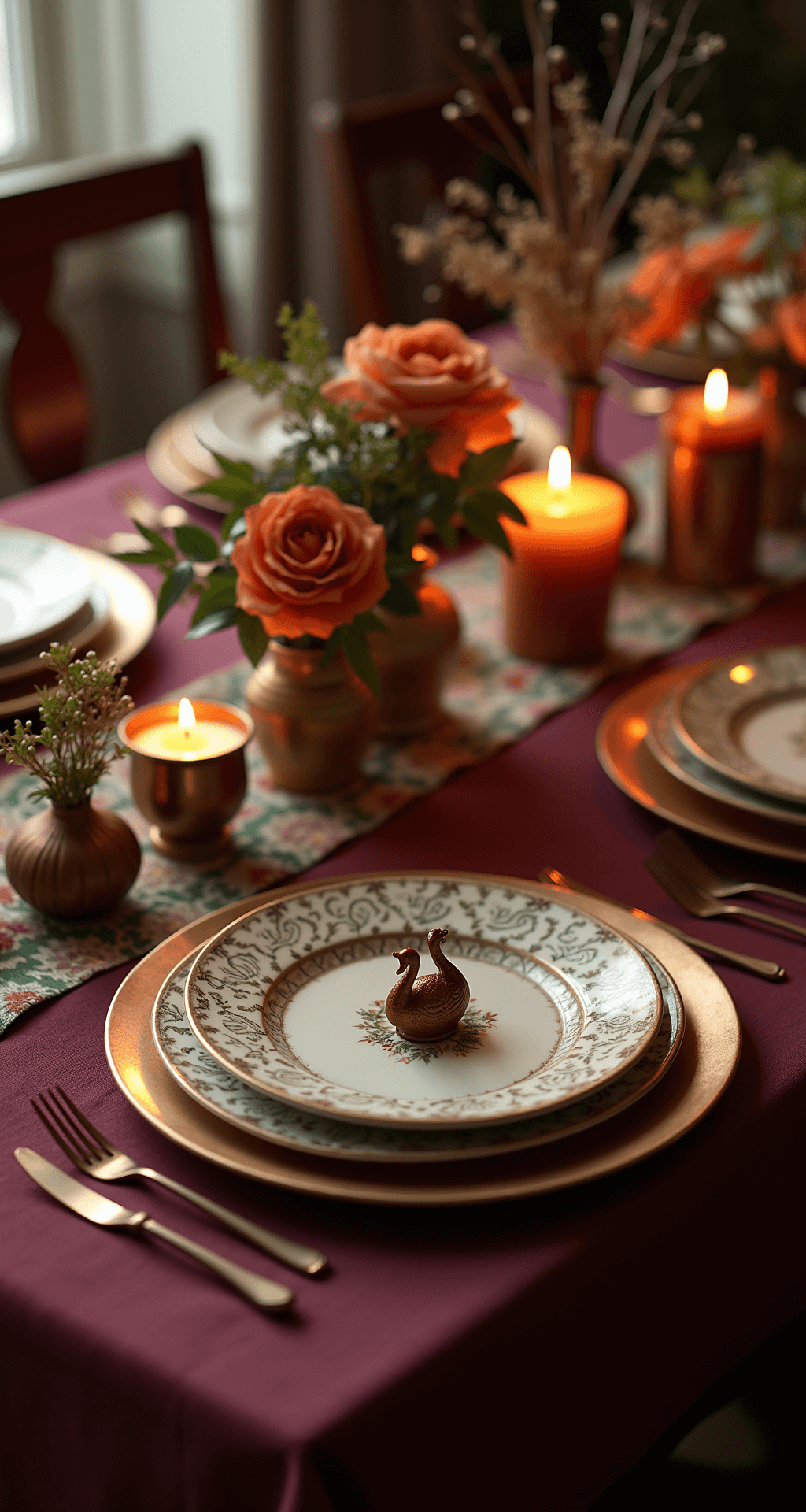
Create a lush but low arrangement using antique hydrangeas, pink and orange roses, or eucalyptus garlands in a bronze or copper vase. Keep it under 12 inches tall so people can actually see each other.
The Scattered Approach (My Personal Favorite):
Forget one massive centerpiece. Instead, scatter elements down the table:
- Artificial acorns and pinecones
- White pumpkins in various sizes
- Copper turkey figurines (yes, they can be tasteful)
- Small bud vases with single stems
This creates movement and interest without dominating the entire table.