This post may contain affiliate links. Please see my disclosure policy for details.
Spring Decor That Actually Makes Your Home Feel Like a Garden (Without the Mud)
Spring decor celebrates renewal and natural beauty through fresh flowers, greenery, and nature-inspired arrangements, and I’m about to show you exactly how to pull it off without looking like you raided a craft store clearance bin.
Look, I get it. You want your home to feel fresh and alive when the season changes, but you’re probably staring at your space thinking, “Where do I even start?”
I’ve been there—standing in the middle of my living room with a bunch of wilted supermarket tulips, wondering why my “spring transformation” looked more like a sad hospital waiting room.
Let me save you from that disaster.
Why Fresh Flowers Are Your Secret Weapon (And How Not to Screw Them Up)
Here’s what nobody tells you about spring decorating: fresh flowers do 80% of the work if you place them strategically.
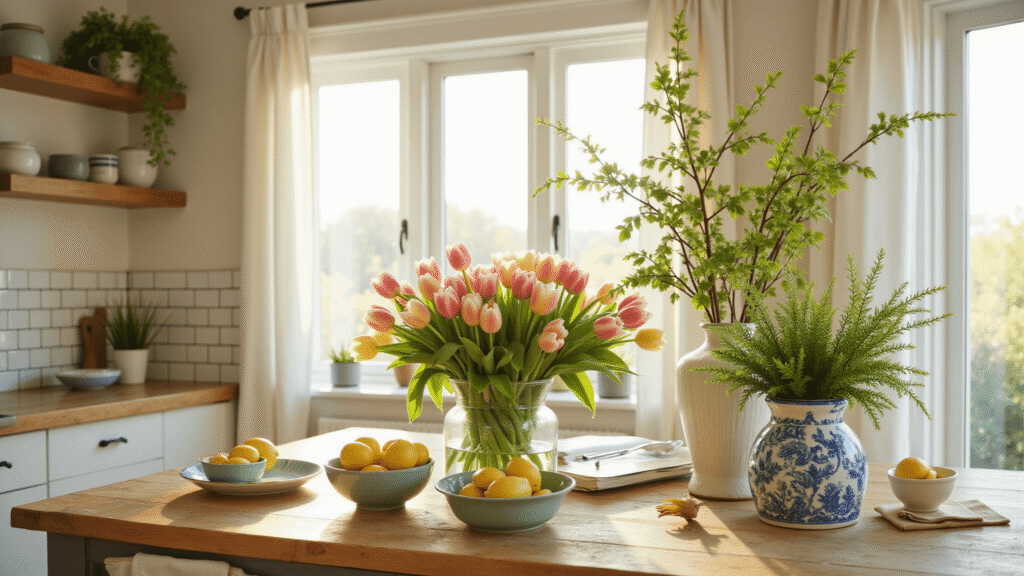
I’m talking about fresh tulip bouquets in spots where you actually see them—not shoved on some random shelf collecting dust.
My go-to placement strategy:
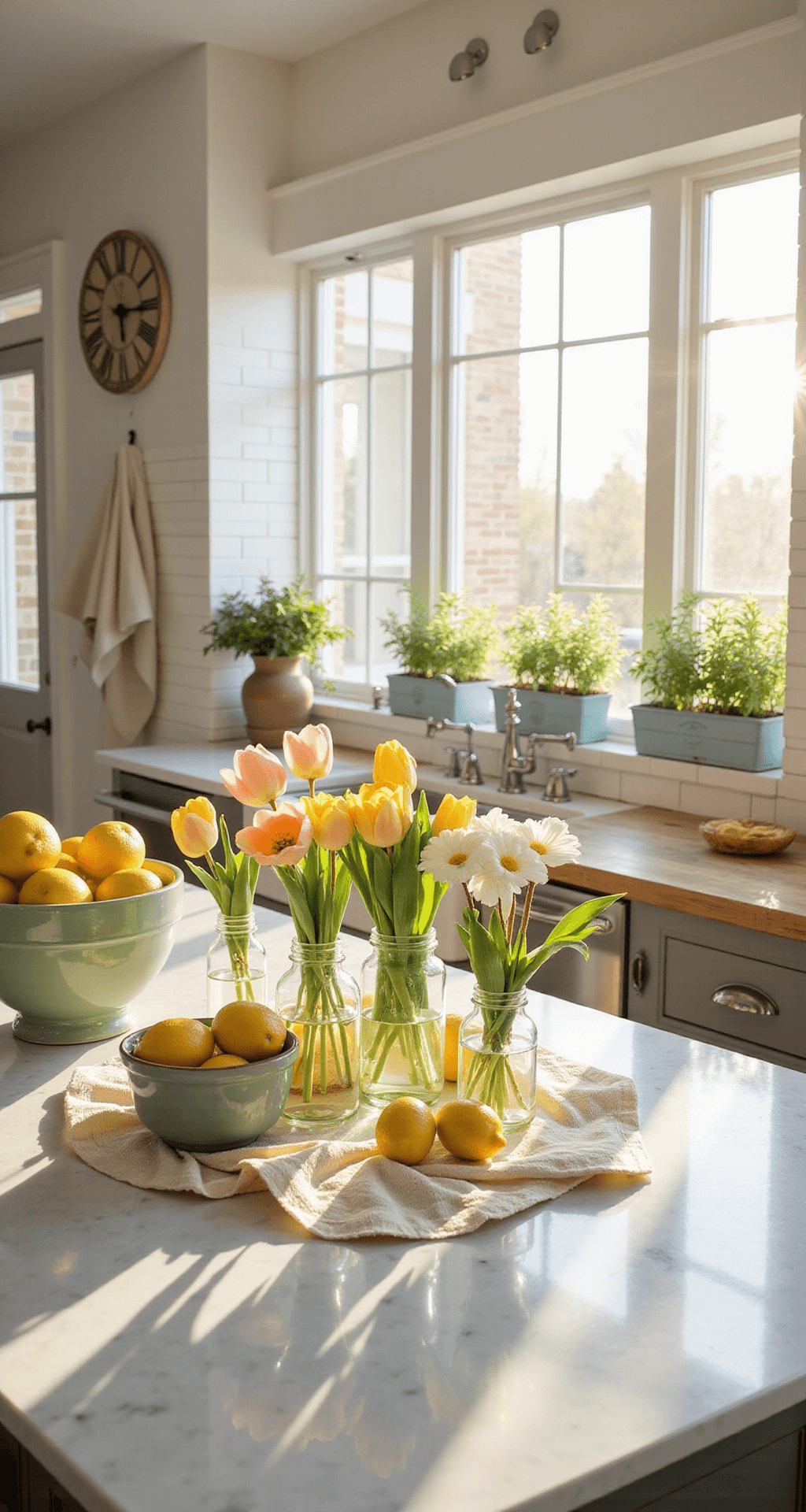
- Kitchen counter (you’re there every morning—start your day right)
- Entryway table (first and last impression for you and guests)
- Bathroom vanity (yes, really—it’s surprisingly mood-lifting)
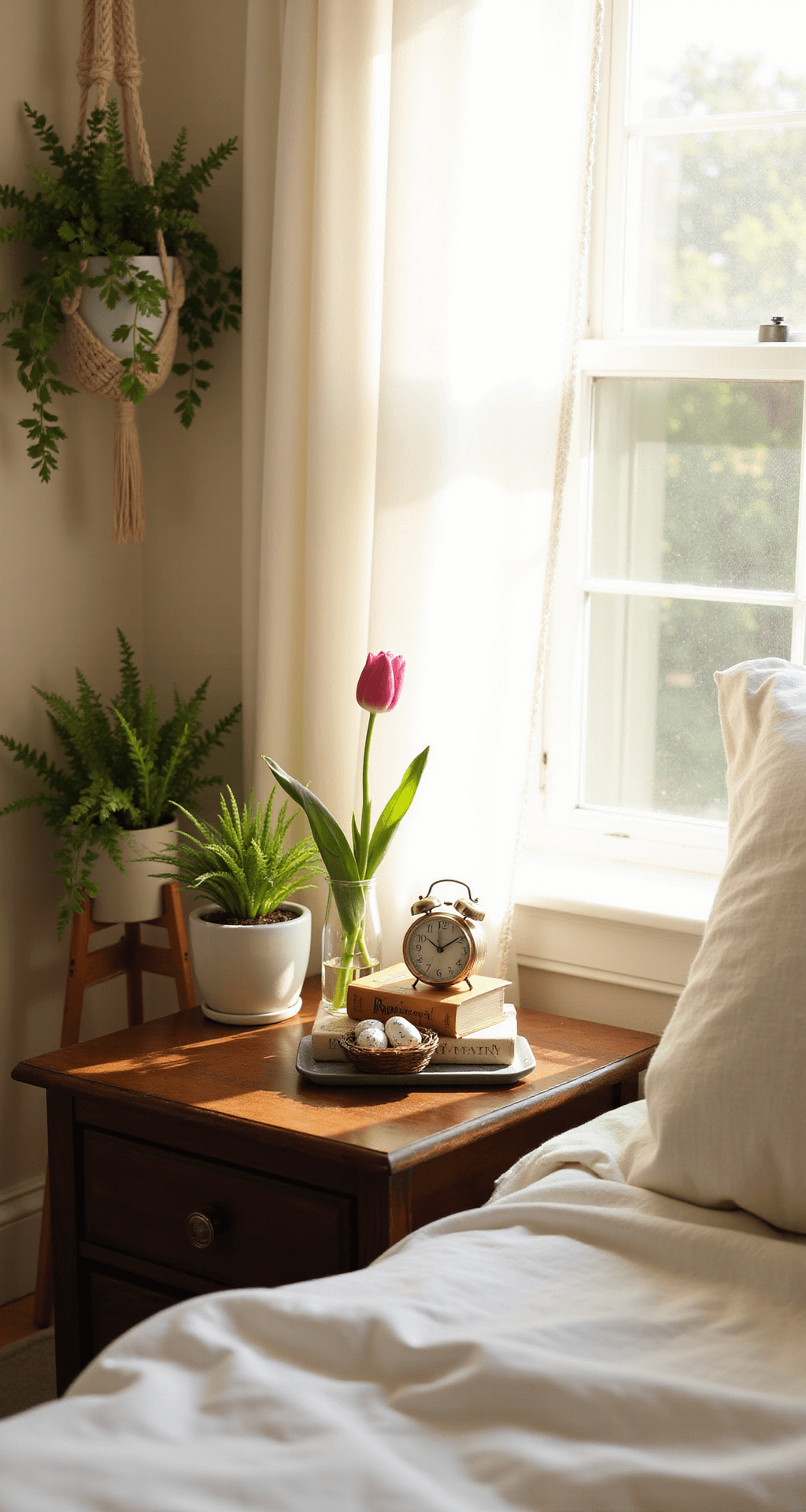
- Bedside table (wake up to something beautiful instead of your phone screen)
White tulips work if you’re going for that clean, sophisticated vibe. But honestly? I love the pastel pinks and sunny yellows because they actually look like spring instead of a minimalist Instagram post.
Pro move: Don’t just plop store-bought flowers in their plastic sleeve and call it a day.
Grab decorative glass vases in different heights and cluster three together. Odd numbers always look better—it’s a design thing, trust me.
The Branch Trick That Makes Everyone Think You’re a Design Genius
This is my absolute favorite spring decor hack, and it costs practically nothing.
Forced flowering branches sound fancy, but here’s what you actually do:
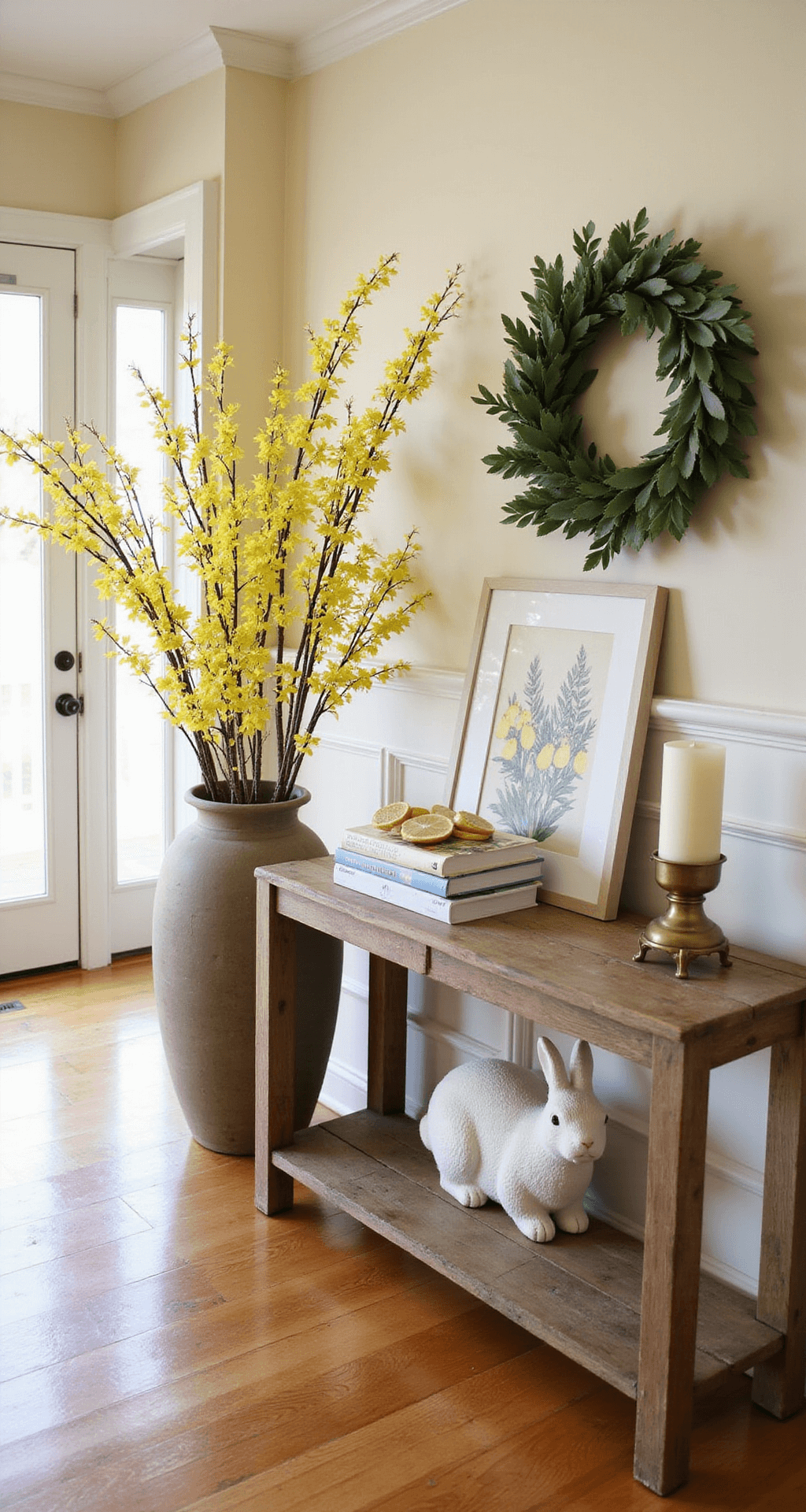
Go outside (revolutionary, I know). Cut branches from forsythia, cherry, or quince trees—anything with buds. Stick them in water indoors. Watch them bloom weeks before they would outside.
The first time I tried this, I felt like a damn magician.
These branches create this wild, organic statement that screams “I know what I’m doing” even if you’re winging it. I put mine in large floor vases flanking my fireplace, and suddenly my entire living room looked like it belonged in a design magazine.
Quick tips for branch success:
- Cut branches at an angle (helps water absorption)
- Change water every few days
- Room temperature speeds up blooming
- Branches last 2-3 weeks—way longer than most cut flowers
Adding Texture Without Looking Like a Botanical Garden Threw Up
Here’s where people go overboard.
You don’t need seventeen different plants competing for attention.
What you do need is layering with intention.
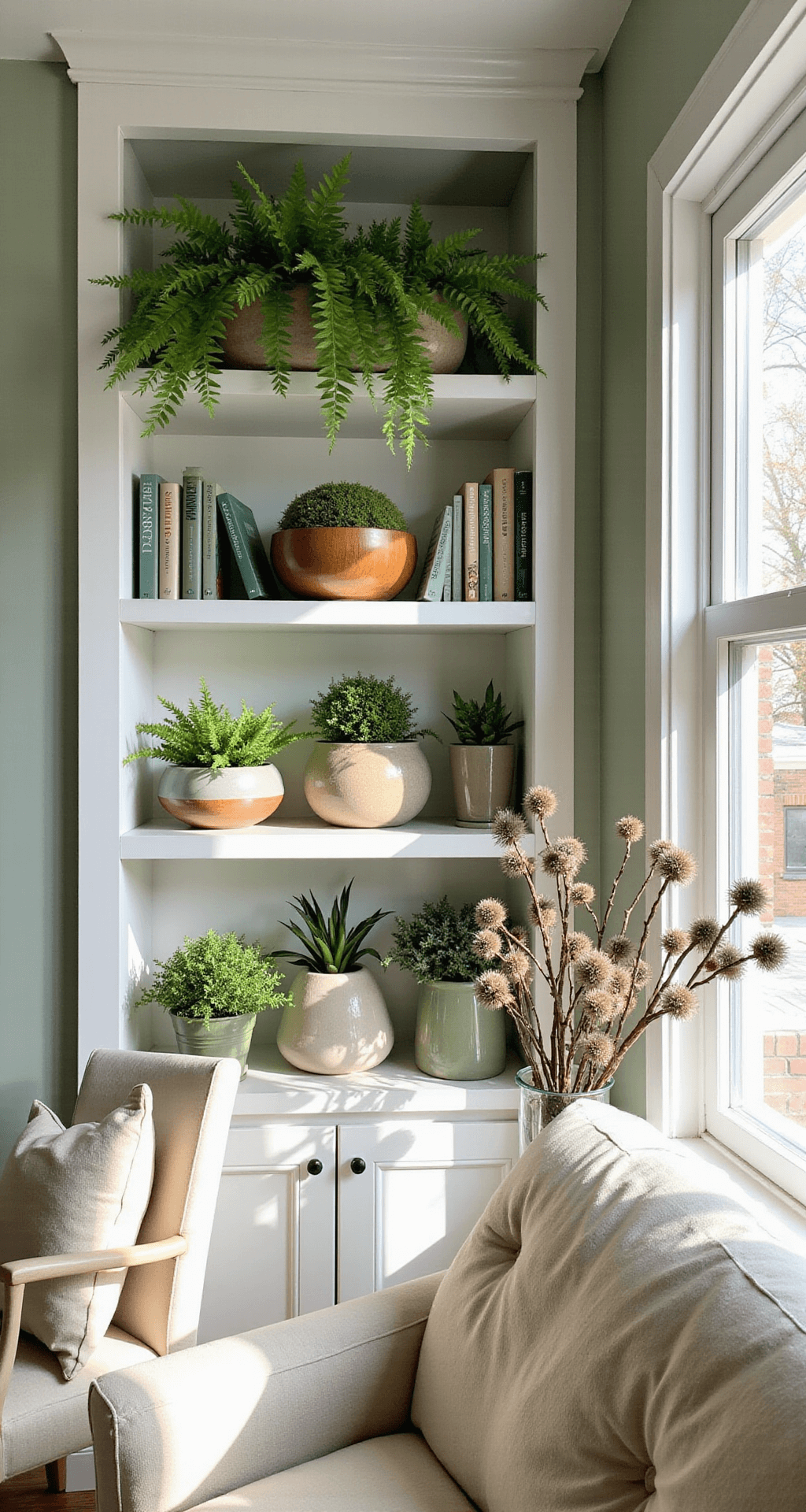
I keep potted ferns on my bookshelf because their cascading fronds add movement without being fussy. Add some moss in a wooden bowl. Toss in pussy willow branches (they’re fuzzy and weird in the best way).
The formula that works:
- One statement piece (those flowering branches we talked about)
- Two to three smaller potted plants in varying heights
- One textural element (moss, driftwood, river stones)
That’s it.
Don’t overthink it.
Budget-Friendly Ideas That Don’t Look Cheap
I’m not spending $200 on seasonal decor that I’ll store in a box for nine months.
Neither should you.
Spring wreaths are worth it because they’re the first thing people see. But make it interesting—I’m talking eucalyptus and lemon slices dried into the design, not just fake flowers hot-glued to a foam ring.
Bowl of lemons on the coffee table? Brilliant. Costs maybe $5 and adds that pop of yellow that screams spring. Plus, when life gives you lemons… well, you’ve already got them displayed beautifully.
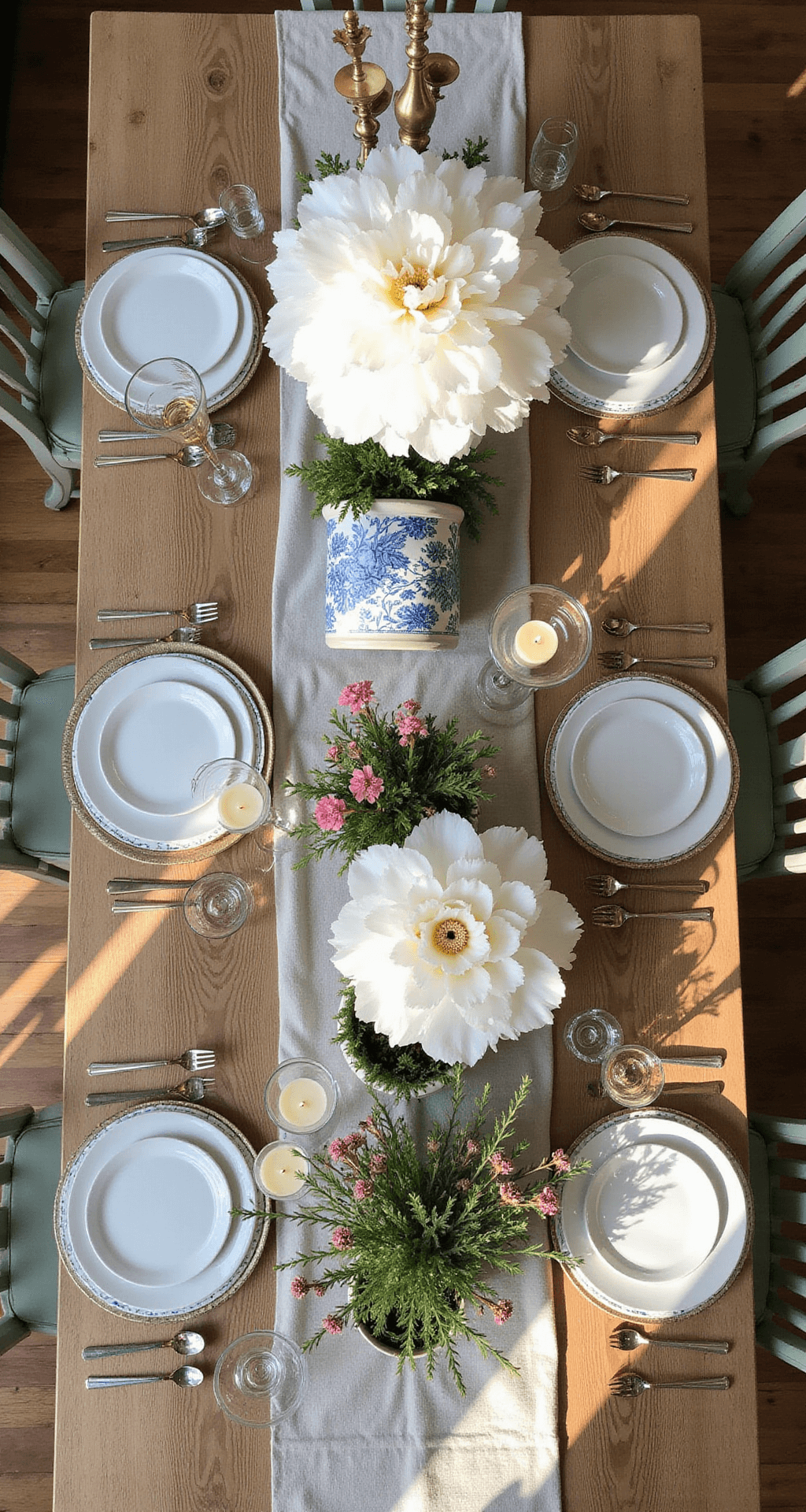
Blue and white planters are my obsession. They work year-round but feel especially fresh in spring. Fill them with literally anything green—herbs from the grocery store, succulents, even just clippings from your yard.
Creating Vignettes That Tell Your Story (Not Pinterest’s)
A spring vignette is just a fancy term for “stuff arranged together that looks good.”
Here’s what I learned the hard way: copying someone else’s vignette exactly makes your home look staged and soulless.
My formula for personal vignettes:
Start with three layers:
- Background (a framed photo, small mirror, or artwork leaning against the wall)
- Middle ground (a stack of books, a decorative candle holder, or a small plant)
- Foreground (something