This post may contain affiliate links. Please see my disclosure policy for details.
Primitive Easter Decor Ideas That’ll Make Your Home Feel Like a Warm Country Cottage
Contents
Primitive Easter decorating celebrates natural materials, rustic textures, and imperfect authenticity to create a warm, seasonal ambiance.
I’ll be honest with you. The first time I tried to decorate for Easter, my living room looked like the Easter Bunny had a meltdown in a craft store. Plastic pastel everything, glittery eggs that shed like a cat in summer, and nothing that felt remotely like me.
That’s when I discovered primitive Easter decor, and everything changed.
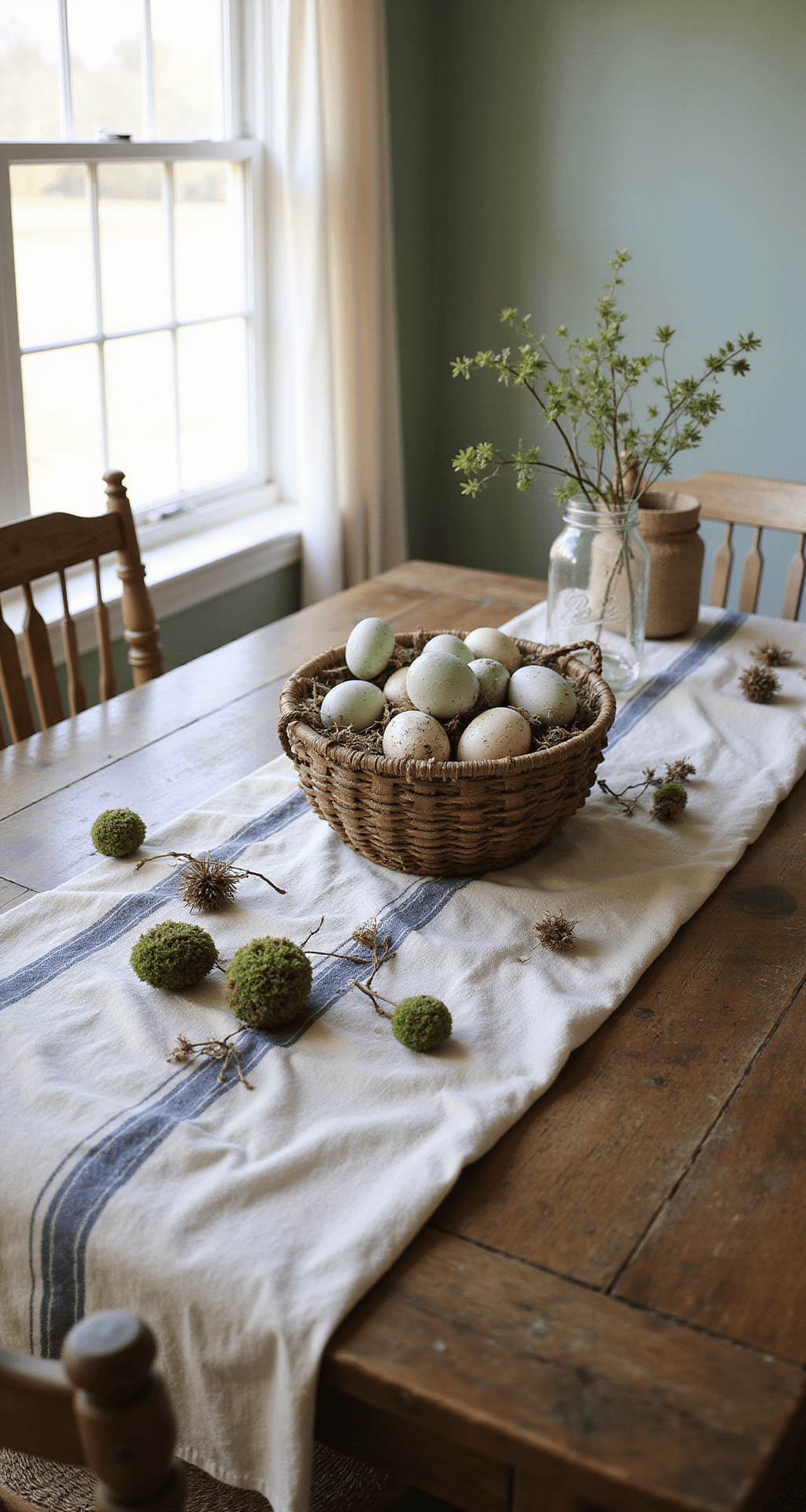
This isn’t about perfection or Instagram-worthy staged photos. It’s about creating a space that feels lived-in, warm, and authentically rustic. Think weathered wood, hand-stitched linens, and eggs that look like they came from an actual farmhouse nest.
If you’re tired of the same shiny, mass-produced Easter decorations and want something with soul, you’re in the right place.
Why Primitive Easter Decor Hits Different
Primitive Easter decorating isn’t trying to be fancy. It’s trying to be real.
The style uses earth tones instead of bright pastels. Vintage elements instead of plastic. Handmade touches instead of factory-produced sameness.
The whole vibe evokes country living and simple elegance without feeling stuffy or overdone.
And here’s the best part: imperfections aren’t mistakes in this style. They’re the entire point. That chipped paint? Beautiful. The slightly wonky handstitched bunny? Perfect. The uneven lettering on your wooden sign? Absolutely spot-on.
Building Your Foundation: Core Decorating Elements
Natural Materials and Textures (Start Here)
The backbone of primitive Easter decor is natural materials. I’m talking about the stuff you’d actually find in a farmhouse or countryside cottage.
Start with these foundational pieces:
- Woven baskets – Not the bright plastic ones, but actual woven primitive woven baskets with texture and character
- Wooden crates – The kind that look like they’ve stored apples or vegetables for decades
- Burlap – This fabric is your best friend for table runners, wraps, and accents
- Moss-covered nests – Real or faux, these add instant rustic charm
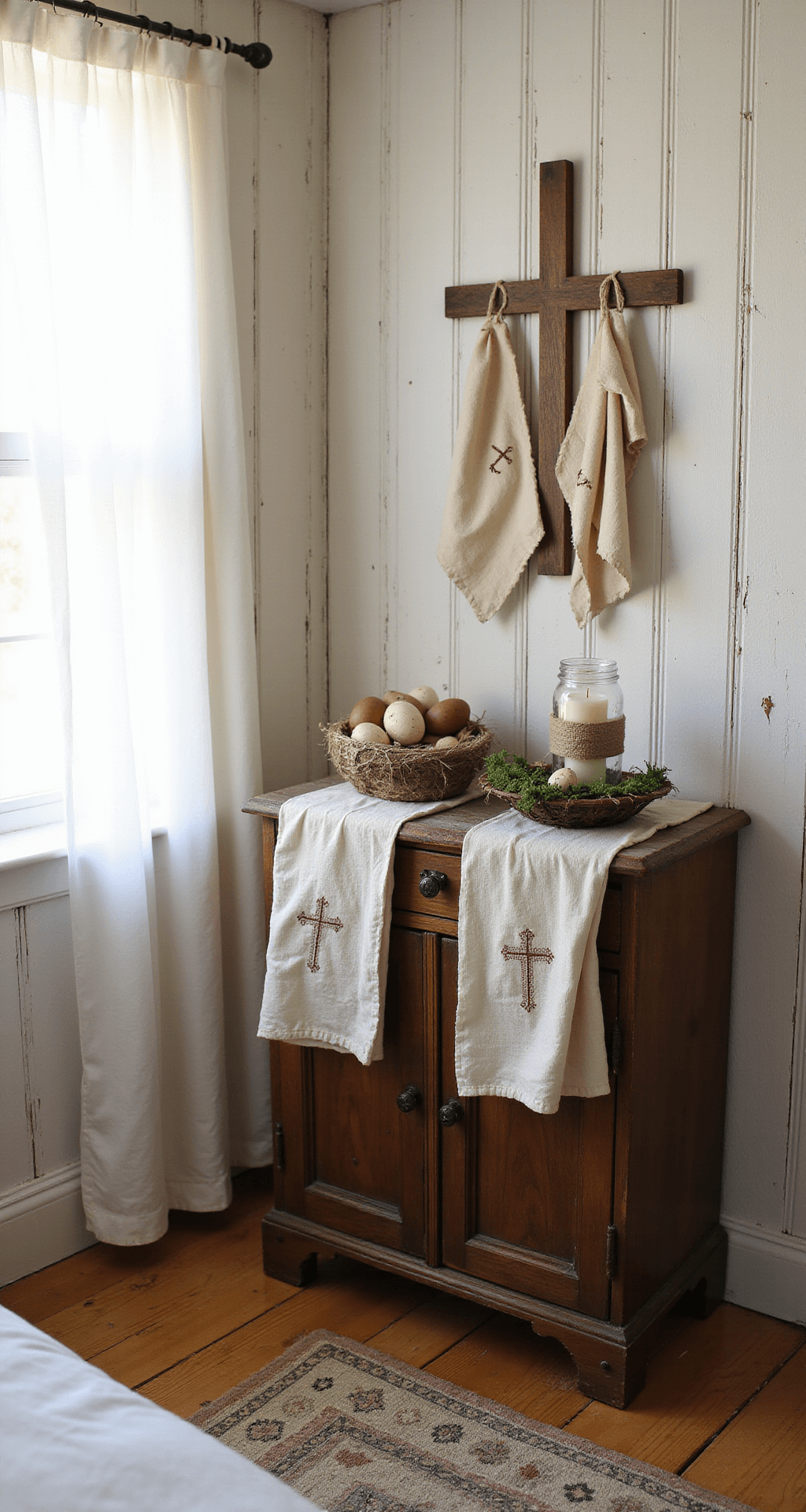
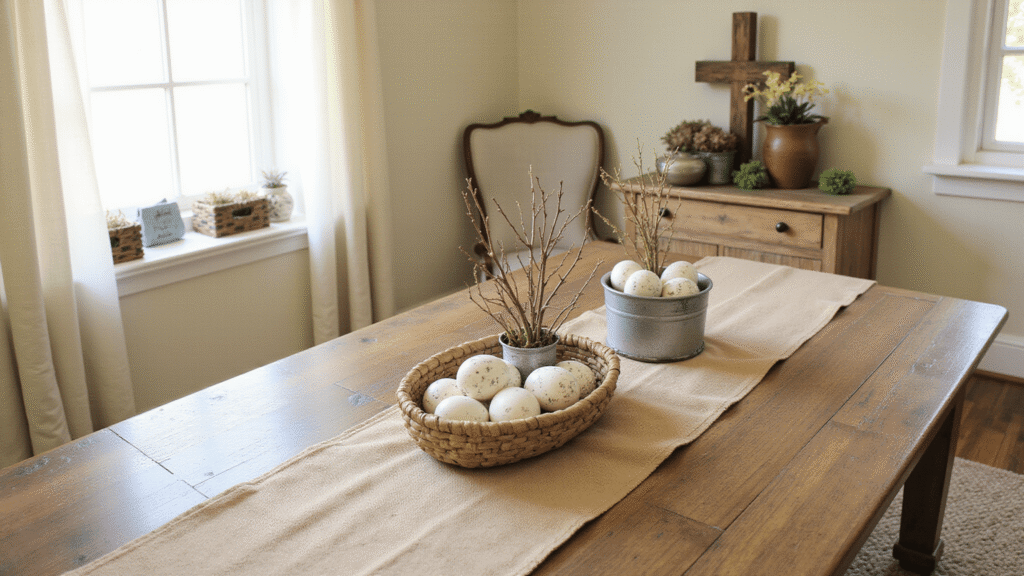
I arrange speckled eggs in rustic baskets right in the center of my dining table. It’s simple, requires zero effort to maintain, and guests always comment on it.
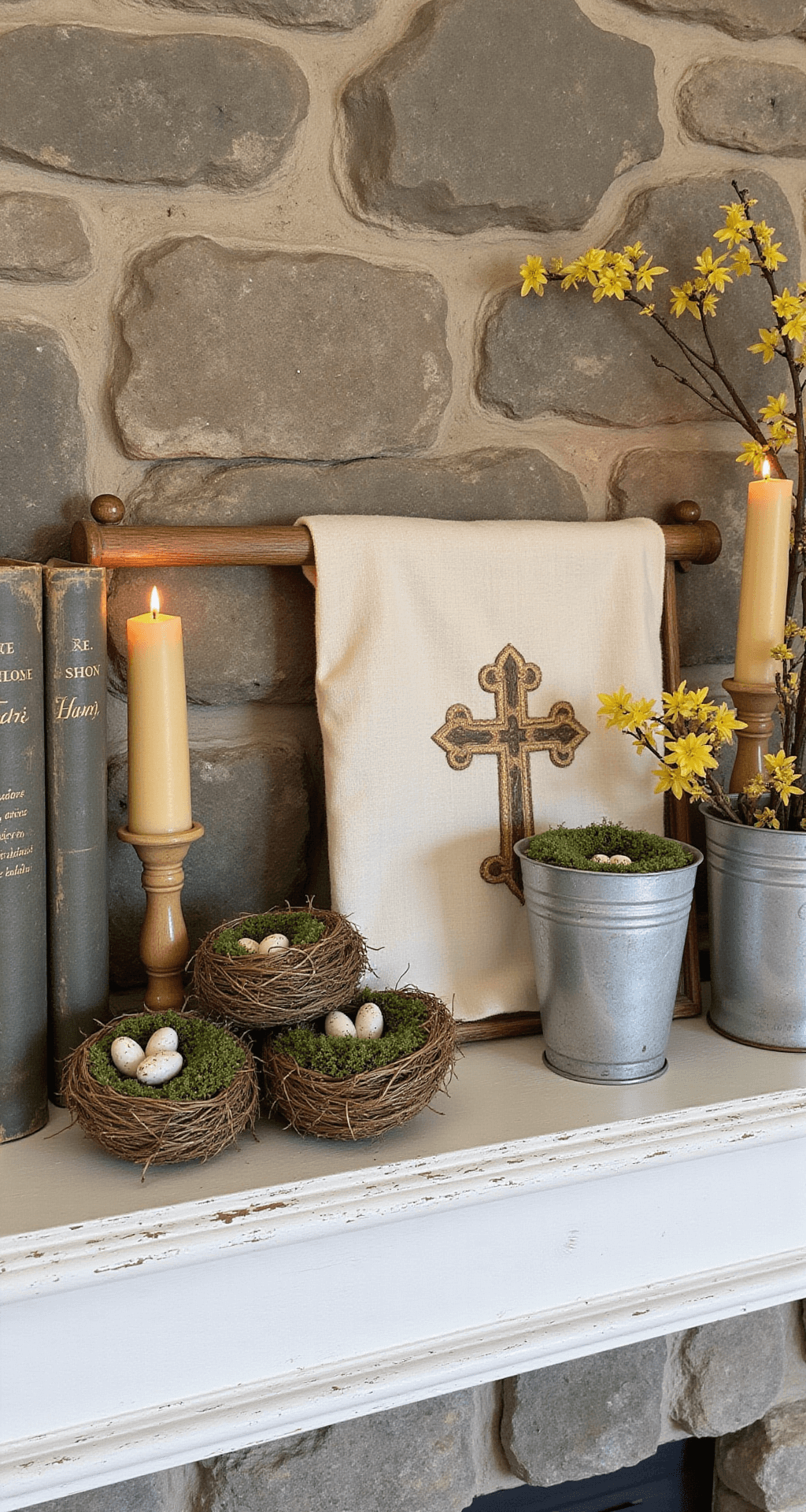
For my mantel, I place moss-filled nests with tiny faux quail eggs tucked inside. The whimsical touch makes people smile without being cutesy or overdone.
Vintage Linens and Textiles (The Secret Sauce)
This is where primitive Easter decor gets personal.
I drape my tables with vintage linens I’ve collected over the years. Flour sack towels make surprisingly beautiful table runners. Grain sack fabric adds that authentic farmhouse feel. Hand-stitched doilies from thrift stores bring instant nostalgia.
These pieces add character that you simply cannot buy new.
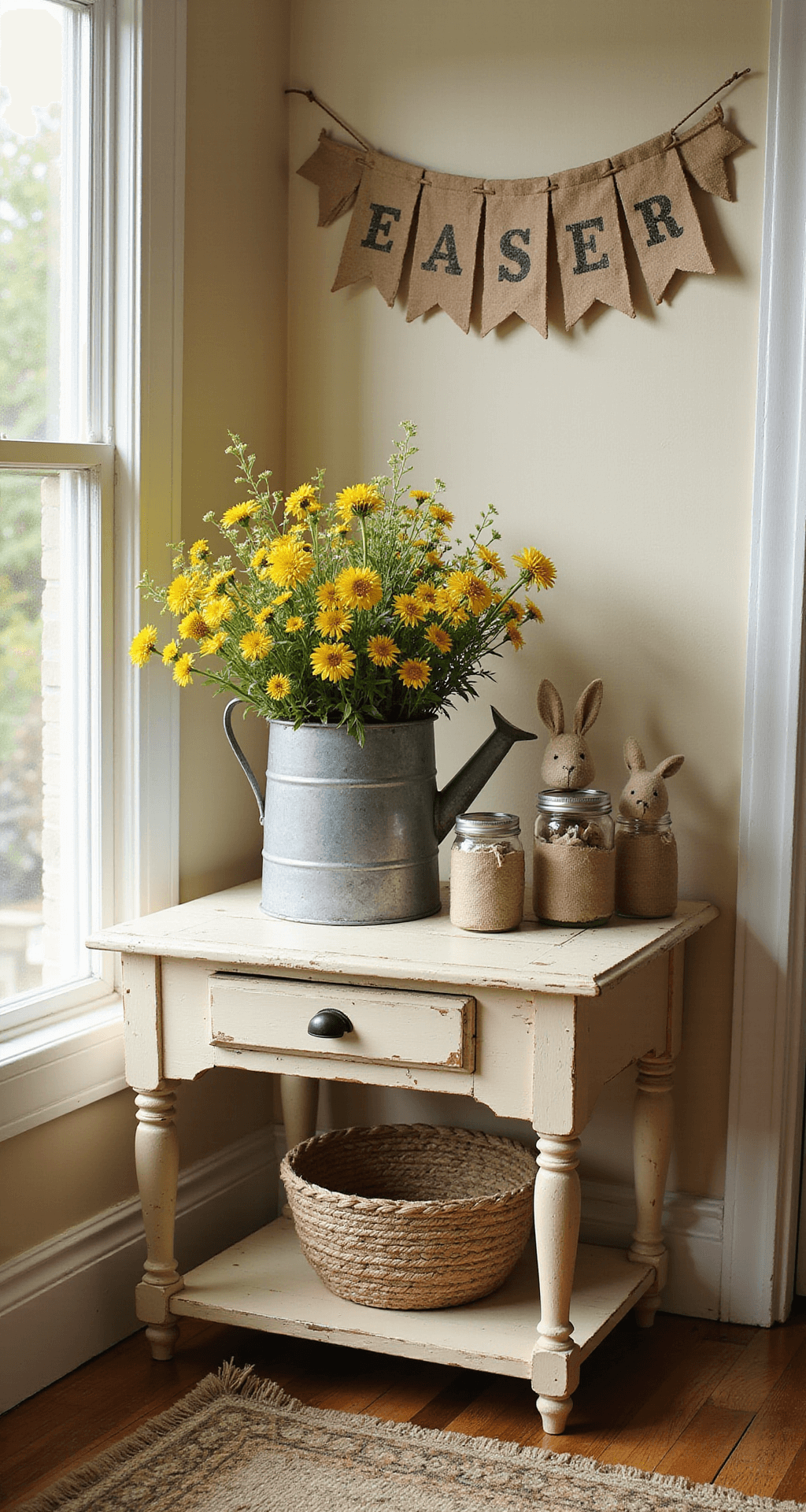
Want to make them even more special? Embroider simple Easter motifs yourself. I’m talking basic bunnies or chicks, not elaborate designs. Even messy stitches look intentional in primitive decor.
You can find vintage flour sack towels online if thrift stores aren’t your thing, though I’d encourage you to check local estate sales first.
Creating Focal Point Pieces (Make One Statement)
Every room needs a focal point for Easter, but primitive style keeps it understated.
My favorite setup? A hand-carved wooden cross on my weathered side table. Around it, I arrange:
- Aged hymnals (mine are actually from my grandmother’s church)
- A simple linen cloth embroidered with a cross
- One single candle nearby
Nothing fancy. Nothing complicated. Just reverent and meaningful.
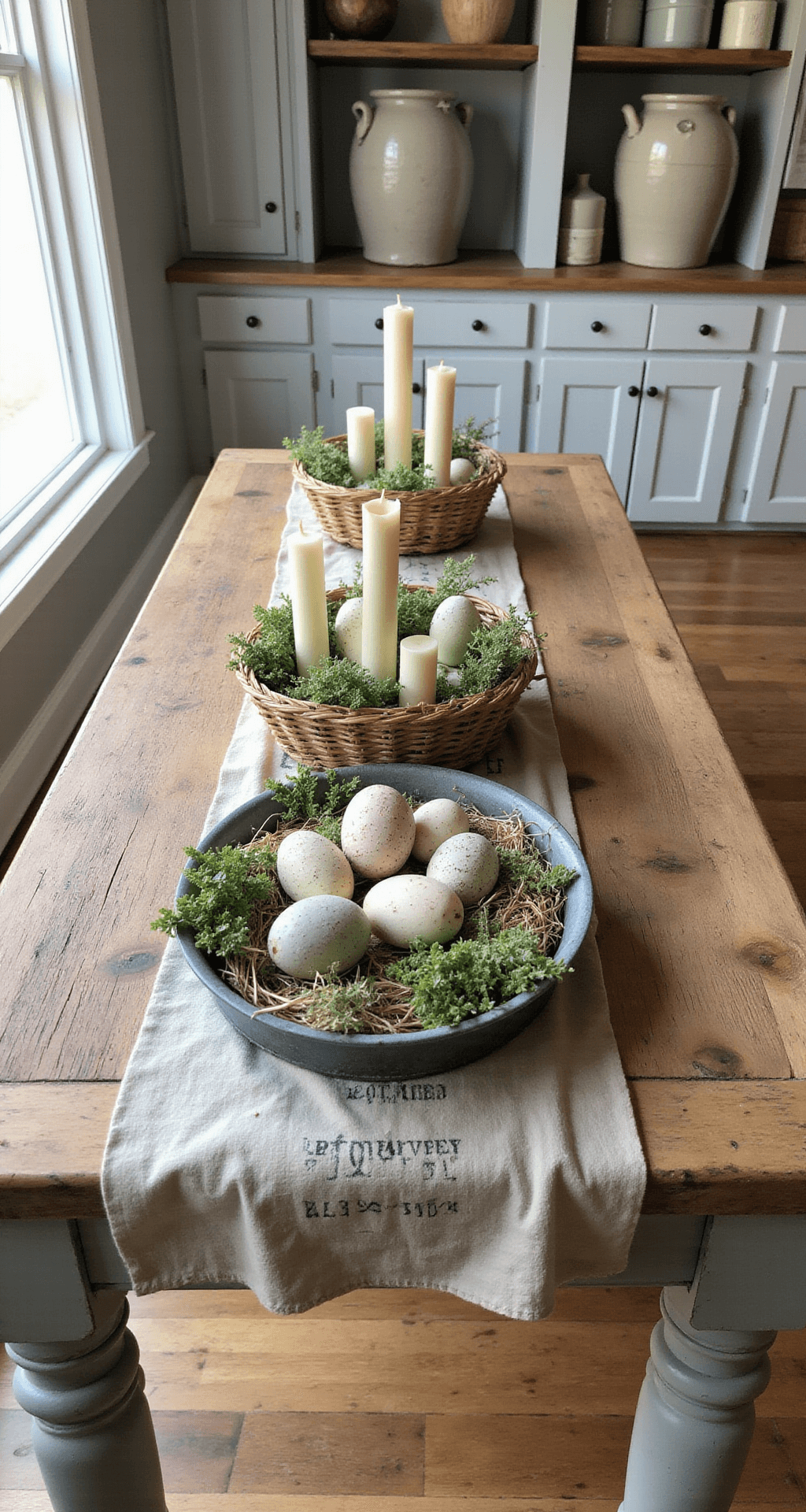
If religious symbols aren’t your preference, vintage farmhouse signs work beautifully. Look for phrases like “He is risen” or “Spring blessings” in simple, unfussy fonts.
I hang mine on the front door or lean them against bookshelves. The leaning actually looks more authentic than perfectly centered hanging.
Floral and Botanical Elements (Keep It Unpretentious)
Forget perfect florist arrangements. Primitive Easter decor calls for wildflowers, pussy willows, or dried lavender.
I gather whatever’s blooming in my yard or available at the farmer’s market. Then I arrange them in rustic pitchers, galvanized metal buckets, or stoneware crocks.
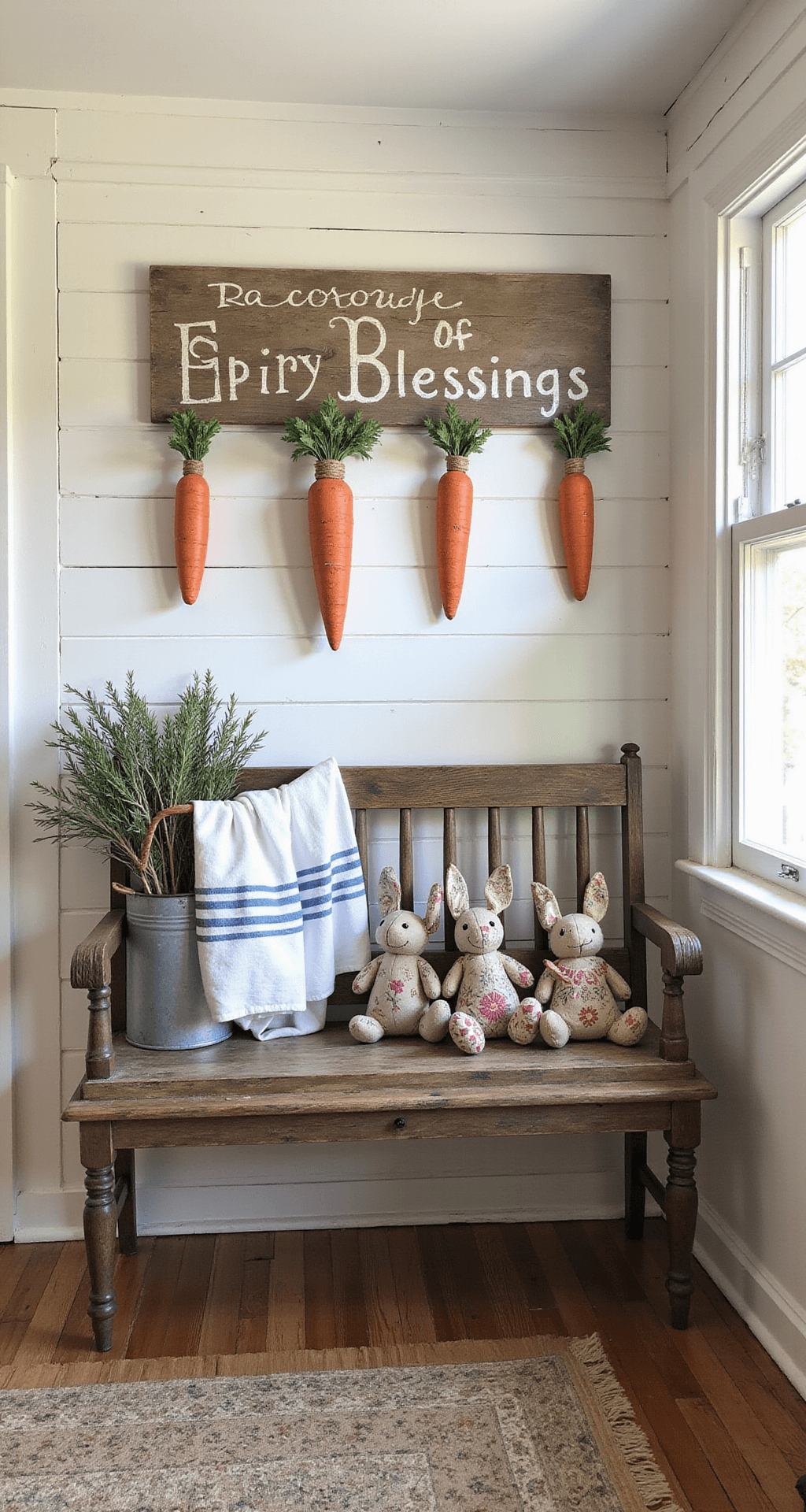
The arrangements look deliberately casual and unpretentious. That’s exactly the point.
DIY Projects You Can Actually Finish
I’m not a crafting genius. I don’t have a room dedicated to supplies. But I can do these projects, which means you absolutely can too.
Handmade Decorative Eggs (Easier Than You Think)
I hand-paint wooden eggs using muted colors. Soft blues, sage greens, pale yellows. Nothing bright or Easter Bunny-ish.
Here’s my process:
- Paint the eggs in one solid muted color
- Let them dry completely
- Lightly sand the edges and high points
- Maybe add a second color underneath for dimension
- Distress slightly with sandpaper
The distressing gives that primitive aesthetic immediately.
Don’t have wooden eggs? I’ve upcycled plastic eggs with decoupage.