This post may contain affiliate links. Please see my disclosure policy for details.
Why Your Minion Pumpkin Carving Might Look Like a Failed Science Experiment (And How to Fix That)
Contents
- Why Your Minion Pumpkin Carving Might Look Like a Failed Science Experiment (And How to Fix That)
- The Real Question Nobody Answers About Minion Pumpkins
- Five Minion Designs That Won’t Make You Want to Throw Your Pumpkin at the Wall
- The Tools That Actually Matter (And the Ones That Are Complete Rubbish)
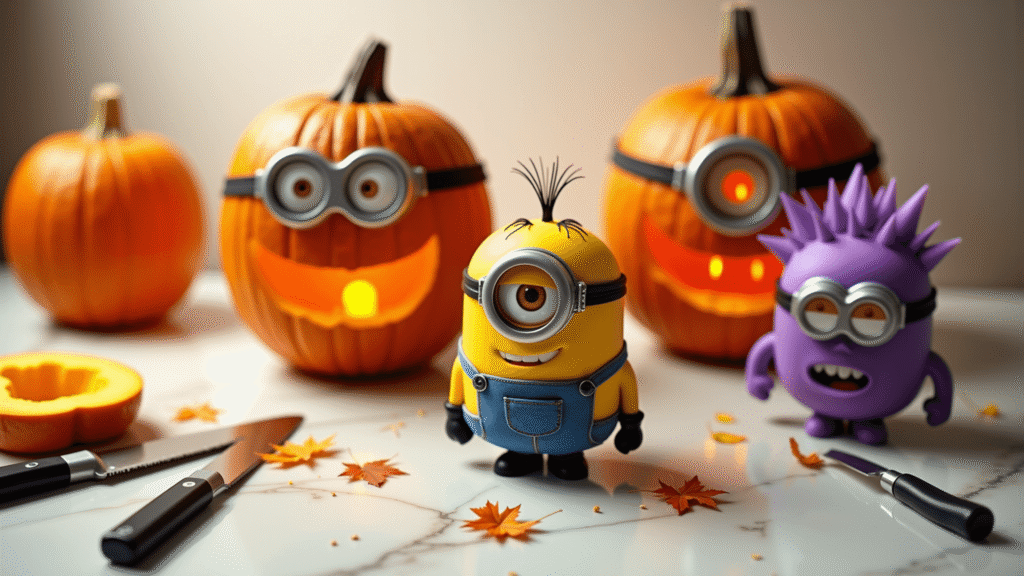
Minion pumpkin carving ideas have taken over Halloween faster than my kids can shout “banana!” at inappropriate moments.
I’m going to be brutally honest with you.
The first minion pumpkin I attempted looked like someone had a fever dream after watching Despicable Me on a broken TV screen.
One goggle sat higher than the other. The smile looked more serial killer than silly sidekick. And don’t even get me started on the hair situation.
But here’s what I learned after carving seventeen (yes, seventeen) of these yellow troublemakers over three Halloweens.
The Real Question Nobody Answers About Minion Pumpkins
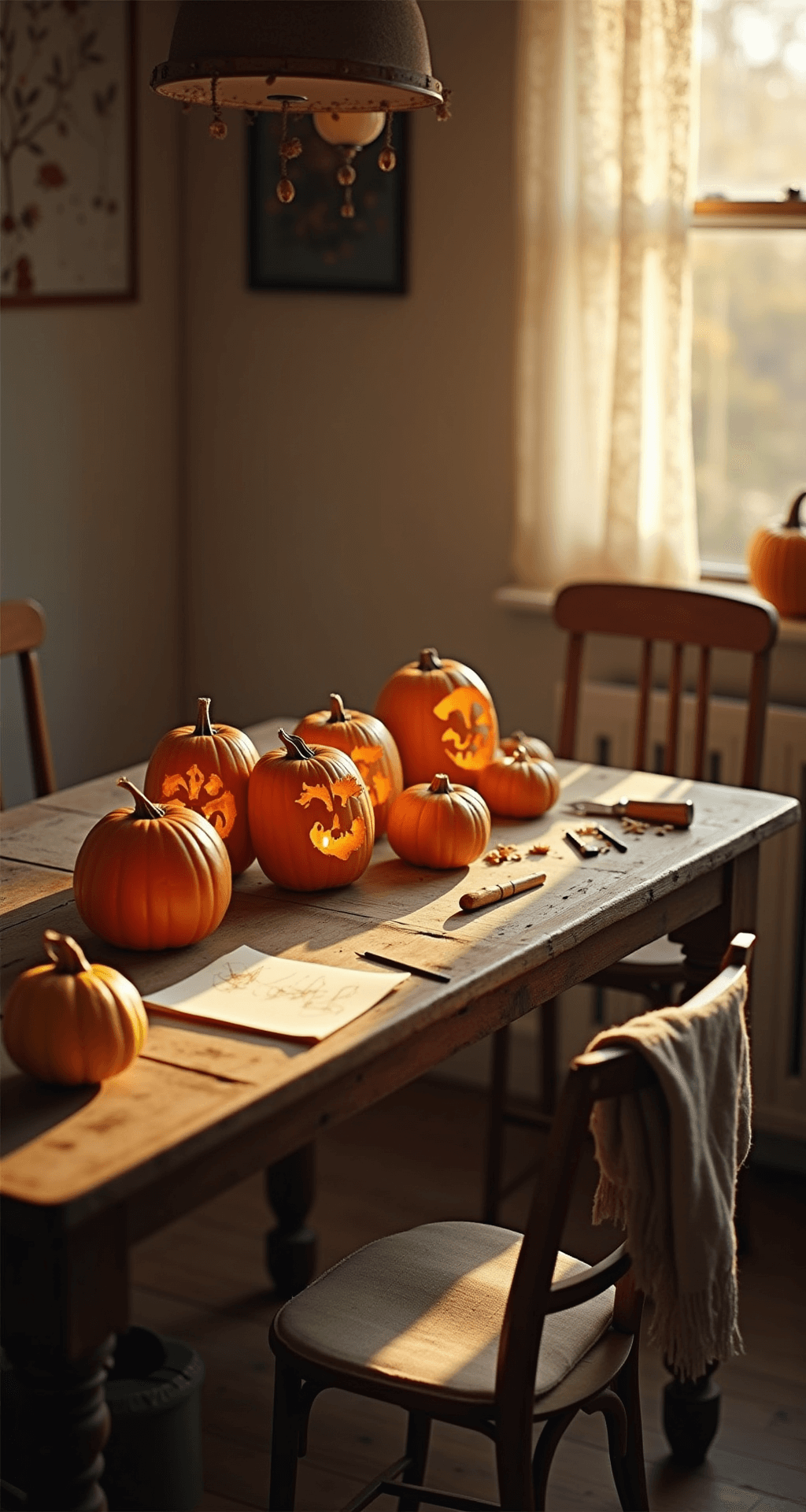
Does your pumpkin need to be perfectly round?
Absolutely not.
In fact, the slightly wonky, oval-shaped pumpkins work better because minions aren’t symmetrical creatures anyway.
I’ve spent way too many hours in pumpkin patches obsessing over the “perfect” pumpkin, only to discover that the weird-shaped one in the reject bin became my masterpiece.
Here’s what actually matters:
- Height over width (nobody wants a pancake minion)
- Smooth surface without deep grooves or battle scars
- Flat bottom so it doesn’t roll away mid-carve
- Sturdy stem for that authentic minion look
Five Minion Designs That Won’t Make You Want to Throw Your Pumpkin at the Wall
1. Classic One-Eye Bob (The Gateway Minion)
This is your training wheels design.
One massive goggle. Tiny mouth. Three hair sprigs.
I carved this on my kitchen counter at 11 PM the night before my daughter’s Halloween party, slightly panicked and heavily caffeinated.
It turned out adorable.
What you’ll need:
- Pumpkin carving kit with detail saws
- One medium-sized pumpkin
- Pencil (for the love of everything, sketch first)
- Patience you didn’t know you had
The technique:
Draw a giant circle covering about 60% of your pumpkin’s front face. Carve out everything except a smaller circle in the middle for the goggle strap. Add that goofy grin below. Stick three toothpicks with small pumpkin chunks on top for hair.
Done.
2. Two-Eye Dave (For the Overachievers)
Now you’re playing with fire.
Two goggles mean double the precision, double the stress, and somehow triple the “wow” factor from your neighbors.
I learned the hard way that the goggles need to be slightly different sizes to capture that authentic minion chaos energy.
Critical steps:
- Mark both goggle positions with tape before carving anything
- Leave a bridge of pumpkin between them (I forgot this once—never again)
- Make one goggle slightly higher for that “confused minion” look
- Add the goggle band wrapping around the sides
The band wrapping around is what sells it. Without that, you’ve just carved two circles and called it a day.
3. Evil Purple Minion (The Drama Queen Version)
Want to scare the neighborhood kids just a little bit?
This one requires purple spray paint and a willingness to embrace the dark side.
Paint your pumpkin purple first. Let it dry completely (I didn’t wait once and ended up with purple fingerprints on my white kitchen cabinets). Carve wild, spiky hair. Make the mouth wider and add fangs. Give those goggles an angry eyebrow.
My son carried his evil minion to school and three kids cried.
Success?
4. Stuart with His Ukulele (Next-Level Showing Off)
This is when you stop being a casual pumpkin carver and start becoming that person on the block.
You’ll carve the minion face on the main pumpkin. Then you’ll need a second smaller pumpkin carved as a ukulele. Position them together like Stuart’s mid-concert.
I used battery-operated LED lights inside both pumpkins because traditional candles are a fire hazard and I value my eyebrows.
Pro move:
Attach small yellow peppers or squash as arms using toothpicks. Suddenly your pumpkin has dimension. Suddenly you’re a Halloween genius.
5. Minion Family Group (When You’ve Lost All Sense of Proportion)
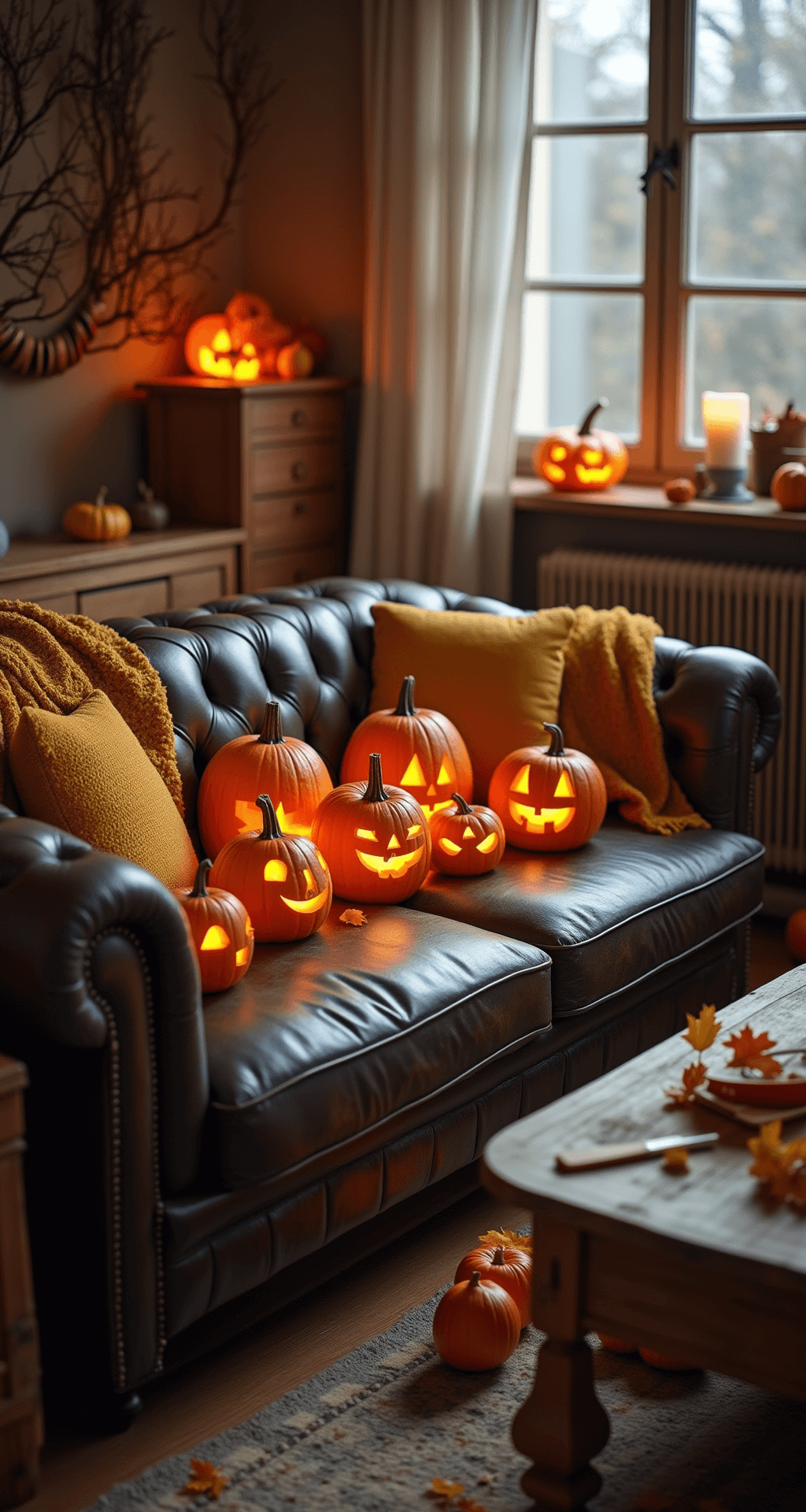
Three to five pumpkins of varying sizes. Each carved as a different minion character. Arranged like they’re plotting something suspicious.
This is my go-to now.
I spend an entire Saturday afternoon covered in pumpkin guts, questioning my life choices, but the final display makes every bit of hand cramping worth it.
Different heights create visual interest. Different expressions tell a story. Different levels of carving skill show your journey (the last one is always noticeably better than the first).
The Tools That Actually Matter (And the Ones That Are Complete Rubbish)
I’ve wasted money on fancy carving kits that promised precision and delivered disappointment.
Here’s what actually works:
Essential tools:
- Sharp serrated knife (your regular kitchen knife is fine)
- Large metal spoon or ice cream scoop for gutting
- Thin-tipped carving saw from any basic kit
- Pencil or washable marker
- Toothpicks (more versatile than you’d think)
Surprisingly useful:
- Apple corer for making perfect circles
- Melon baller for detailed scooping
- Potato peeler for removing just the pumpkin skin
- Clay sculpting tools if you’re getting fancy
Complete waste of money:
- Those electric carving tools (too aggressive)
- Stencil kits that never stick properly
- Specialty gouges that break immediately