
This post may contain affiliate links. Please see my disclosure policy for details.
Why Your Porch Ceiling Actually Matters
Contents
I used to think porch ceilings were just “there.”
Then I realized they’re literally the first thing you see when you sit down to enjoy your outdoor space. A sad, droopy ceiling kills the vibe faster than a broken rocking chair.
But dropping thousands of dollars on tongue and groove cedar? That’s not happening for most of us.
The Winner: Vinyl Soffit (Yes, Really)
Vinyl is the most inexpensive option and I know what you’re thinking.
“Vinyl? That’s what cheap apartment buildings use!”
Hold on.
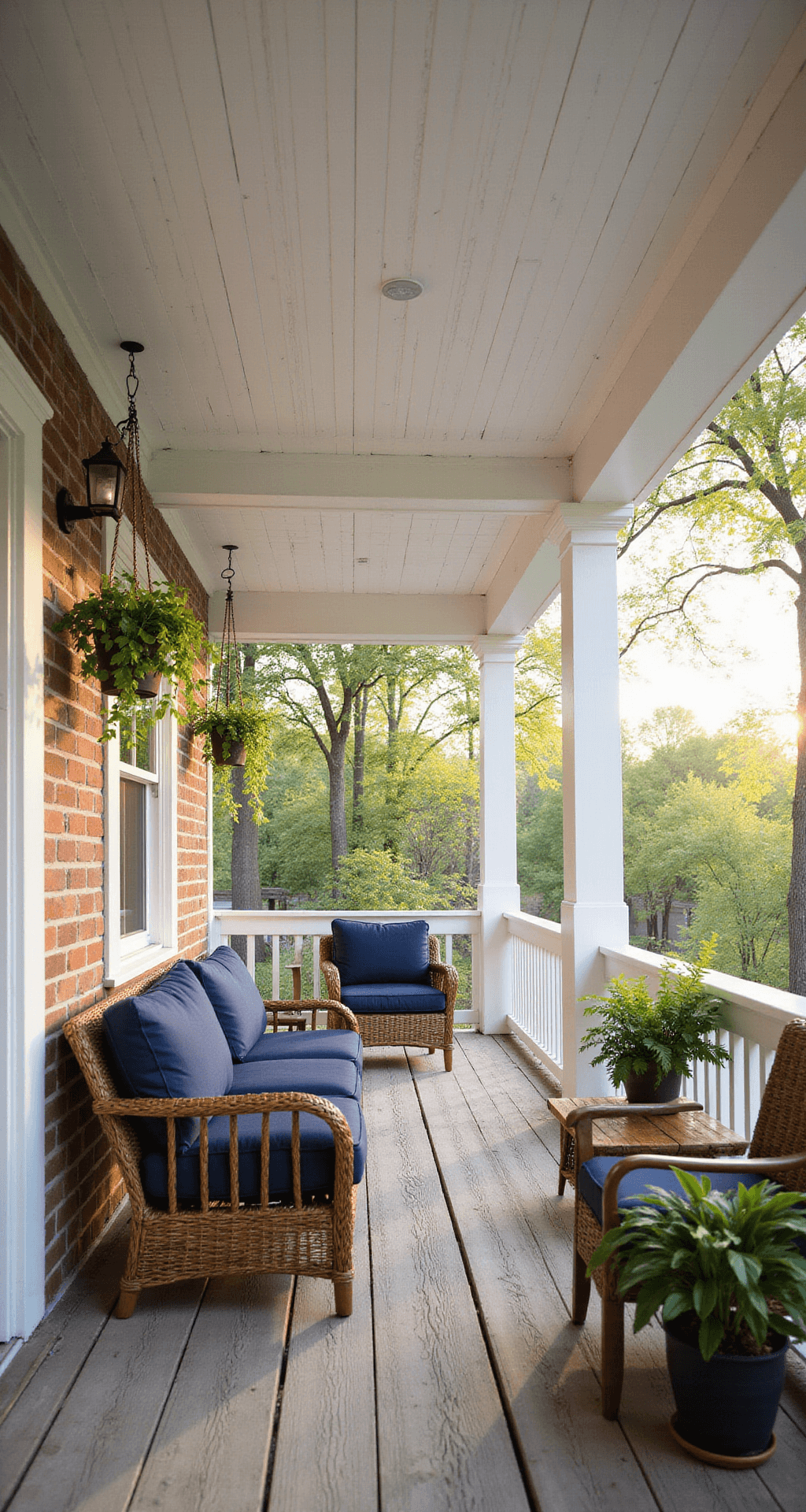
Vinyl soffit panels have come a long way, and here’s why they’ve earned my respect:
- Budget-friendly – We’re talking significantly less than wood options
- Zero rot worries – Moisture just laughs and rolls off
- Insects hate it – No termites munching away while you sleep
- Maintenance? What maintenance? – Hose it off once a year and you’re done
The Vinyl Reality Check
I’m not going to lie to you like some home improvement blog trying to sell you a dream.
Vinyl has problems:
- Temperature tantrums – It can sag in extreme heat or get brittle in freezing cold. I’ve seen it happen, especially on south-facing porches in Texas.
- The synthetic look – It’s plastic. It looks like plastic. Anyone who tells you otherwise is selling you something.
- Limited colors – You basically get white, off-white, cream, or “why did I choose this beige?”
But if your budget is tight and you want something that’ll last 20 years without lifting a finger? Vinyl wins.
The Absolute Cheapest: Open Rafters
Want to spend almost nothing?
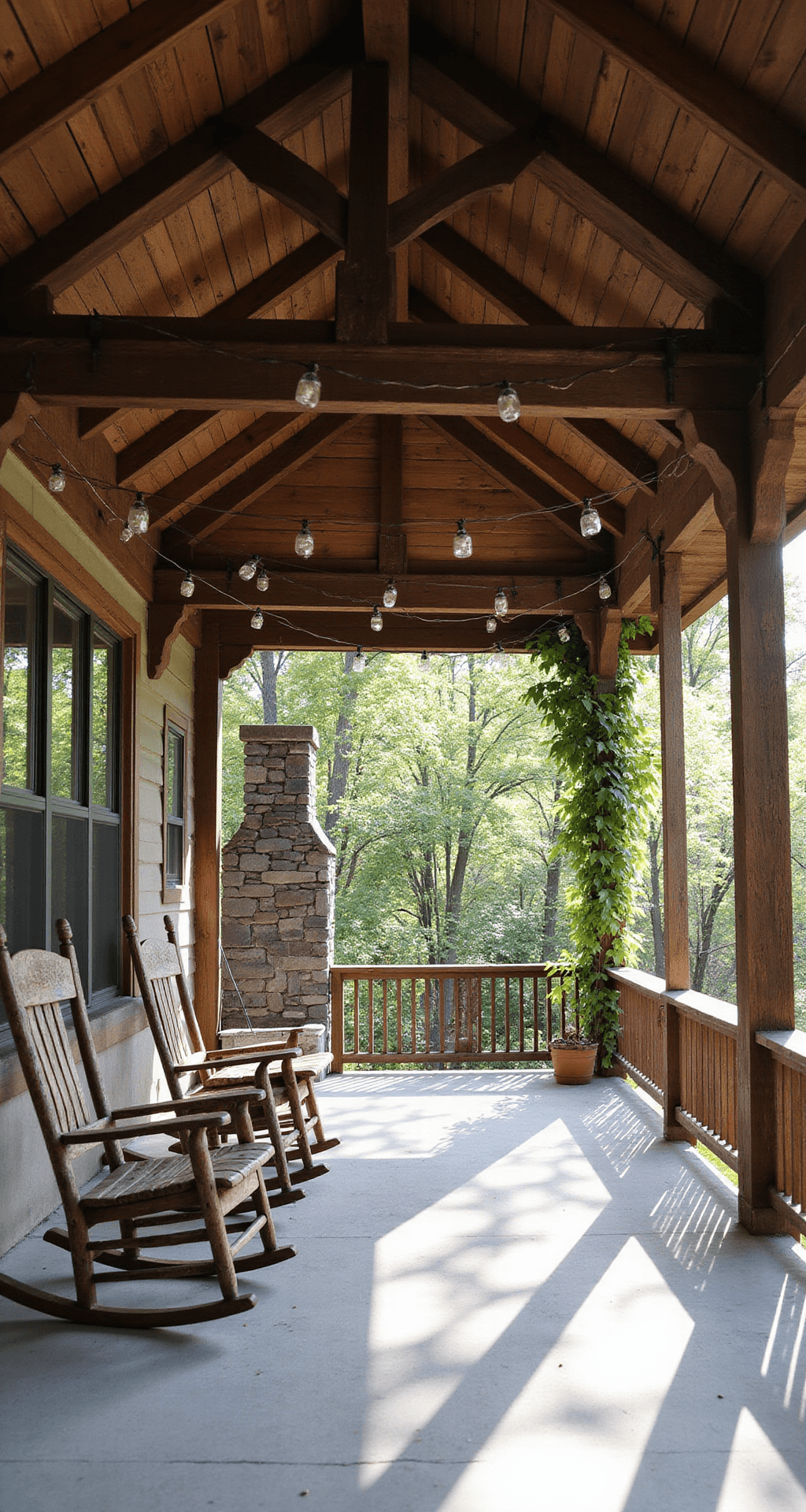
Leave those rafters exposed.
I actually love this look when it’s done intentionally. My neighbor did this with his wraparound porch, stained the beams a gorgeous dark walnut, and it looks like a million bucks.
Cost? About $200 in stain and wood sealer.
The catch:
- You’ll need to reseal every 2-3 years
- Dirt and cobwebs become your new hobby to remove
- Birds think exposed rafters are perfect nesting spots (ask me how I know)
This works beautifully if you’re going for a rustic, cabin-style aesthetic. It fails miserably if you live in a cookie-cutter suburban neighborhood with HOA rules.
The Classic Budget Option: Beaded Plywood
This is what I used on my first porch ceiling, and I’m still happy with it seven years later.
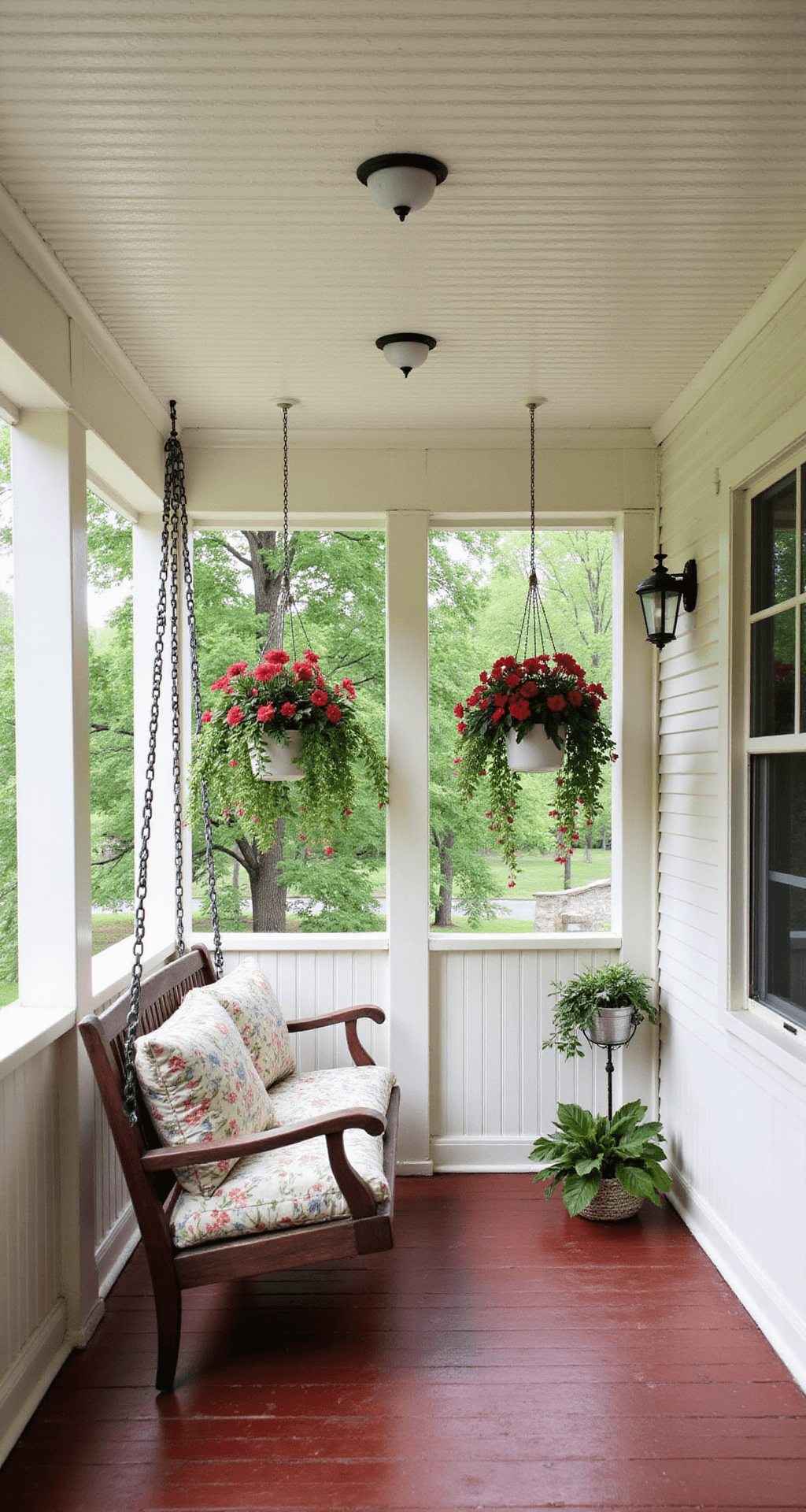
Beadboard plywood panels give you that cottage charm without the cottage price tag.
Here’s my exact process:
- Buy the beaded plywood sheets – Way cheaper than individual boards
- Seal everything with mildew-resistant preservative – I used Woodlife, but any quality exterior wood preservative works
- Two coats of exterior acrylic paint – Make sure it has mildew protection built in
- Paint the beads a contrasting color – This step is optional but adds serious visual interest
Total cost for my 12×20 porch? Around $450 including materials and the paint I stress-bought but didn’t need.
Why this works:
It looks expensive. Seriously, people think I spent thousands. The beaded detail adds texture and shadow that tricks the eye into seeing “custom carpentry” instead of “plywood from Home Depot.”
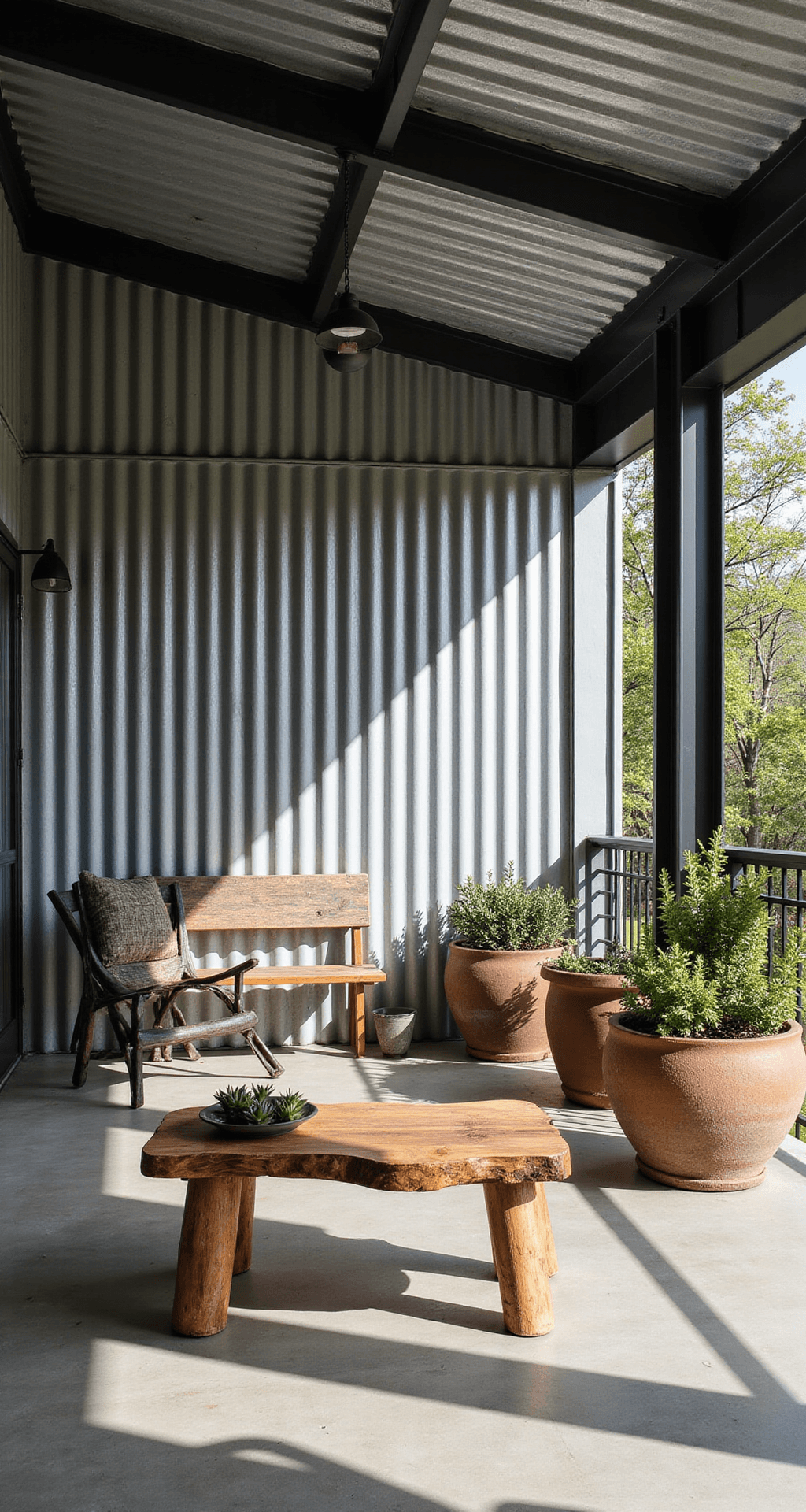
The Farmhouse Favorite: Steel Soffit
This surprised me when I first saw it.
Steel soffit or steel building siding sounds industrial and cold, right?
Wrong.
I visited a farmhouse in Kentucky where the owner used corrugated steel panels on his porch ceiling, and it looked incredible. Very modern farmhouse, very intentional.
The steel advantage:
- Cheap – Especially agricultural-grade steel from farm supply stores
- Bulletproof durability – This stuff outlasts everything
- Unique aesthetic – When you trim it properly with wood accents, it’s stunning
You can find corrugated metal roofing panels that work perfectly for this application.
Word of warning:
Steel can amplify rain noise. If that sounds soothing to you, perfect. If it sounds annoying, maybe keep shopping.
Also, rust is real. Go with galvanized or coated steel, not bare metal.
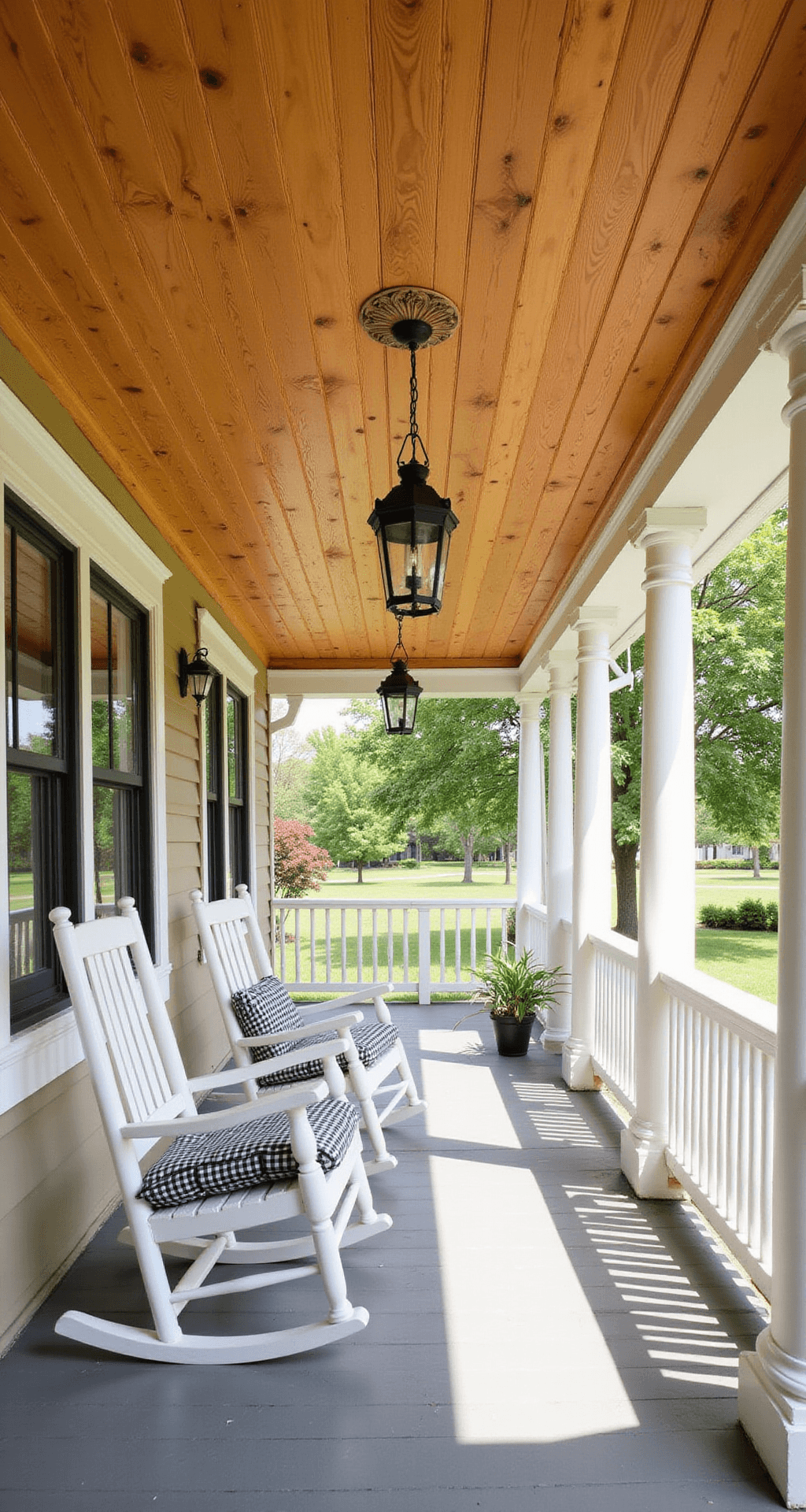
The Warm And Traditional: Tongue and Groove
Full transparency: pine tongue and groove is my favorite if you can stretch the budget just a bit.
A homeowner I know sourced pine boards for around $1,200 for a decent-sized porch.
That’s not pocket change, but it’s also not the $2,400 that cedar would’ve cost.
Why tongue and groove makes my heart happy:
- Real wood warmth – There’s just no substitute
- Stain flexibility – Make it light, dark, or anywhere in between
- Timeless appeal – This look never goes out of style
- <