This post may contain affiliate links. Please see my disclosure policy for details.
Why Your Christmas Village Looks… Meh (And How to Fix It)
Contents
- Why Your Christmas Village Looks… Meh (And How to Fix It)
- Let Me Tell You About My First Village Disaster
- The Container Trick That Changes Everything
- Stop Making Your Village Look Like a Police Lineup
- The Height Variation Secret Nobody Talks About
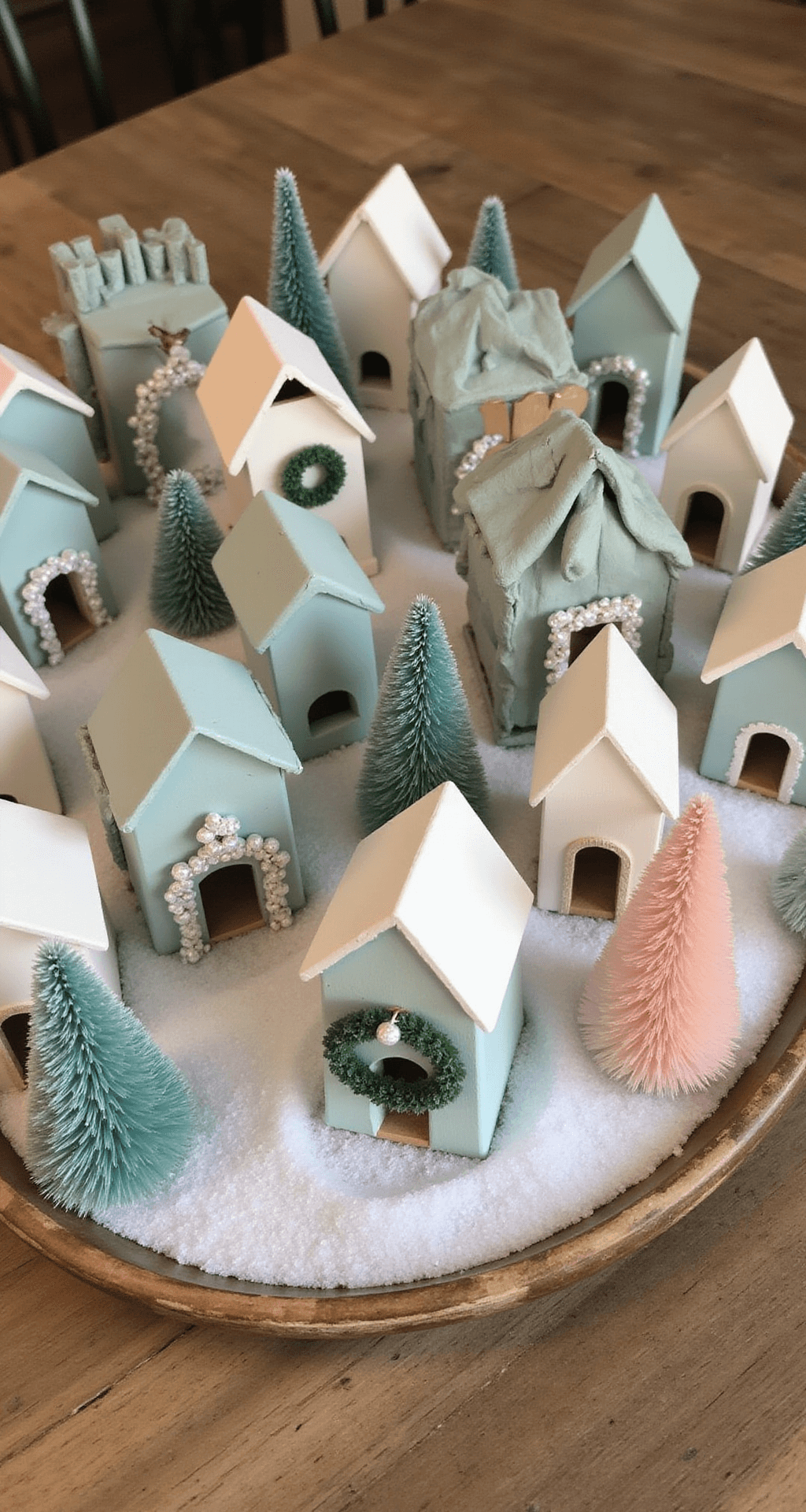
- Let’s Talk About Trees (Because You’re Doing It Wrong)
- The Budget-Friendly Route (Because Not Everyone Has $500 for Ceramic Houses)
You know that disappointing feeling when you finally arrange all those little houses and trees, step back, and think “this looks like a garage sale threw up on my table”? Yeah, I’ve been there. The problem isn’t your houses or your decorating skills. It’s that nobody teaches you the actual rules of village displays.
Most people just plop everything down in a straight line and call it done. That’s like putting every ingredient for a cake on a plate and expecting it to taste good.
Let Me Tell You About My First Village Disaster
Three years ago, I bought twelve adorable ceramic houses at an after-Christmas sale. I was so proud of myself. Got them for 70% off.
Come next December, I arranged them on my dining room buffet in what I thought was a “charming” display. My sister walked in, looked at it for three seconds, and said “did you just line them up by height?”
She wasn’t wrong. It looked like a real estate lineup, not a village. That’s when I learned the golden rule: your village needs to tell a story, not recite a spreadsheet.
The Container Trick That Changes Everything
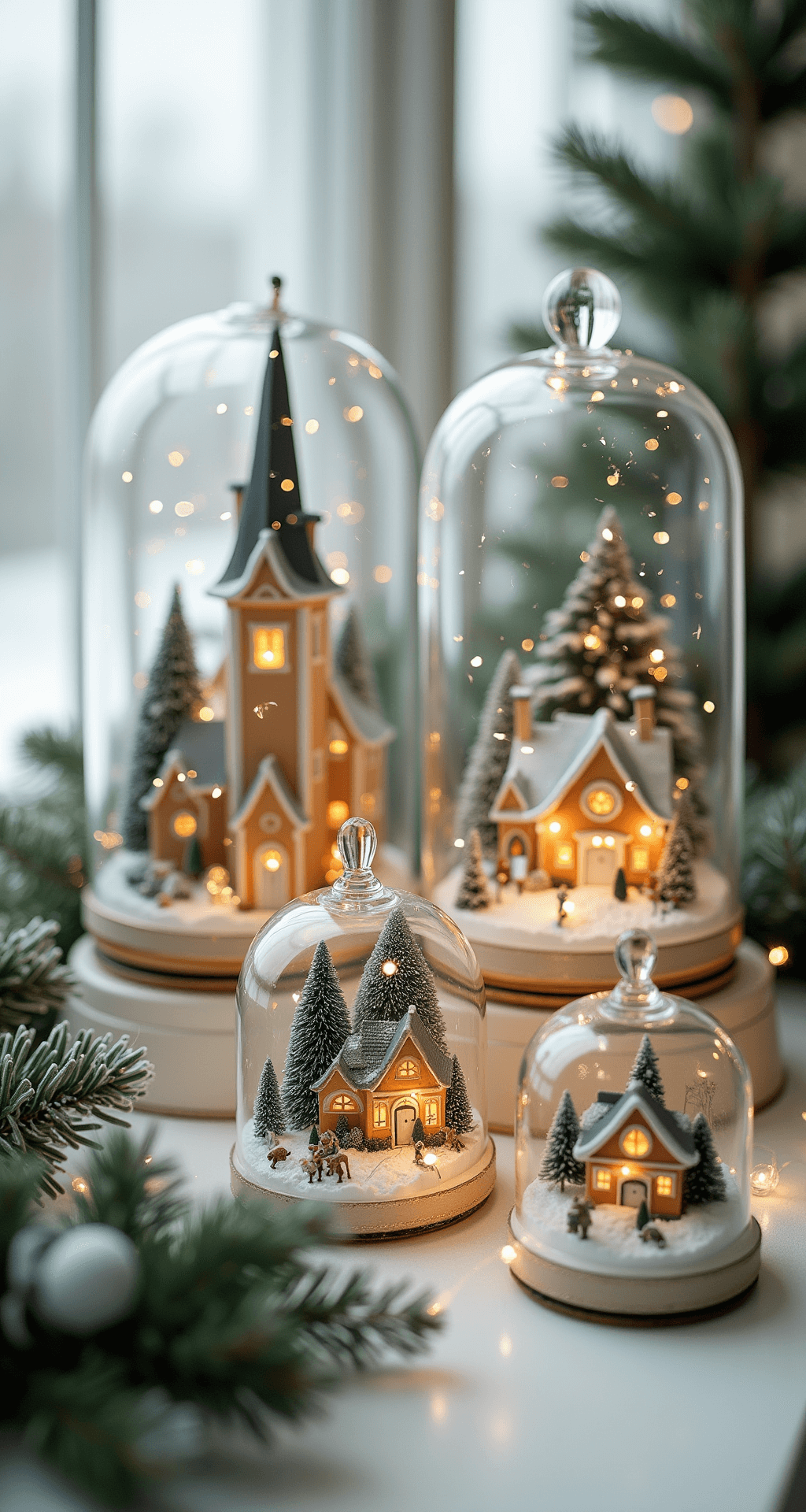
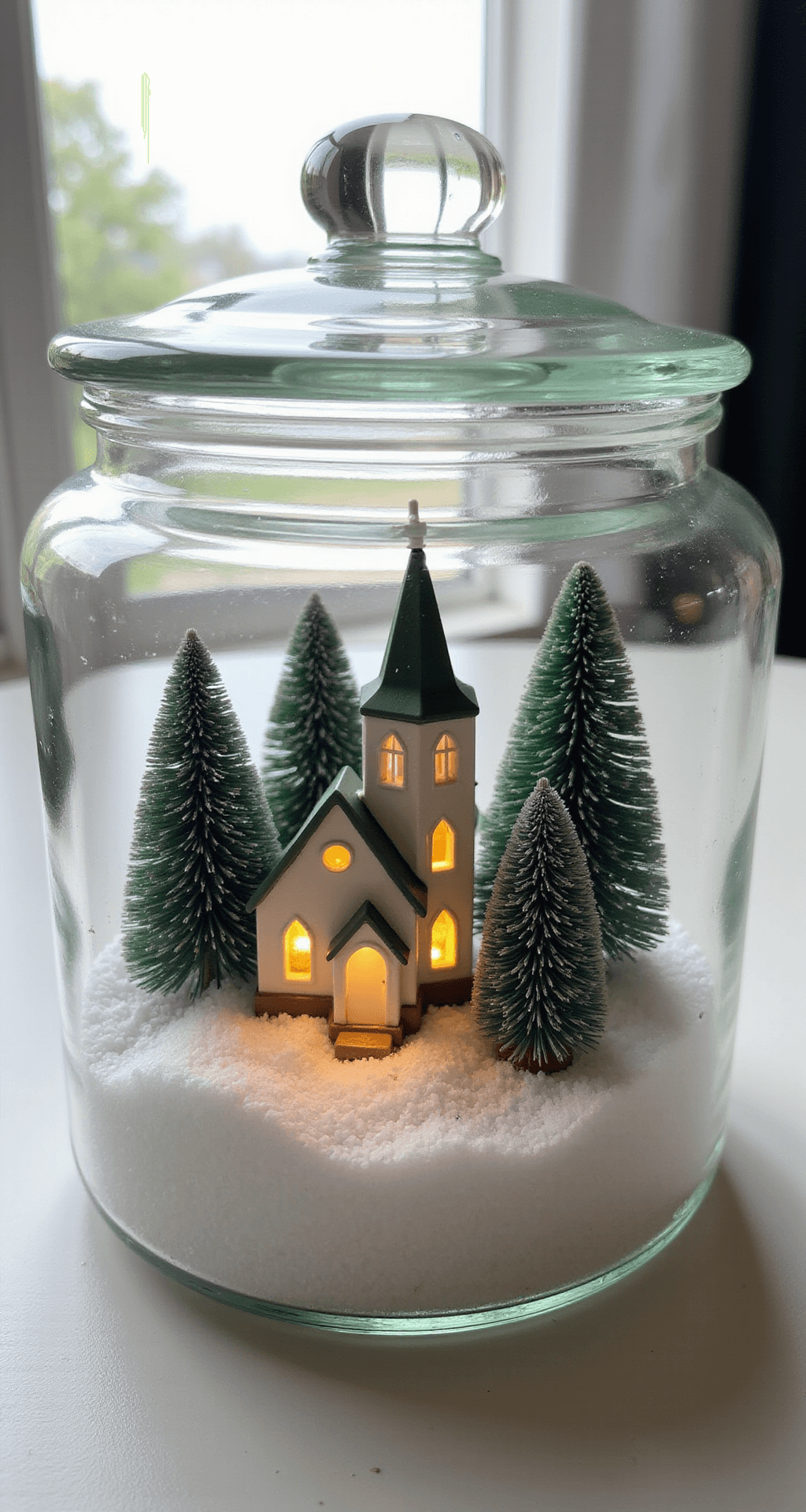
Here’s what transformed my entire approach: put your villages inside things. I’m talking about glass apothecary jars. These bad boys create instant magic.
Here’s how I use them:
- Fill the bottom with Epsom salt (looks like fresh snow, costs almost nothing)
- Place a small house or church in the center
- Add a few miniature bottle brush trees around it
- Pop the lid on top
Done. You’ve just created a snow globe effect without the water, the glitter mess, or the inevitable leak.
Other container options that work:
- Wooden trays (creates boundaries and makes it portable)
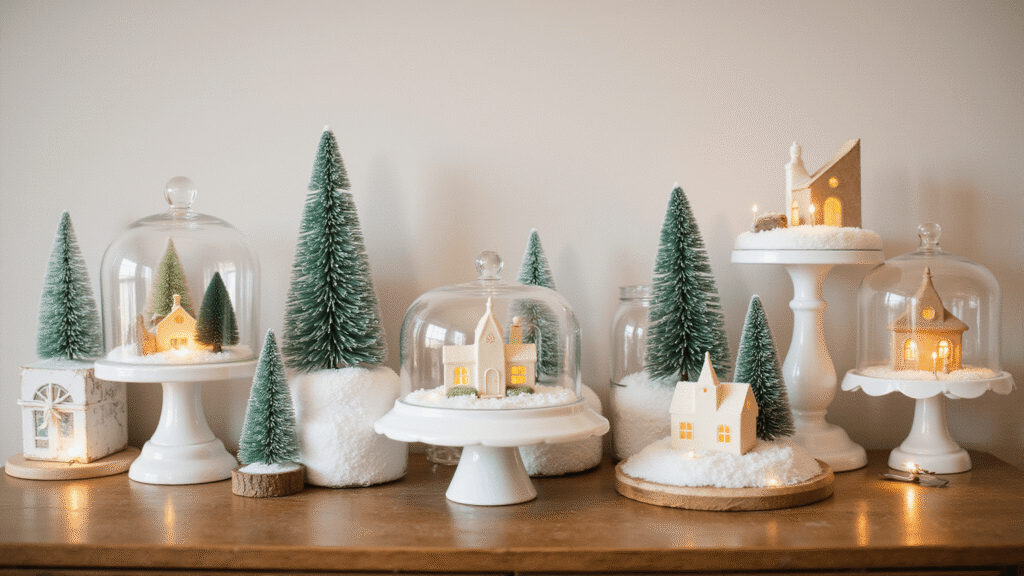
- Glass cloches (fancy word for glass domes)
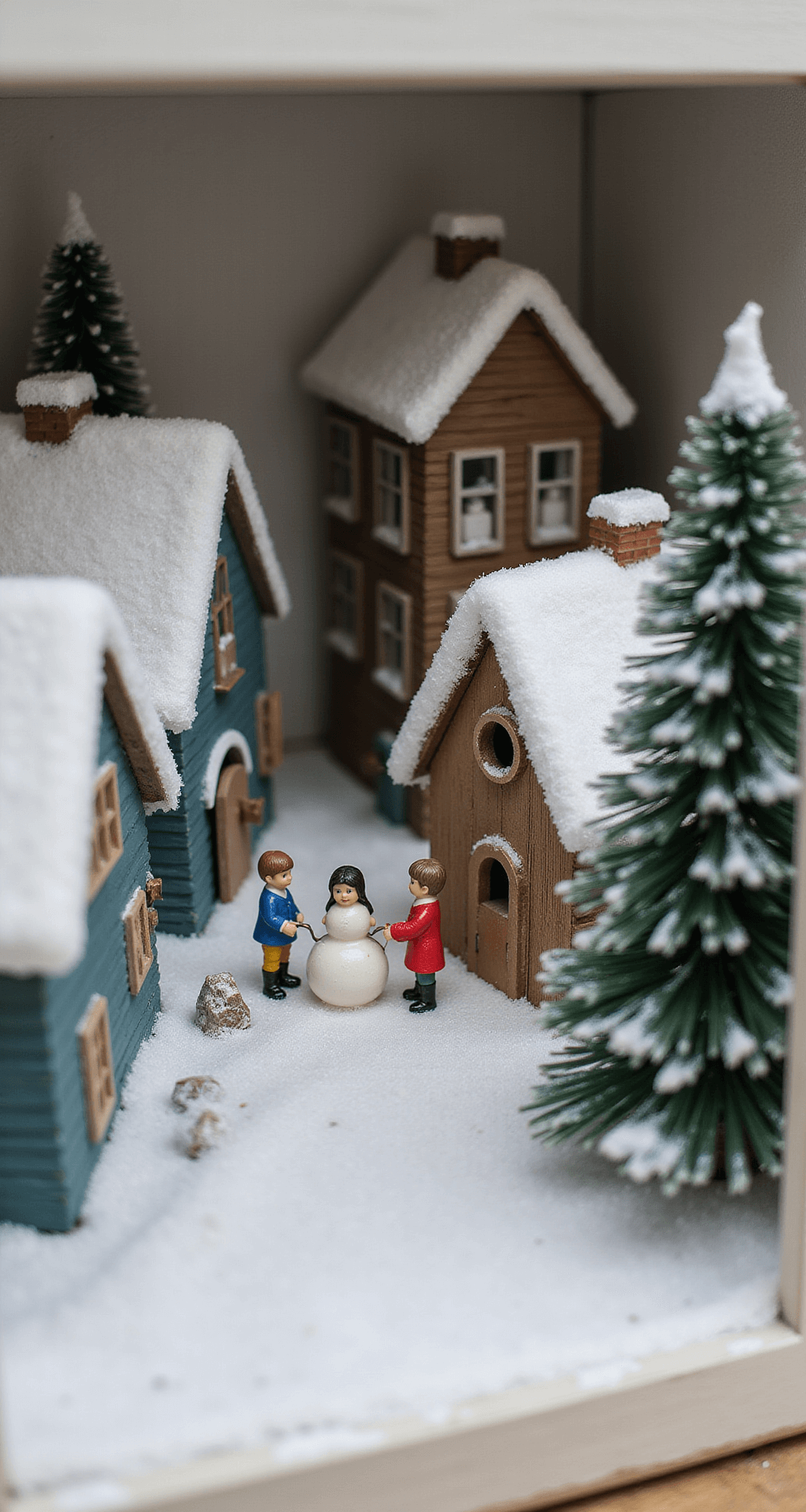
- Shadow boxes (especially good for wall displays)
- Cake stands (adds height without looking like you tried too hard)
The container does half your decorating work by creating natural boundaries and focus.
Stop Making Your Village Look Like a Police Lineup
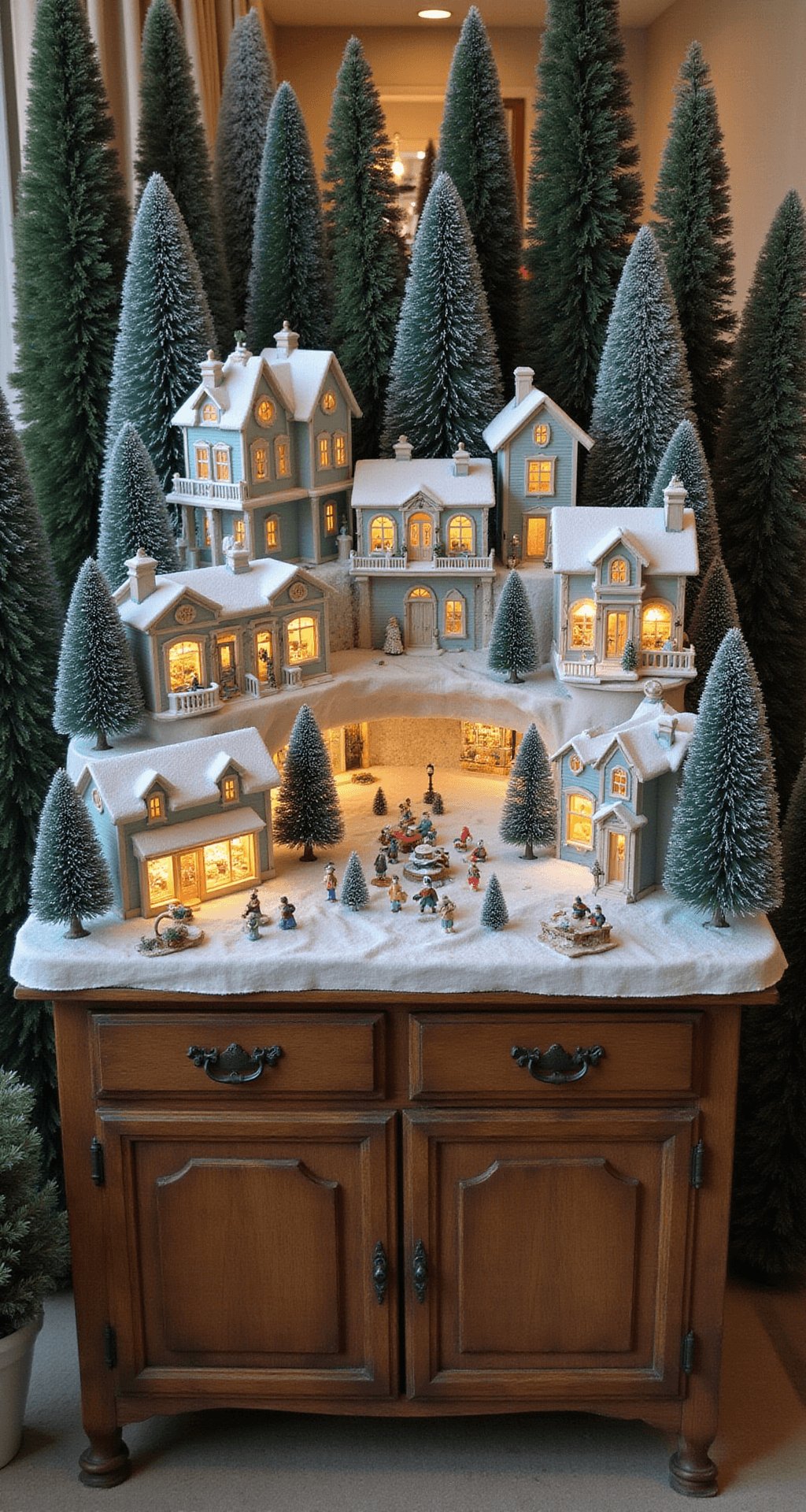
Remember my sister’s burn about my height-organized disaster? Here’s what actually works: create neighborhoods with purpose.
Think about real towns. They don’t have all the tall buildings in one spot and all the short ones in another. They have districts, areas, sections.
My village layout strategy:
Main Street Section:
- Shops clustered together
- Church or town hall as the focal point
- Street lamps scattered around
- A few evergreen trees, not a forest
Residential Area:
- Smaller houses grouped in twos and threes
- More trees and greenery
- Maybe a snowman or two
- Pathways connecting homes
Country Outskirts:
- Barn or farm buildings
- Lots of trees creating a forest edge
- Snow-covered fields (hello, white fabric or batting)
This organization makes people actually look at your village instead of just glancing and moving on.
The Height Variation Secret Nobody Talks About
Flat displays are boring displays. That’s just science. You need levels, and I don’t mean putting all your tall pieces in the back like a school photo.
Use these to create height variation:
- Cupcake stands (the tiered kind, genius for villages)
- Overturned bowls hidden under fabric
- Small boxes wrapped in white paper
- Books stacked strategically
- Marble or wood platforms
I arrange mine so your eye travels through the village in a Z-pattern. High point on the left. Mid-level in the center. Another high point on the right. This creates visual interest and makes people spend more time looking at your setup. Which means more compliments for you.
Let’s Talk About Trees (Because You’re Doing It Wrong)
Most people buy a pack of identical trees and space them out evenly like soldiers. Stop that.
Here’s my tree strategy:
Vary everything:
- Different heights (short ones in front, tall ones in back, but mix it up)
- Different colors (not every pine tree is the same green, even in plastic form)
- Different styles (flocked, frosted, plain green, snow-tipped)
Cluster them like forests:
- Three trees together here
- Two trees there
- A solo tree over there
- NOT one tree, space, one tree, space, repeat
Real forests don’t grow in neat rows unless someone planted them. Your village should look natural, not like a tree farm.
Tuck bottle brush trees between houses to fill awkward gaps. Think of them as the punctuation marks of your display.