This post may contain affiliate links. Please see my disclosure policy for details.
How to Create a Show-Stopping Grinch Christmas Tree That’ll Make Your Heart Grow Three Sizes
Contents
- How to Create a Show-Stopping Grinch Christmas Tree That’ll Make Your Heart Grow Three Sizes
- Why Lime Green Doesn’t Have to Look Like a Craft Store Explosion
- Start With Your Ribbon or Die Trying
- The Ornament Strategy Nobody Talks About
- Texture Is Your Best Friend (And You’re Probably Ignoring It)
- The Tree Topper That Makes or Breaks Everything
- Lights: The Technical Detail That Ruins Everything If You Get It Wrong
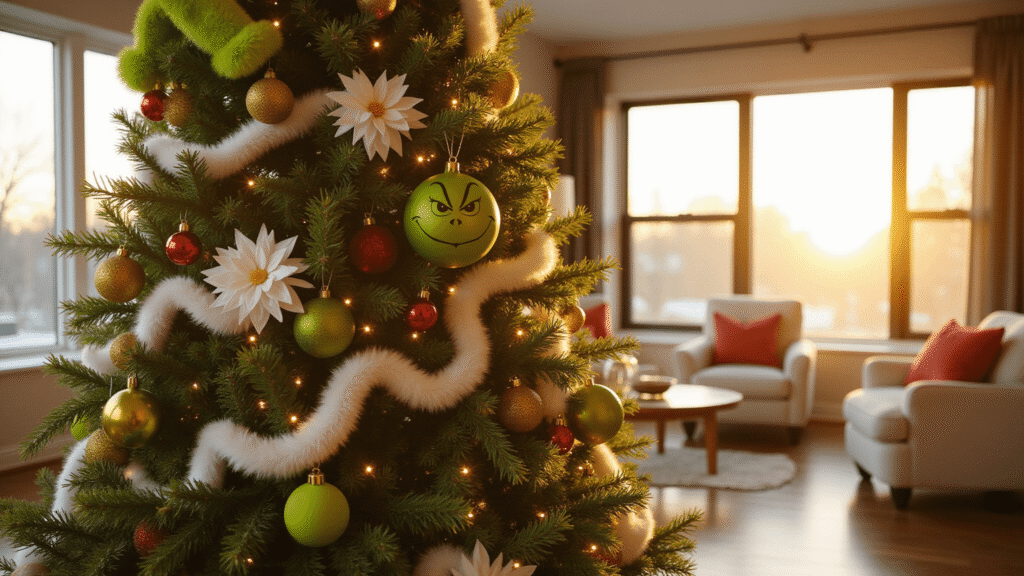
Grinch Christmas tree ideas transform your holiday decor from predictable to absolutely unforgettable, and I’m about to show you exactly how to pull off this whimsical masterpiece without losing your mind in the process.
Look, I get it.
You’ve scrolled through Pinterest until your eyes glazed over, wondering if you can actually recreate those magazine-worthy Grinch trees without spending your entire paycheck or needing a degree in interior design.
You’re worried about it looking too childish, too chaotic, or worse—like you just threw green stuff at a tree and called it a day.
I’ve been there, staring at my plain tree, clutching a handful of green ornaments and wondering where the heck to even start.
Why Lime Green Doesn’t Have to Look Like a Craft Store Explosion
Here’s the truth nobody tells you: a Grinch-themed tree can be absolutely stunning when you understand the color theory behind it.
The magic happens when you stick to three core colors:
- Lime green (obviously, but the right shade matters)
- Cherry red (not orange-red, not burgundy—proper cherry red)
- Crisp white (this is your secret weapon for making everything pop)

I learned this the hard way during my first attempt when I threw every shade of green I could find onto my tree.
It looked like the Grinch had indeed stolen Christmas—stolen it and vomited it back onto my poor tree.
The game-changer? Limiting yourself to one specific shade of green and using white as your contrast color makes everything look intentional instead of chaotic.
Start With Your Ribbon or Die Trying
Controversial opinion incoming: if you don’t get your ribbon right, nothing else matters.
I’m serious.
The ribbon creates the foundation that holds your entire design together, and here’s exactly how to do it without wanting to throw your tree out the window:
The Professional Ribbon Technique:
- Start from the top and work downward in a spiral motion
- Pinch the ribbon every 8-10 inches to create natural-looking swoops
- Twist it so the pretty side always faces outward (sounds obvious, but you’d be surprised)
- Use decorative Christmas ribbon in both striped and solid patterns
- Let it cascade loosely—tight, structured ribbon looks stuffy, not whimsical
My first tree took me three ribbon attempts because I kept trying to make perfect loops like some kind of gift-wrapping robot.
The moment I relaxed and let the ribbon flow naturally? Magic happened.
The Ornament Strategy Nobody Talks About
Here’s where most people completely sabotage themselves: they hang ornaments randomly and wonder why their tree looks messy.
The zigzag method changed everything for me.
Work with one type of ornament at a time, placing them in a zigzag pattern from top to bottom.
This distributes color and visual weight evenly without you having to be a mathematical genius about it.
Essential Grinch Ornaments to Hunt Down:
- Grinch face ornaments (3-5 depending on tree size)
- Max the dog decorations (because he’s the real hero)
- Whoville-inspired pieces with swirls and stripes
- Oversized ornament balls in lime green
- Character ornaments featuring Cindy Lou Who
I snagged a set of Grinch Christmas ornaments that included all the main characters, and honestly, having them pre-coordinated saved my sanity.
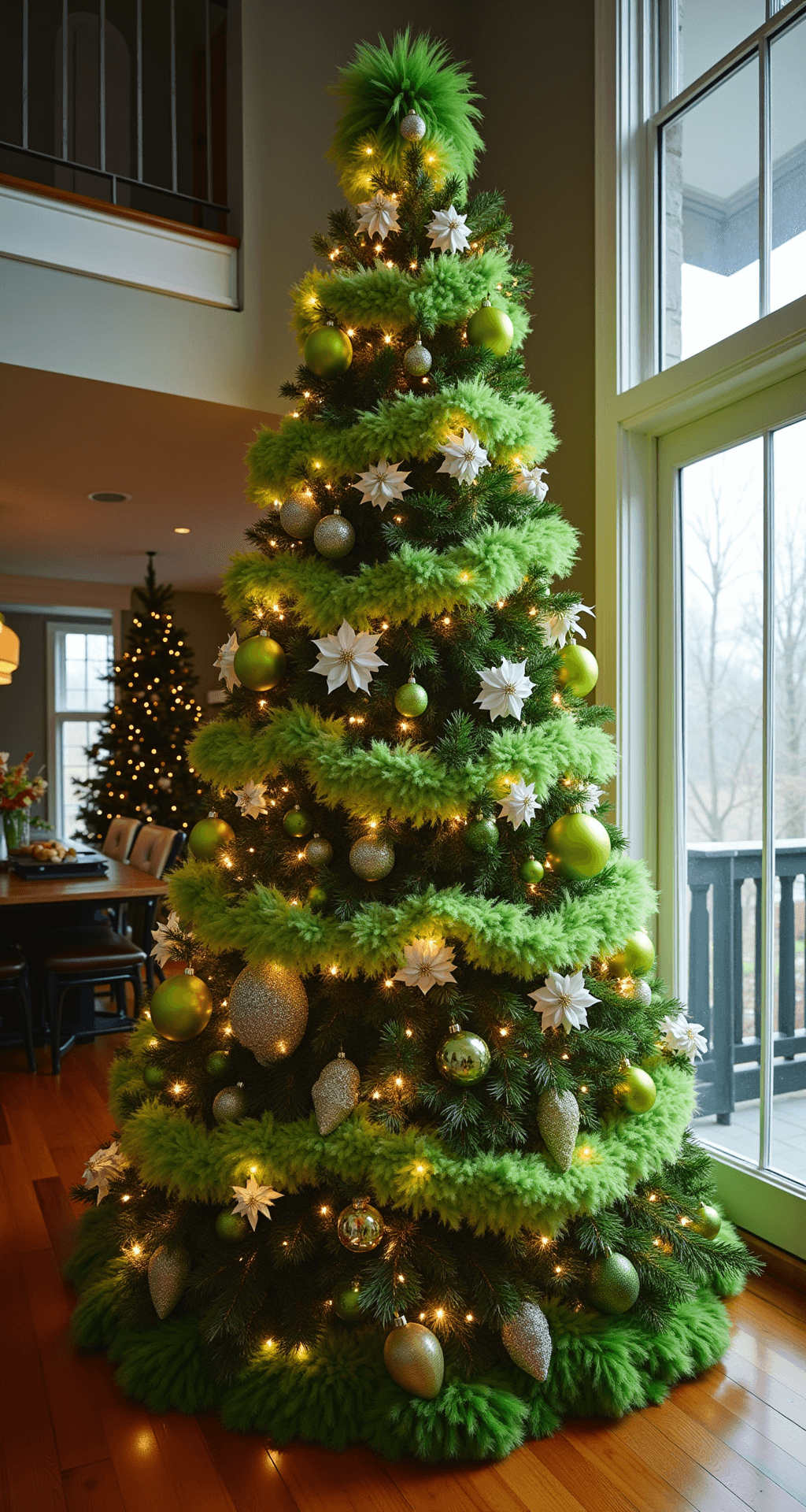
Texture Is Your Best Friend (And You’re Probably Ignoring It)
This is the difference between a tree that looks expensive and one that looks like a theme party gone wrong.
You need texture variation:
- Furry Grinch elements that mimic his fuzzy green exterior
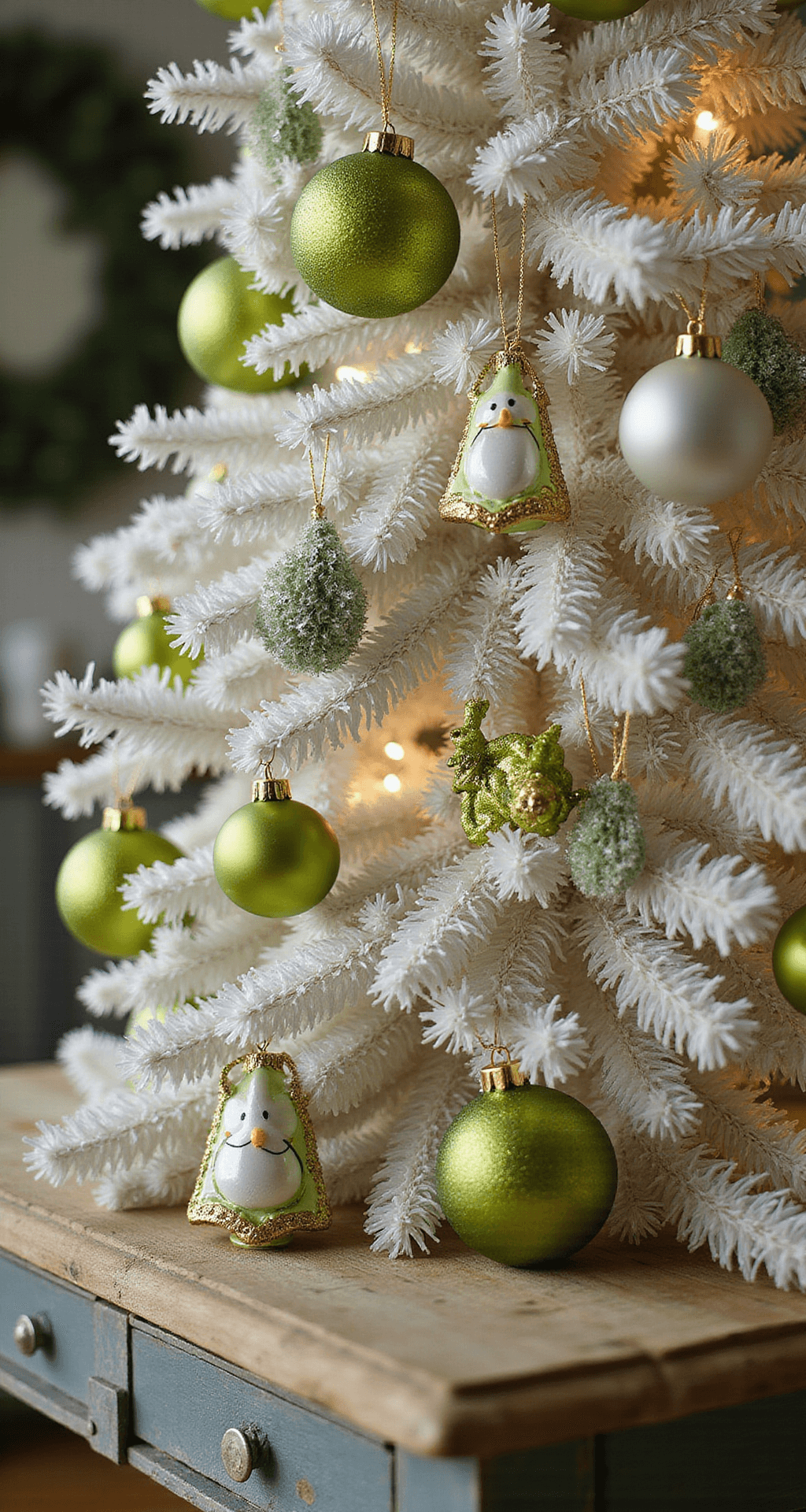
- Smooth glass ball ornaments for contrast
- Matte-finish decorations to break up shininess
- Glittery accents (sparingly—we’re going for whimsical, not disco ball)
The fur elements are non-negotiable if you want authenticity.
I added Christmas tree fur picks tucked throughout the branches, and the tactile dimension it created made people actually reach out and touch my tree.
That’s when you know you’ve won.
The Tree Topper That Makes or Breaks Everything
Your tree topper is the punctuation mark on your entire design statement.
Go wimpy here, and your whole tree deflates visually.
Winning Topper Options:
- Oversized Grinch hat in fuzzy fabric
- Large bow in coordinating ribbons with long streamers
- Grinch character figure posed mischievously
- “Stink, Stank, Stunk” sign with greenery
I went with a giant furry Santa hat in Grinch green, and I positioned it at a slightly crooked angle because perfect symmetry feels wrong for this theme.
The Grinch wouldn’t do perfect, so neither should you.
Lights: The Technical Detail That Ruins Everything If You Get It Wrong
White lights. Period. End of discussion.
I know colored lights seem thematic, but they’ll muddy your carefully chosen color palette faster than you can say “You’re a mean one.”
Lighting Strategy:
- Warm white LEDs work best (not cool white—too harsh)
- Wrap lights deep into branches first
- Add a second strand around the outside for depth
- Plan for 100 lights per vertical foot of tree
The lights go on FIRST, before anything else touches that tree.
I tried adding them after once, and I spent an hour untangling them from ribbon while questioning every life choice that led me to that moment.