
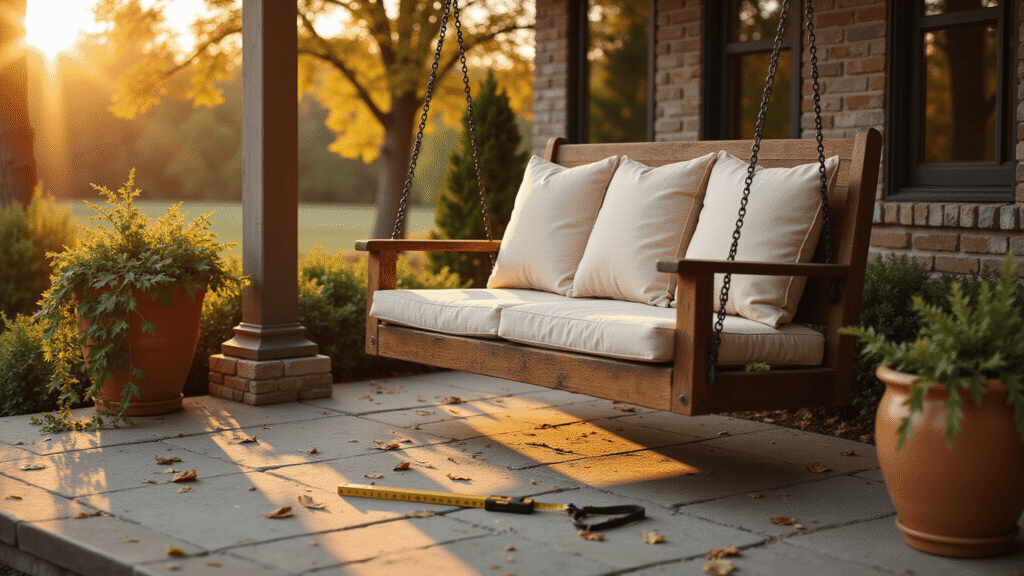
This post may contain affiliate links. Please see my disclosure policy for details.
Free Standing Porch Swing: Everything You Need to Know Before You Buy One
Contents
- Free Standing Porch Swing: Everything You Need to Know Before You Buy One
- What Exactly Is a Free Standing Porch Swing?
- Why These Swings Work Anywhere You Want
- The Fancy Features You Didn’t Know You Needed
- Size Matters: Picking the Right Capacity
- Why I Actually Love Mine (And You Might Too)
- The Stuff Nobody Tells You (But I Will)
- What to Check Before You Buy
Free standing porch swings solve one of the biggest frustrations I hear from people who dream of having a swing—what do you do when you don’t have a sturdy porch beam?
I get it. You want that peaceful rocking motion, that perfect spot to sip your morning coffee, but your home just doesn’t have the right setup.
Here’s the thing: a free standing porch swing doesn’t need a ceiling, rafters, or any overhead structure. It stands on its own. Completely independent.
Think of it as the rebellion against traditional swings—it goes wherever you want it.
What Exactly Is a Free Standing Porch Swing?
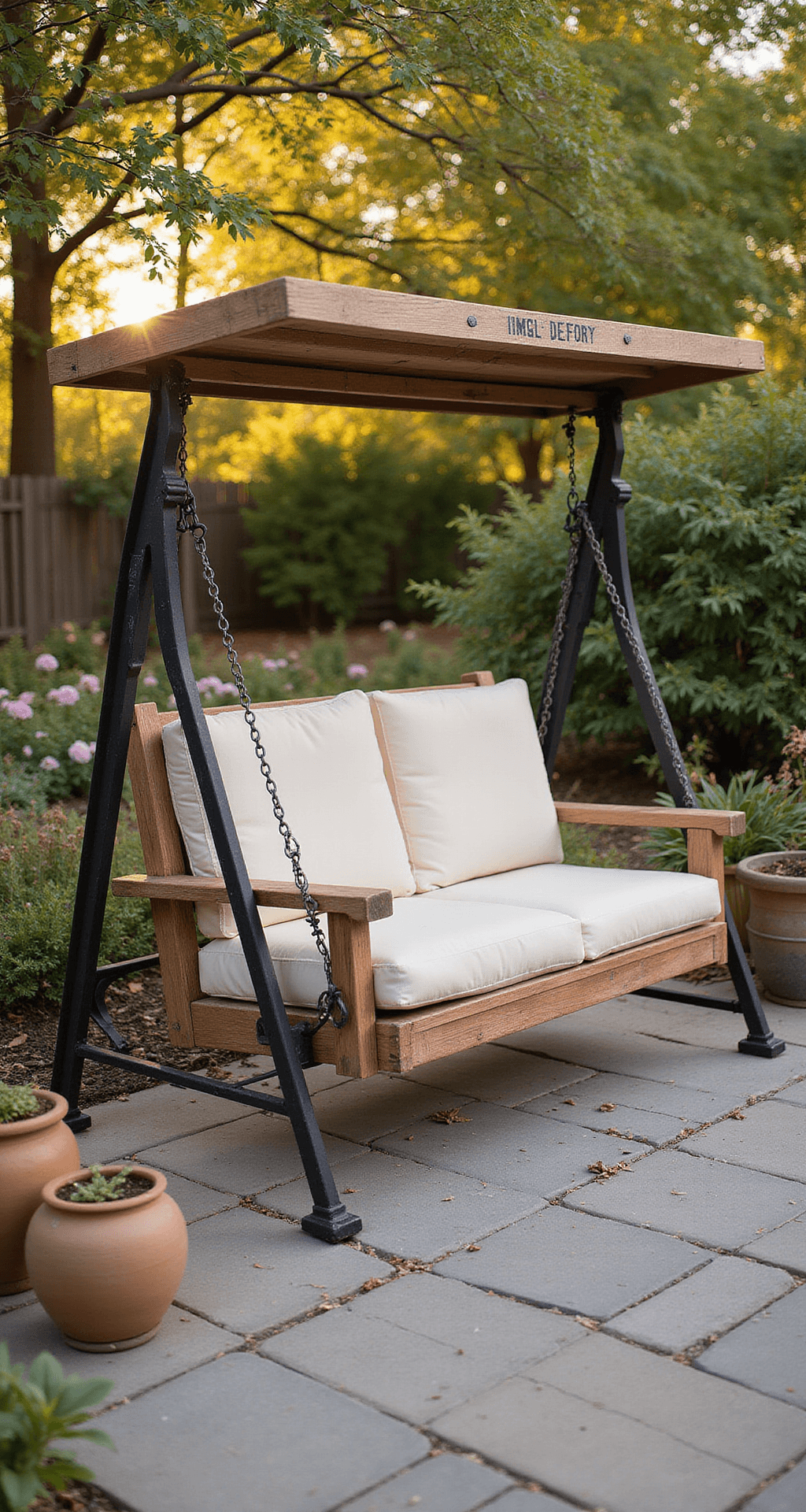
A free standing porch swing is exactly what it sounds like. It’s an outdoor swing that comes with its own built-in stand.
No drilling into beams. No searching for studs. No crossing your fingers hoping your porch ceiling can handle the weight.
The stand does all the heavy lifting—literally. You just need a flat surface, and you’re good to go.
I installed my first one three years ago in my backyard, and honestly, it changed how I use my outdoor space. Now I actually want to be outside.
Why These Swings Work Anywhere You Want
The beauty of these swings is their flexibility.
Here’s where you can put them:
- Your backyard, right in the middle of the grass
- A patio overlooking your garden
- By the pool where you can watch the kids
- In a shaded corner of your yard
- Next to your flower beds for a perfect reading spot
As long as the ground is level and solid, you’re set.
I moved mine three times in the first month. First by the garden, then near the fire pit, finally settling under a tree. That’s the kind of freedom you get with a free standing porch swing frame.
The Fancy Features You Didn’t Know You Needed
Some models come with extras that’ll make you wonder how you lived without them.
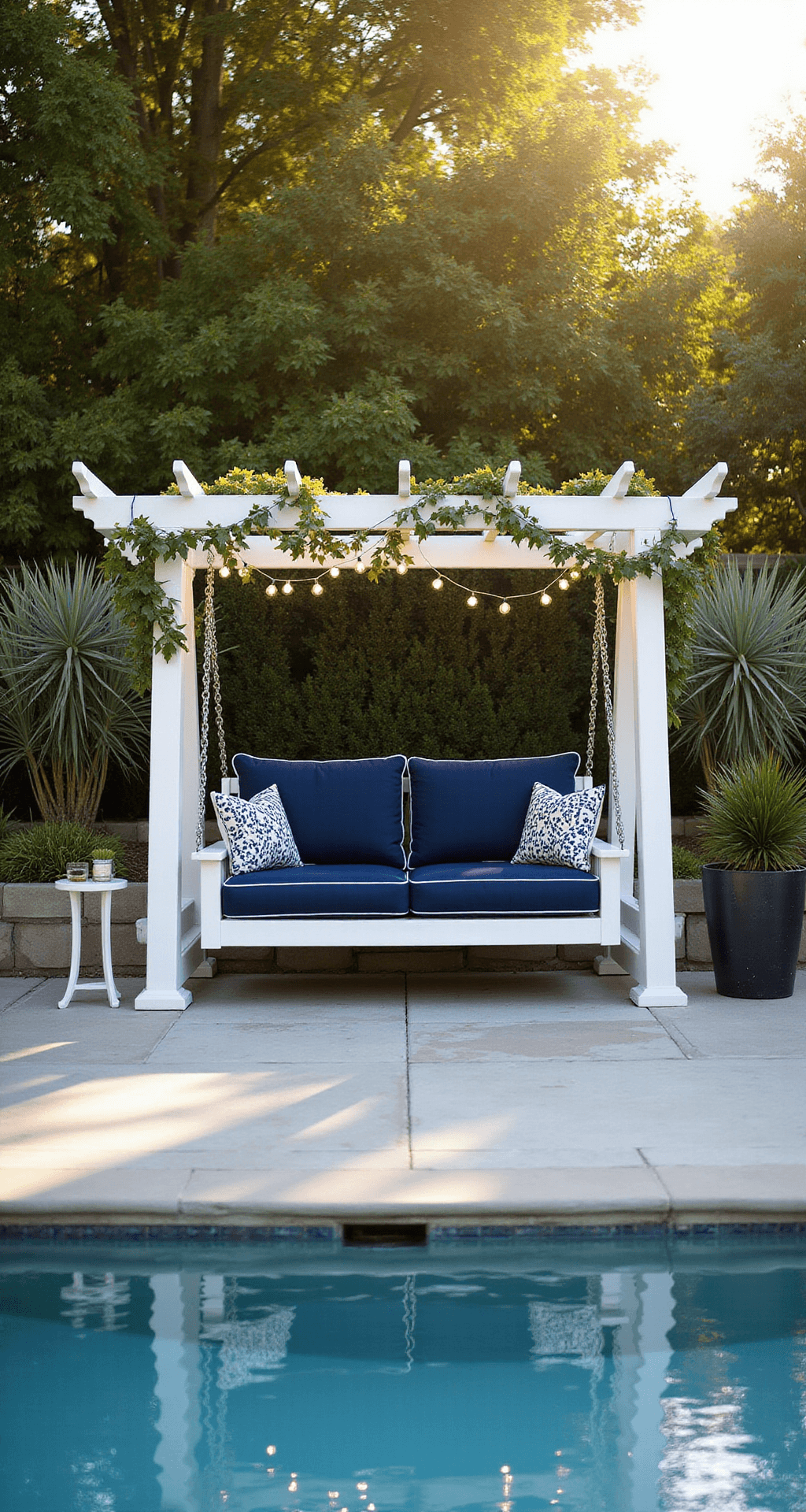
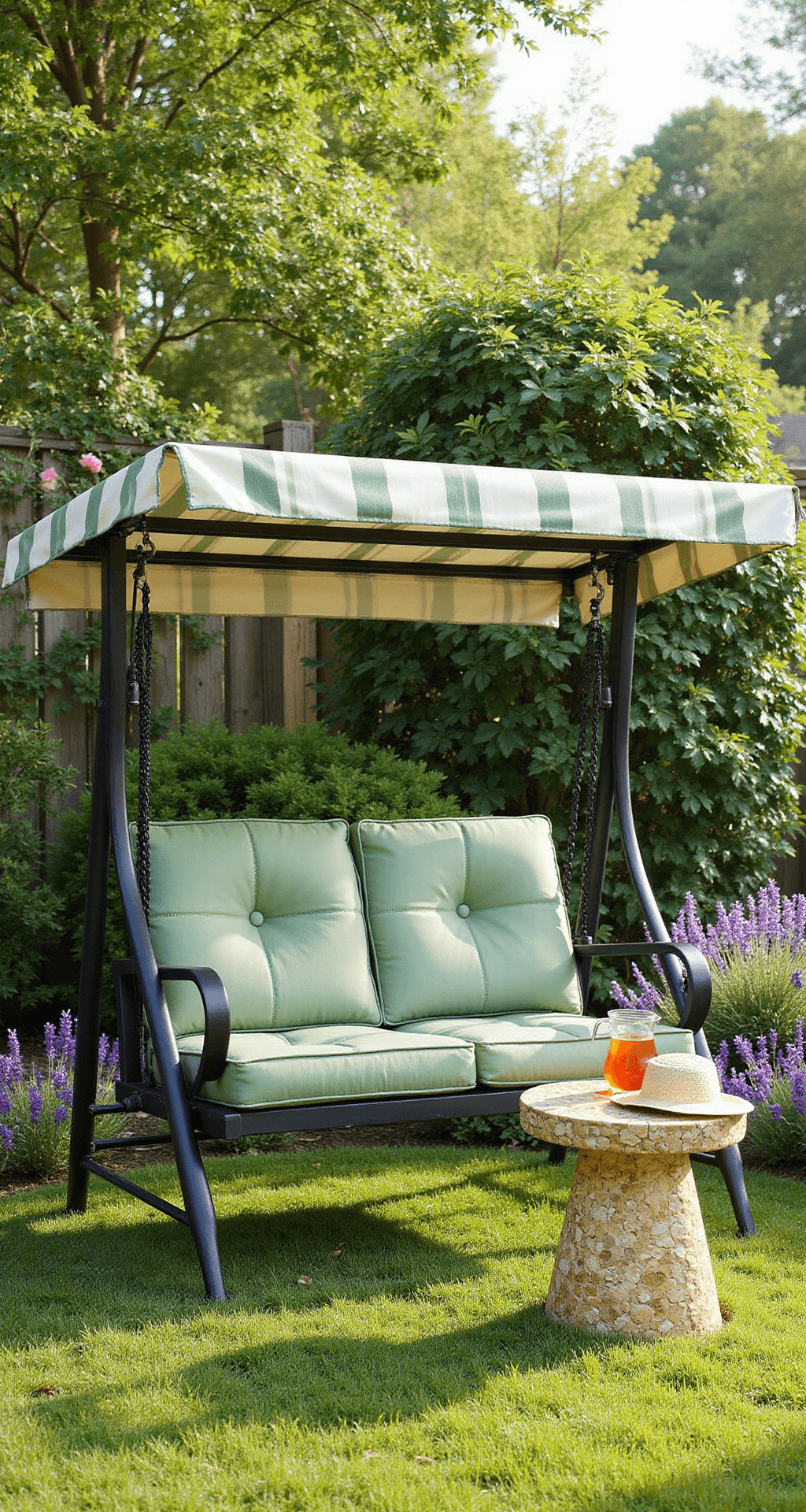
Pergola or arbor tops turn your swing into a statement piece. They look gorgeous and give you something to hang plants or string lights from.
Built-in canopies or shade covers mean you can swing in the middle of July without melting. I learned this the hard way after one too many sweaty afternoon swings.
My neighbor has a canopy porch swing stand and I’m legitimately jealous every time I see her out there, completely shaded while I’m squinting in the sun.
Size Matters: Picking the Right Capacity
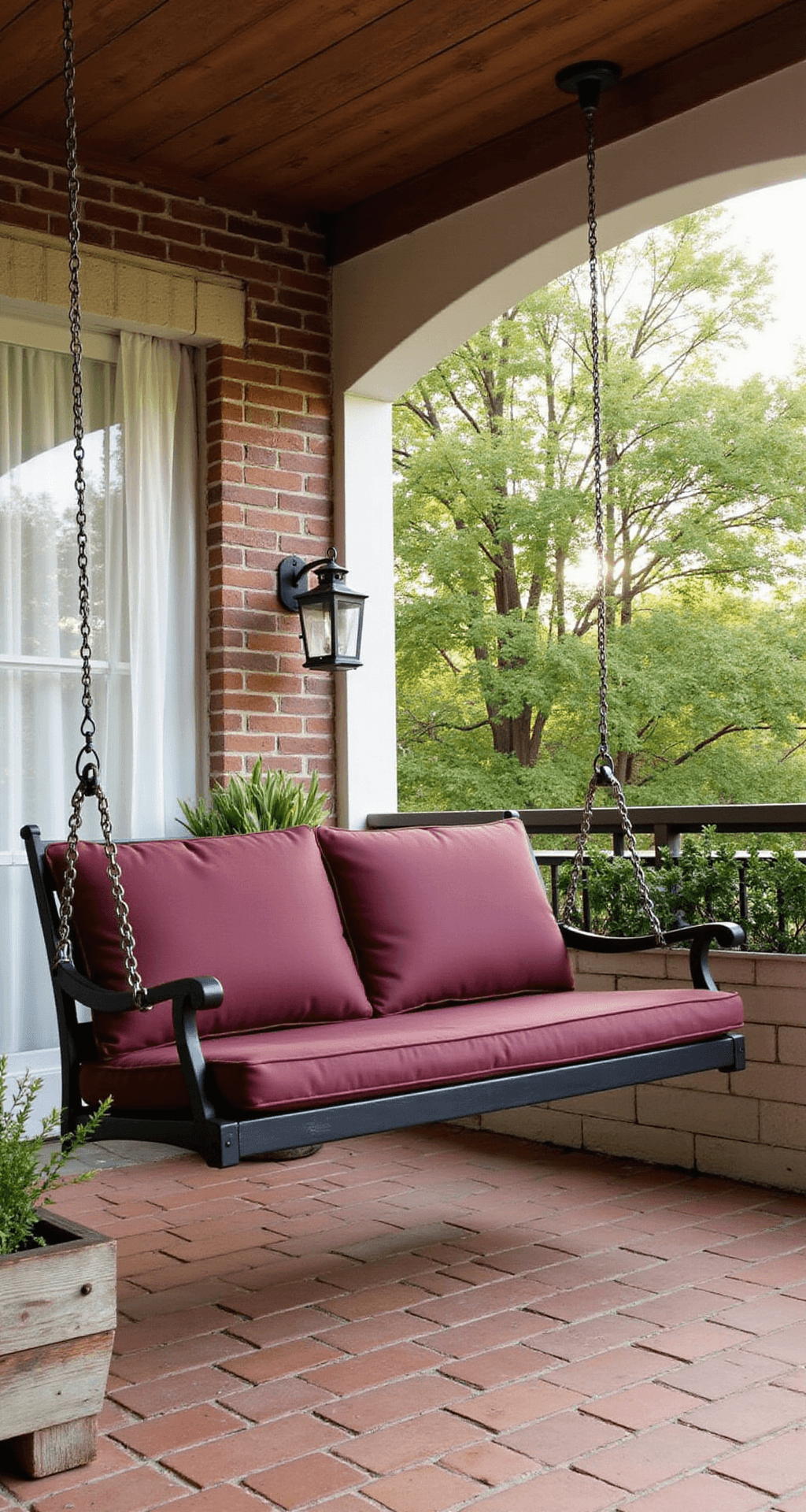
These swings come in different sizes, and you need to think about who’s using it.
Single-seater:
Perfect if you want your own sanctuary. Nobody stealing your spot.
Two-seater:
The classic choice. Good for couples or when a friend comes over.
Three-seater:
Great for families or when you want to sprawl out with a book and three throw pillows.
Weight capacity ranges wildly. Some basic models handle around 400 lbs. Others can support up to 880 lbs—that’s serious engineering.
Don’t cheap out here. Get something rated well above what you think you’ll need. You’ll thank me when four people pile on during a summer barbecue.
Check out heavy duty porch swing stands if you want something built to last.
Why I Actually Love Mine (And You Might Too)
You can move it whenever you want.
This is huge. Morning sun too bright? Move it to the shade. Want to be closer to the vegetable garden? Grab a friend and relocate.
I rearrange my outdoor furniture more than most people, so this flexibility is everything.
Setup is usually pretty simple.
Most models come with the hardware already attached or clearly labeled. You’re not hunting through a bag of mysterious screws wondering which one goes where.
I put mine together in about an hour with just a basic screwdriver and some determination. If I can do it, trust me, you can too.
The Stuff Nobody Tells You (But I Will)
These swings are heavy.
Like, really heavy. Don’t plan on moving yours solo unless you enjoy testing your back’s limits.
When I moved mine the second time, I tried doing it alone. Made it about six feet before I had to admit defeat and call my brother.
Get help. Your chiropractor will thank you.
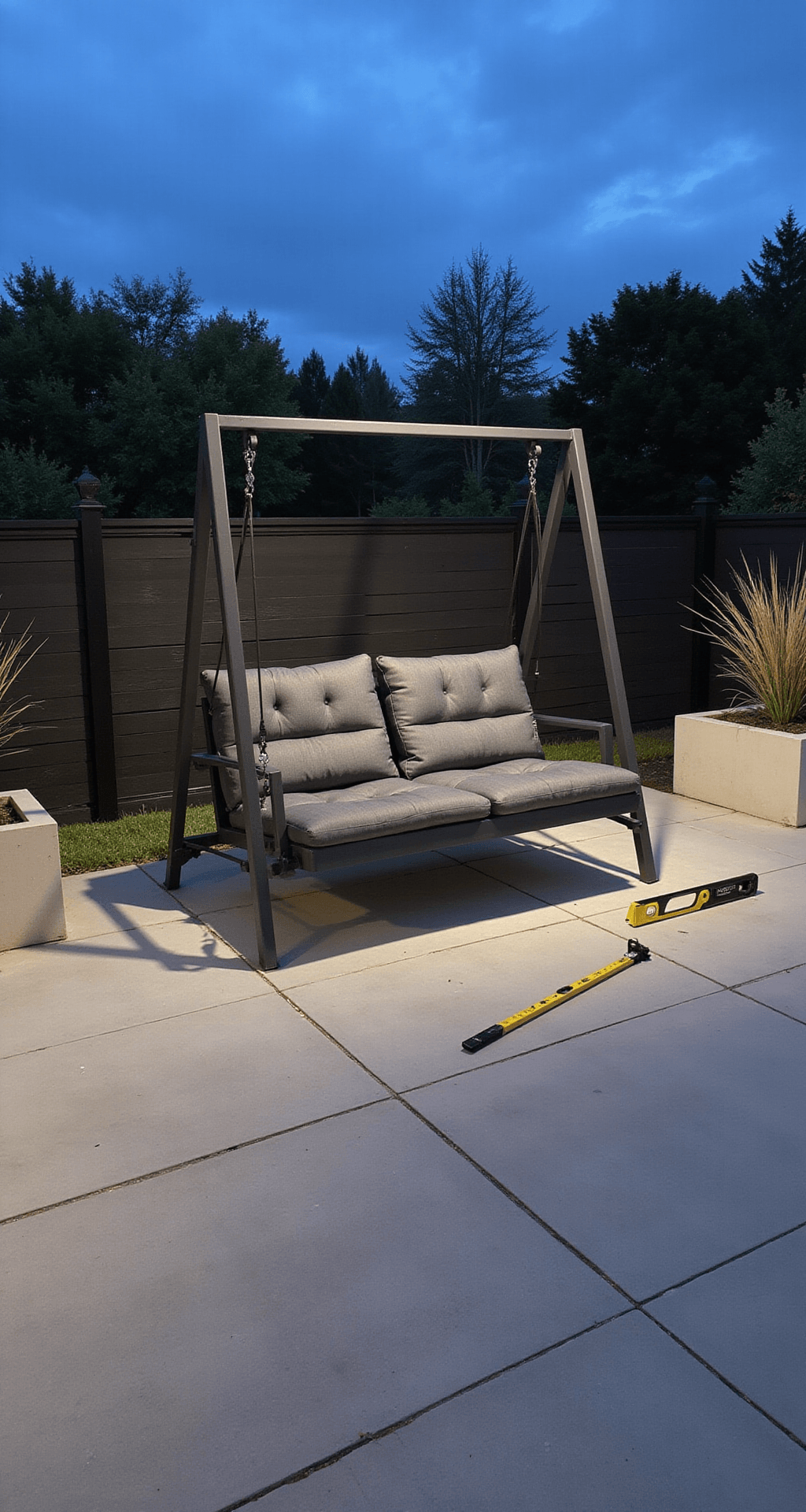
Measure your space before you buy.
I cannot stress this enough. The swing needs room to actually swing.
You need clearance behind and in front. I’ve seen people cram a swing into a tight patio corner, and it basically becomes a very expensive stationary bench.
Grab a measuring tape and actually measure. Then add an extra foot on each side just to be safe.
Level ground isn’t negotiable.
If your swing rocks unevenly or feels tippy, it’s probably the ground.
A wobbly swing is annoying at best and dangerous at worst. Take the time to level things out properly.
What to Check Before You Buy
- Ground surface: Is it level? Is it solid? Grass, concrete, pavers—all fine. Soft dirt or sand? Not ideal.
- Space requirements: Measure the full swing arc. Give yourself breathing room.
- <