This post may contain affiliate links. Please see my disclosure policy for details.
Farmhouse Grapevine Wreath Ideas That’ll Make Your Front Door the Talk of the Neighborhood
Contents
- Farmhouse Grapevine Wreath Ideas That’ll Make Your Front Door the Talk of the Neighborhood
- Why Grapevine Wreaths Work for Farmhouse Style
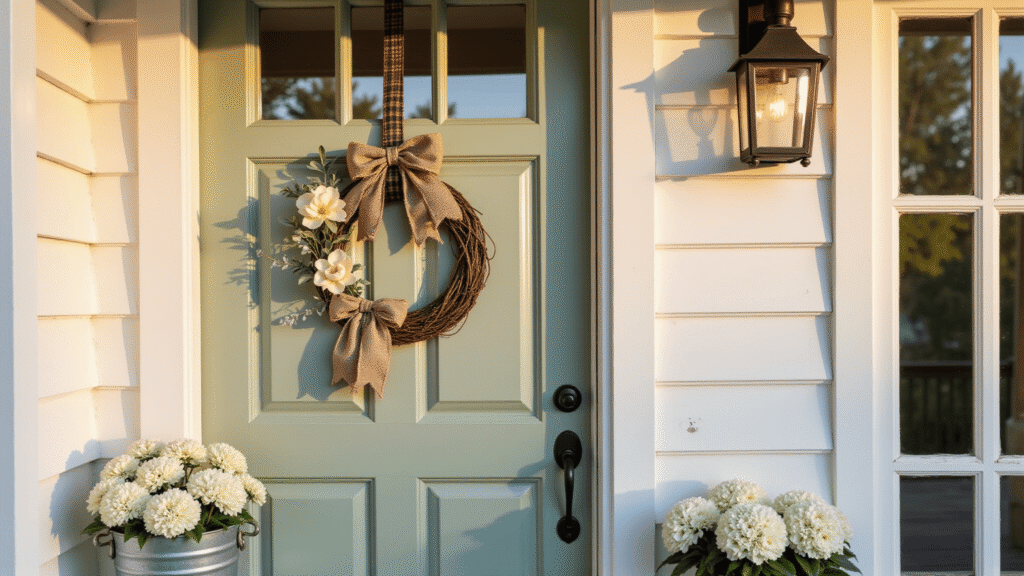
- Classic Magnolia & Ribbon Design (My Go-To for Guests)
- Year-Round Neutral Design (For the Lazy Decorator in All of Us)
- Rustic Fabric Flower Approach (When You’re Feeling Extra)
- Key Design Elements That Separate the Gorgeous from the Tragic
Farmhouse grapevine wreaths can be personalized with ribbons, bows, florals, greenery, signage, and various fabric accents – and honestly, I’m obsessed with how one simple wreath can completely transform your entryway.
I’ve been making these wreaths for years, and I still remember the first one I attempted. It looked like a bird’s nest had a collision with a craft store explosion. But here’s the thing – once you understand the basic building blocks, you can create something genuinely stunning.
Why Grapevine Wreaths Work for Farmhouse Style
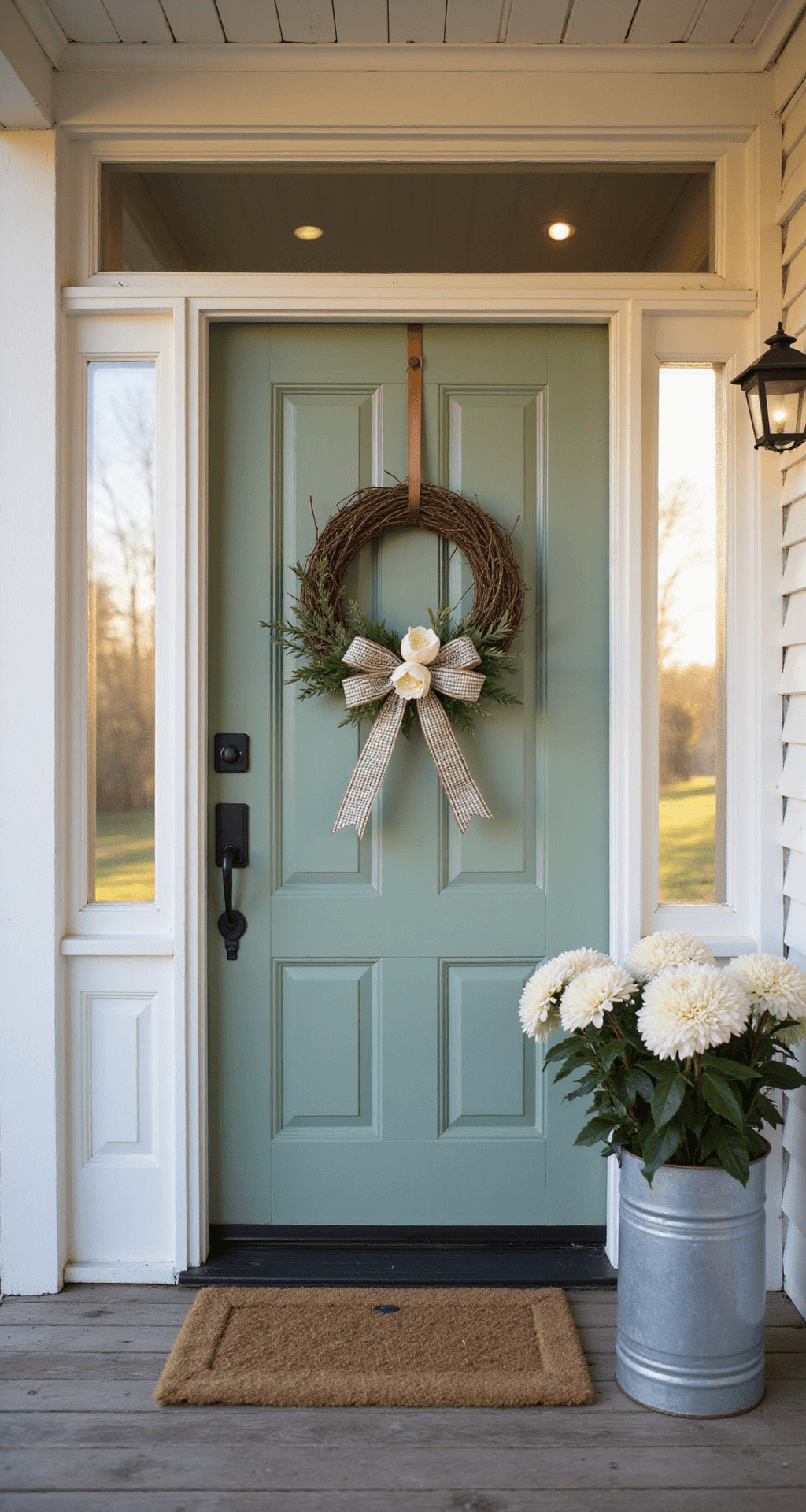
Let me tell you why I keep coming back to grapevine bases. They’re rustic without trying too hard. They’ve got that perfectly imperfect texture that screams “farmhouse” without screaming “I bought this at a chain store.”
The natural twists and gaps in a grapevine wreath base give you built-in character. You’re already halfway to gorgeous before you’ve added a single stem.
Classic Magnolia & Ribbon Design (My Go-To for Guests)
This is the wreath I make when I want people to think I’ve got my life together.
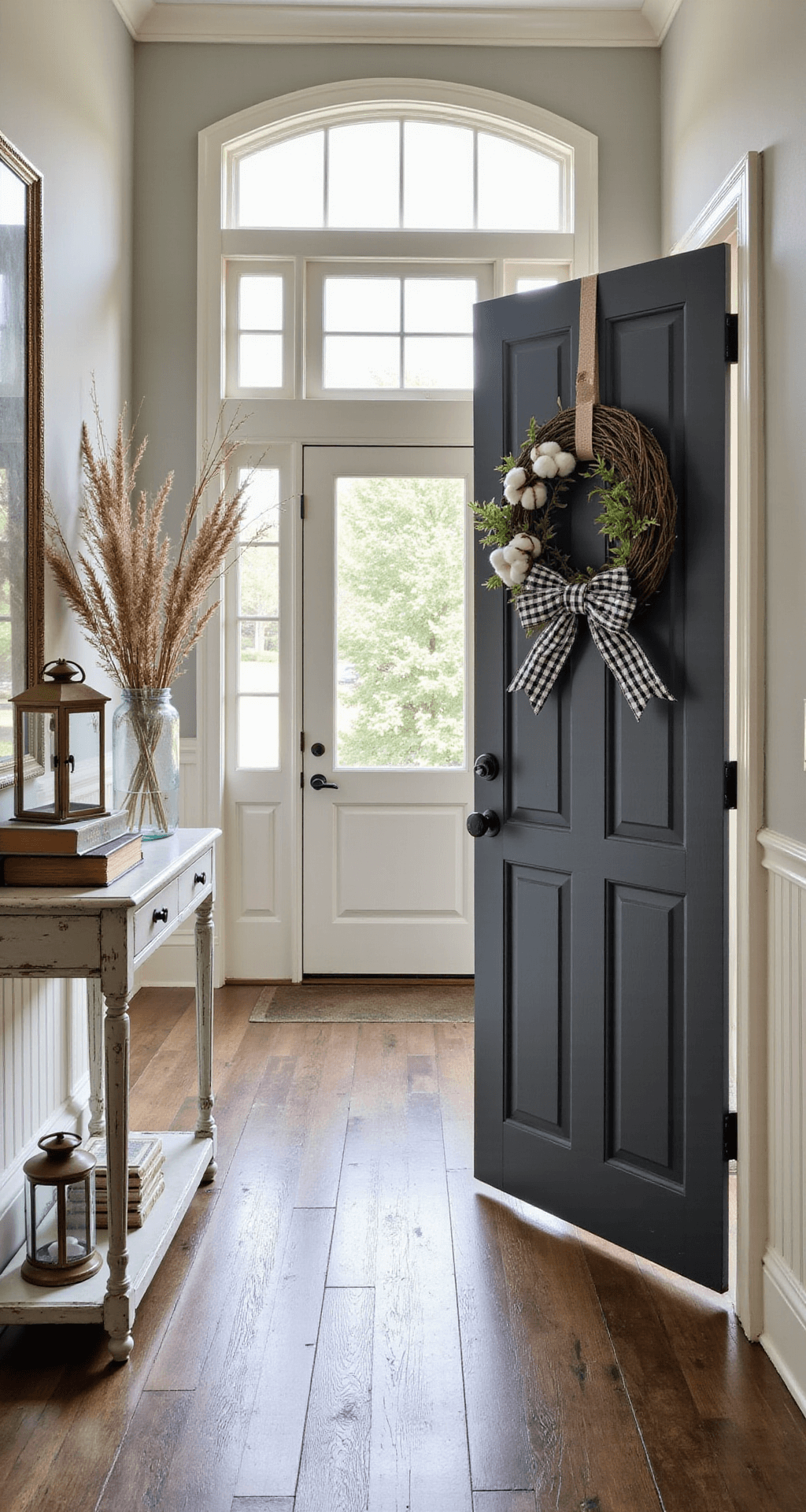
Start with your greenery – I’m talking eucalyptus, faux olive branches, or whatever strikes your fancy. Layer it onto your grapevine base like you’re tucking a baby into bed. Gentle. Strategic. Not suffocating the poor wreath.
Then comes the star of the show: magnolia florals. These cream-colored beauties have that Southern charm that makes everything feel like a glass of sweet tea on a porch swing.
The Ribbon Game-Changer
Here’s where most people mess up – they use one sad ribbon and call it done.
Don’t do that.
I use multiple coordinating ribbons in different widths:
- 2.5-inch ribbon for the main bow (this is your statement piece)
- 1.5-inch ribbon for secondary accents (the supporting actors)
- Mix patterns like buffalo check with solid colors
- Cut those tails in a dovetail style – it’s fancier than straight cuts and takes literally three extra seconds
The secret is creating dimensional layering. Think of it like getting dressed – you don’t just wear a shirt, right? You add a jacket, maybe a scarf, some jewelry. Same concept.
Pick up some wired farmhouse ribbon because the wire makes bows that actually hold their shape instead of flopping around like sad lettuce.
Year-Round Neutral Design (For the Lazy Decorator in All of Us)
I’m not remaking a wreath every season. I’ve got better things to do, like binge-watching home renovation shows and contemplating why I ever thought DIY was relaxing.
This is where the year-round neutral approach saves your sanity.
The Base That Keeps on Giving
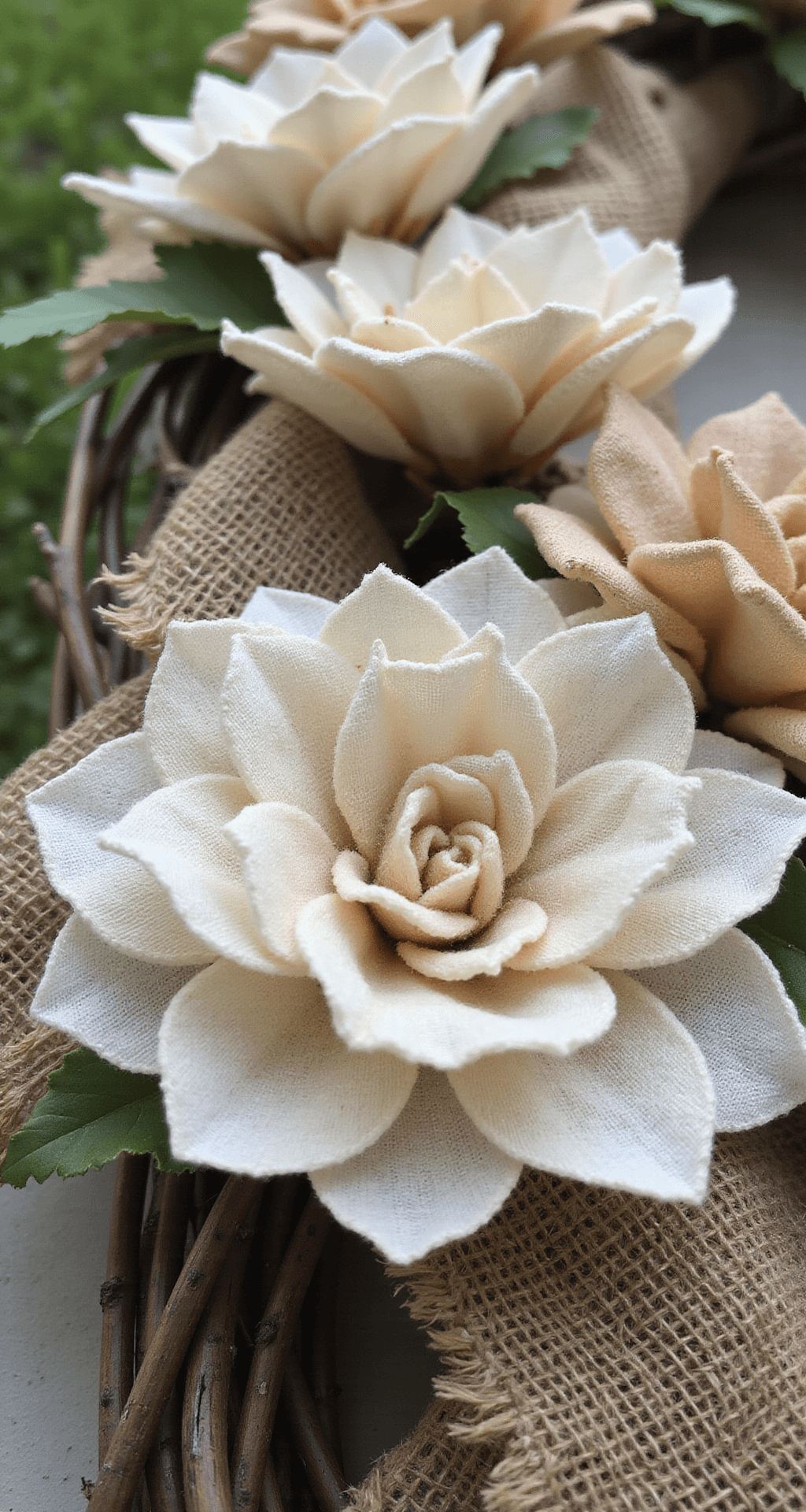
Start with lamb’s ear greenery – that soft, silvery-green foliage that looks expensive but isn’t. Add some cotton pods because nothing says farmhouse like cotton.
Then here’s the genius part: use a neutral black and white gingham bow.
But wait, there’s more.
Make that bow detachable. I’m talking about using floral wire or small zip ties that you can easily snip off.
The Interchangeable Bow Strategy
Now you’ve got one wreath base that works all year:
- Spring: Swap in a pastel ribbon with some artificial tulips
- Summer: Bright yellow or coral bow
- Fall: Burnt orange or deep burgundy
- Winter: Plaid or burlap with some pine sprigs
You’re basically getting four wreaths for the effort of one. I’m all about that ROI (Return on Investment, but make it crafty).
Rustic Fabric Flower Approach (When You’re Feeling Extra)
This one takes more time, but the compliments you’ll get are worth it.
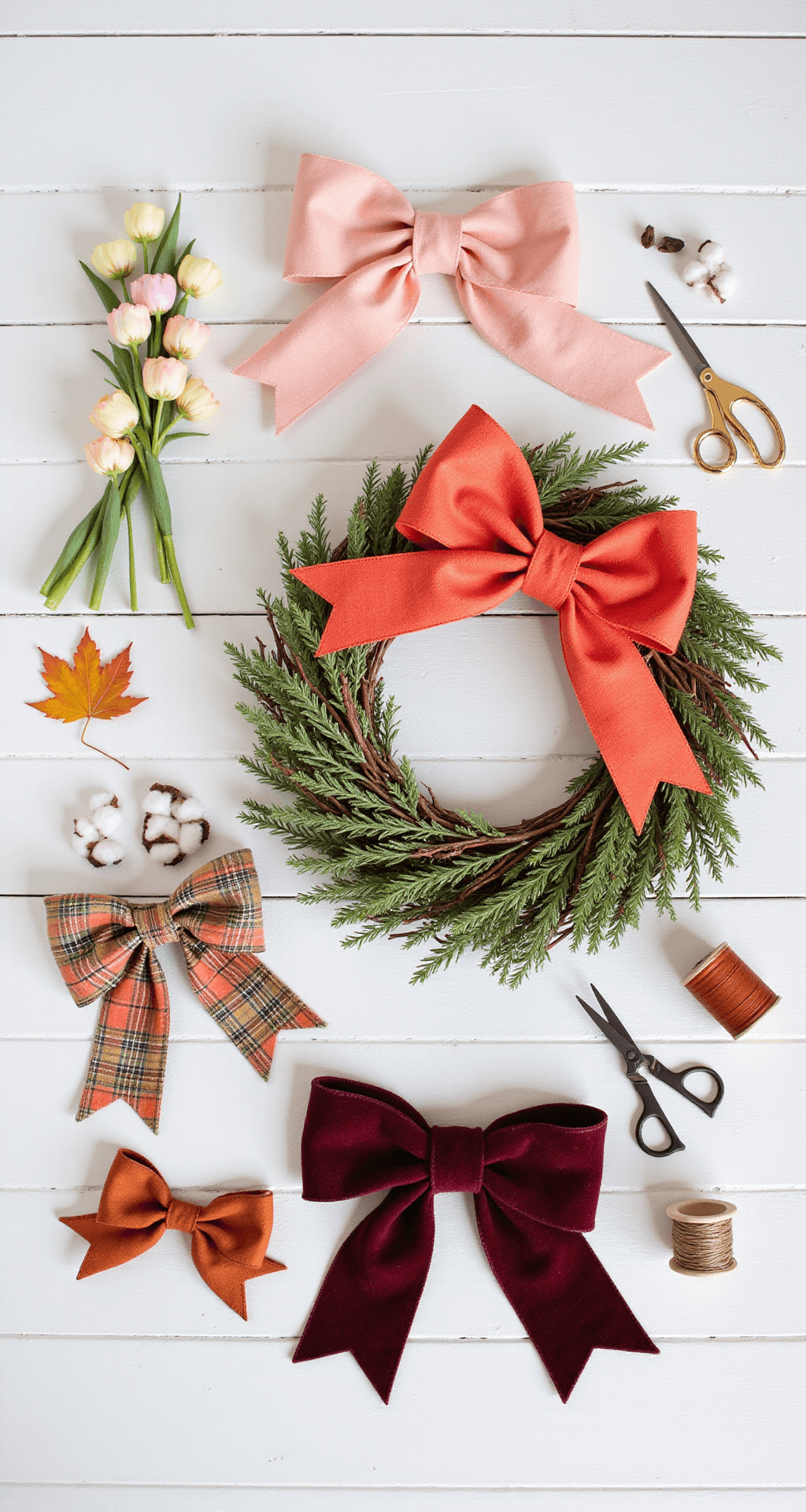
I make fabric flowers from whatever cheap fabric I can find:
- Painter’s drop cloth (yes, the thing you use to protect floors)
- Muslin
- Osnaburg fabric
How to Make Fabric Flowers Without Losing Your Mind
Cut your fabric into strips:
- 1.5 inches wide for smaller, delicate flowers
- 2.5 inches wide for statement blooms
Roll them up. Twist them. Hot glue them into flower shapes.
I’m not going to lie – the first few will look like fabric tumbleweeds. But by flower number five, you’ll have the hang of it.
Layer these handmade beauties on your grapevine base. Add burlap ribbon with intentionally frayed edges.
That frayed look isn’t messy – it’s “curated rustic aesthetic.” Big difference.
Key Design Elements That Separate the Gorgeous from the Tragic
Let me break down what actually makes a farmhouse wreath work.
Greenery Layering (The Foundation of Everything)
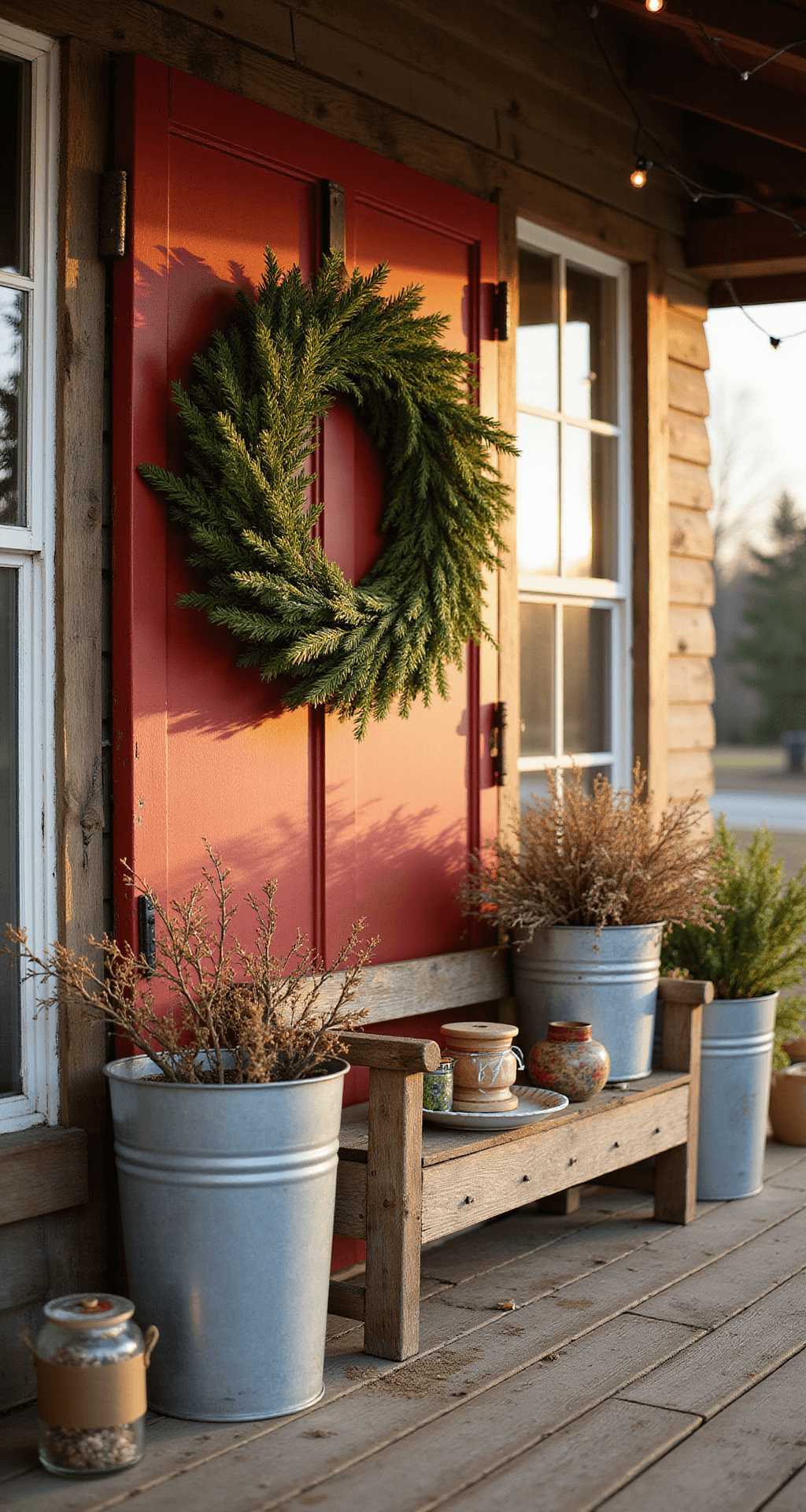
Position your greenery to frame the design. I see so many people covering every inch of their wreath like they’re hiding evidence.
Your focal elements – flowers, signs, special accents – need breathing room. The greenery should guide the eye toward these stars, not compete with them.
Pro