This post may contain affiliate links. Please see my disclosure policy for details.
Farmhouse Front Porch Steps: My Guide to Creating That Perfect Welcome Home Moment
Contents
Farmhouse front porch steps transformed my entire home’s first impression, and I’m convinced they might be the most underrated feature in exterior design.
Let me guess—you’re standing outside right now, staring at your bland concrete steps thinking “there’s got to be something better than this.”
Maybe your front entrance feels cold and uninviting.
Or perhaps those cracked, stained concrete steps are making your beautiful home look cheaper than it deserves.
I’ve been there, and I’m going to show you exactly how to fix it.
Why Your Front Steps Matter More Than You Think
Your porch steps are literally the first thing people touch when they visit your home.
Not just see—actually touch.
That matters.
I learned this the hard way when my mother-in-law visited and the first words out of her mouth weren’t about my freshly painted shutters or the new wreath on the door.
Nope.
“These steps feel wobbly, dear.”
Ouch.
That’s when I realized I’d been ignoring the foundation of my entire porch aesthetic.
The Classic Farmhouse Step Color Combo That Never Fails
Here’s the thing about farmhouse style—it’s not complicated.
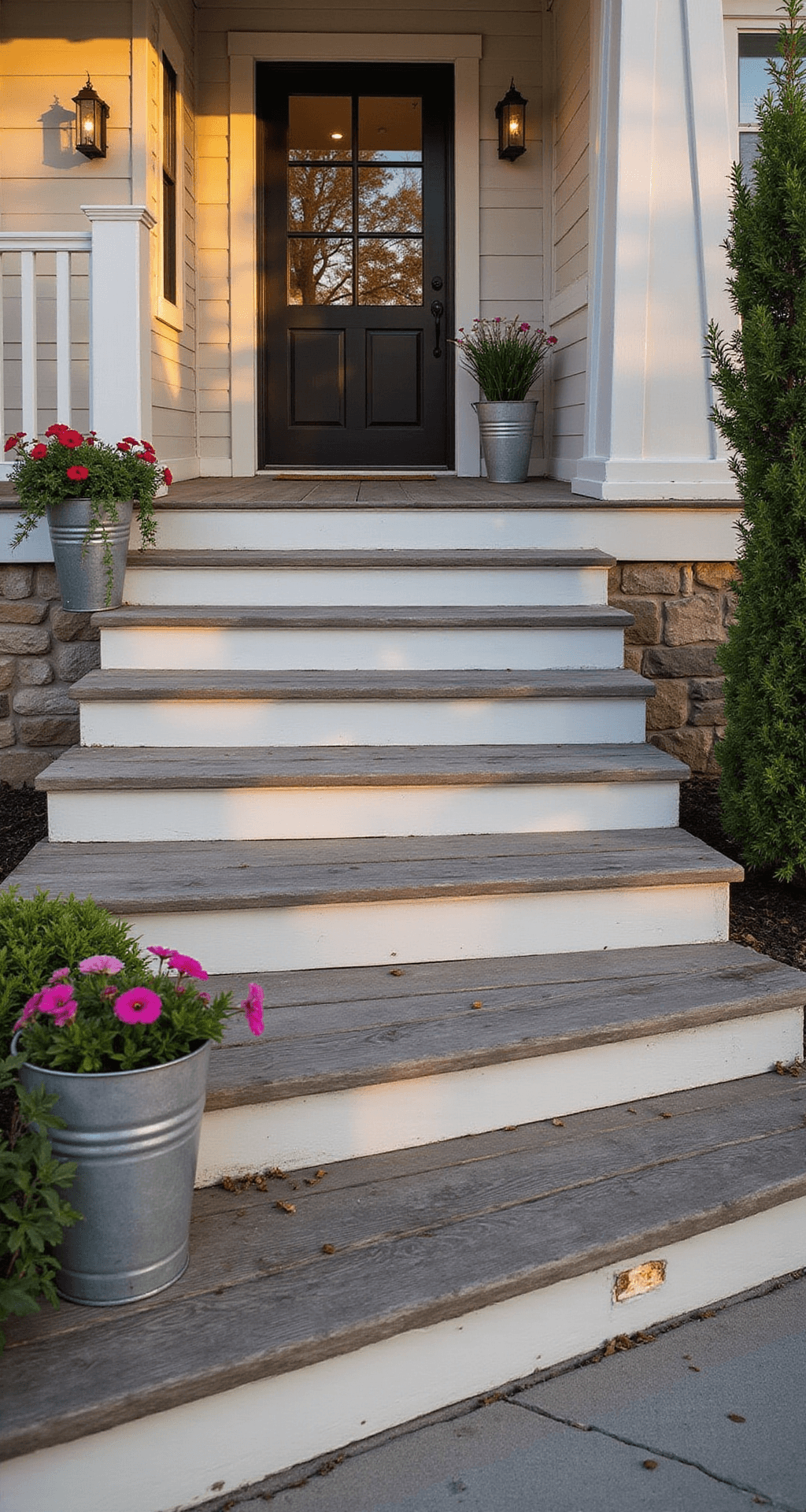
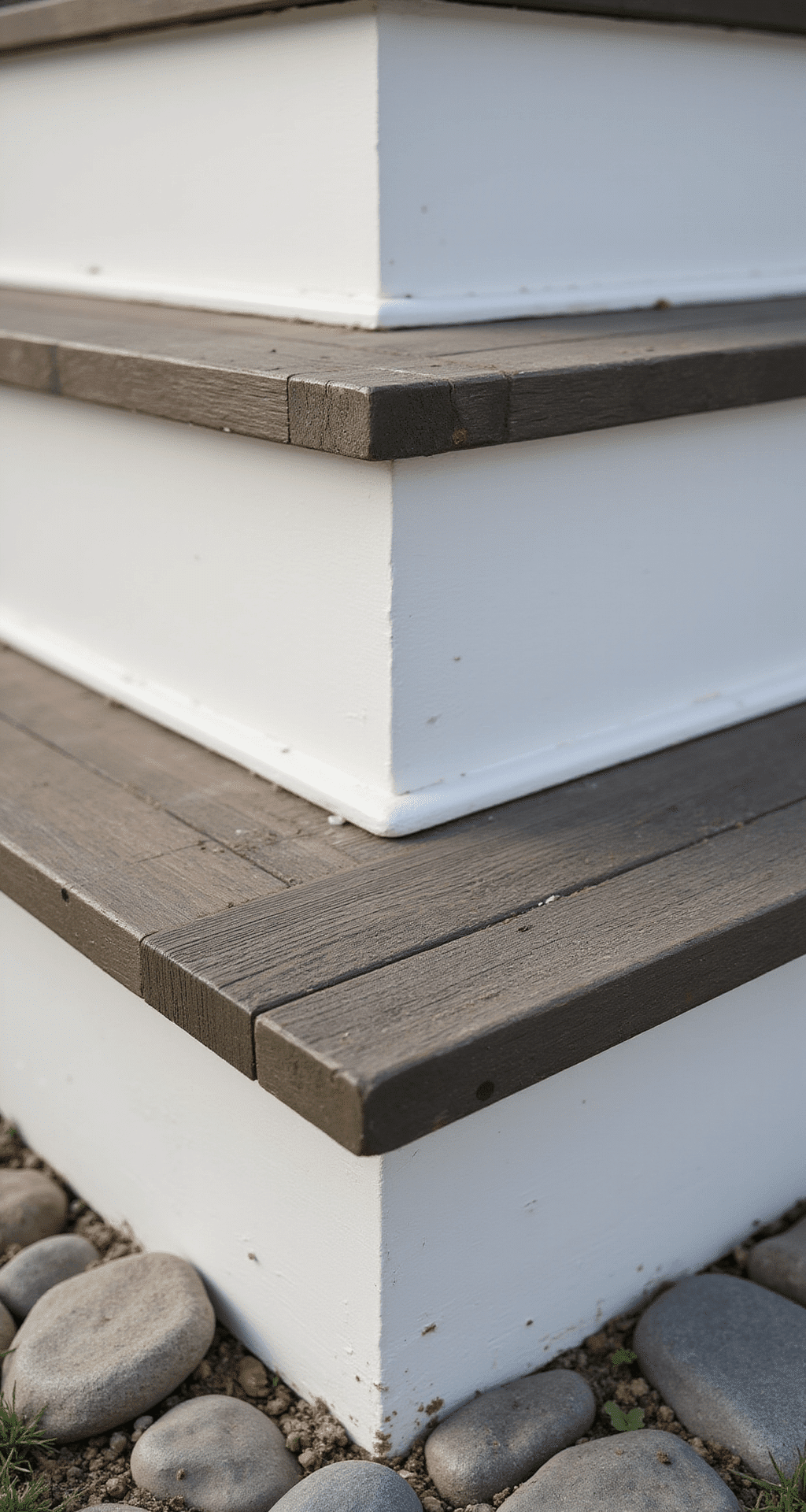
The most iconic look pairs crisp white risers with neutral grey treads.
Simple.
Classic.
And it works every single time.
I painted mine this exact combination three years ago, and neighbors still stop to ask about them.
The grey treads typically match your porch floor color, creating this beautiful flow that guides people up to your front door.
Alternative color approaches that work:
- Coordinate with your siding color (ochre, sage, or warm earth tones on risers with natural wood treads)
- Dark stained treads with white risers for that sharp, magazine-worthy contrast
- All-natural wood with clear sealant if you’re blessed with gorgeous wood grain
- Soft cream risers with weathered grey treads for a more aged farmhouse vibe
The beauty of this style is its flexibility.
You’re not locked into one rigid formula.
Wood vs. Everything Else: Let’s Talk Materials
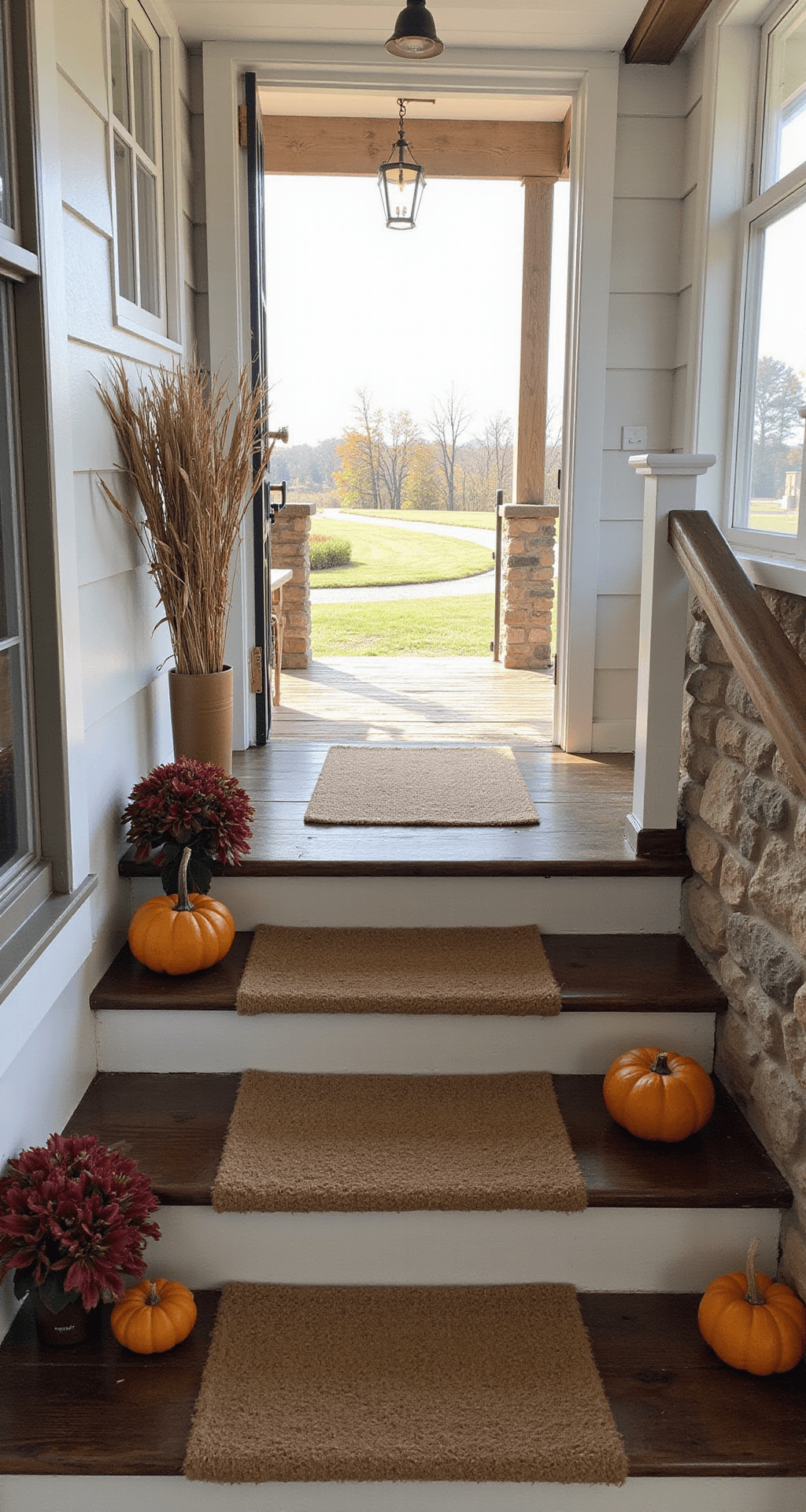
Wood is king in the farmhouse world.
Period.
But not all wood projects are created equal, and I’ve got opinions about this.
Covering Existing Concrete Steps
This was my approach, and honestly, it’s genius for most situations.
My concrete steps were structurally sound but aesthetically tragic.
Instead of jackhammering them out (expensive, loud, and your neighbors will hate you), I built a wooden frame right over them.
Here’s what I used:
- Pressure-treated 2×12 lumber for stringers
- 1×6 cedar boards for the treads
- Exterior wood screws (don’t cheap out here)
- High-quality exterior primer and paint
The cedar smelled amazing during installation, which was a bonus I wasn’t expecting.
Building From Scratch
If you’re starting with nothing or replacing rotted steps, you’ve got more freedom.
My neighbor went this route, and her steps turned out stunning.
Key lumber choices:
- Pressure-treated pine: Budget-friendly, holds up to weather, accepts stain reasonably well
- Cedar: Naturally rot-resistant, gorgeous grain, smells incredible, costs more but worth it
- Redwood: The premium option, lasts forever, beautiful color, might require a small loan
I’m kidding about the loan.
Mostly.
The Composite Decking Option
Look, I’m a wood purist, but I’m not blind to reality.
Composite decking has come a long way.
If you live in a climate that punishes natural wood (looking at you, Pacific Northwest and humid South), composite deck boards might be your best friend.
Composite advantages:
- Never needs staining or sealing
- Won’t rot, crack, or splinter
- Available in convincing wood-like colors
- Lasts decades with zero maintenance
The tradeoff:
- More expensive upfront
- Doesn’t have that authentic wood feel
- Can get slippery when wet (ask me how I know)
I watched my sister install composite steps last summer.
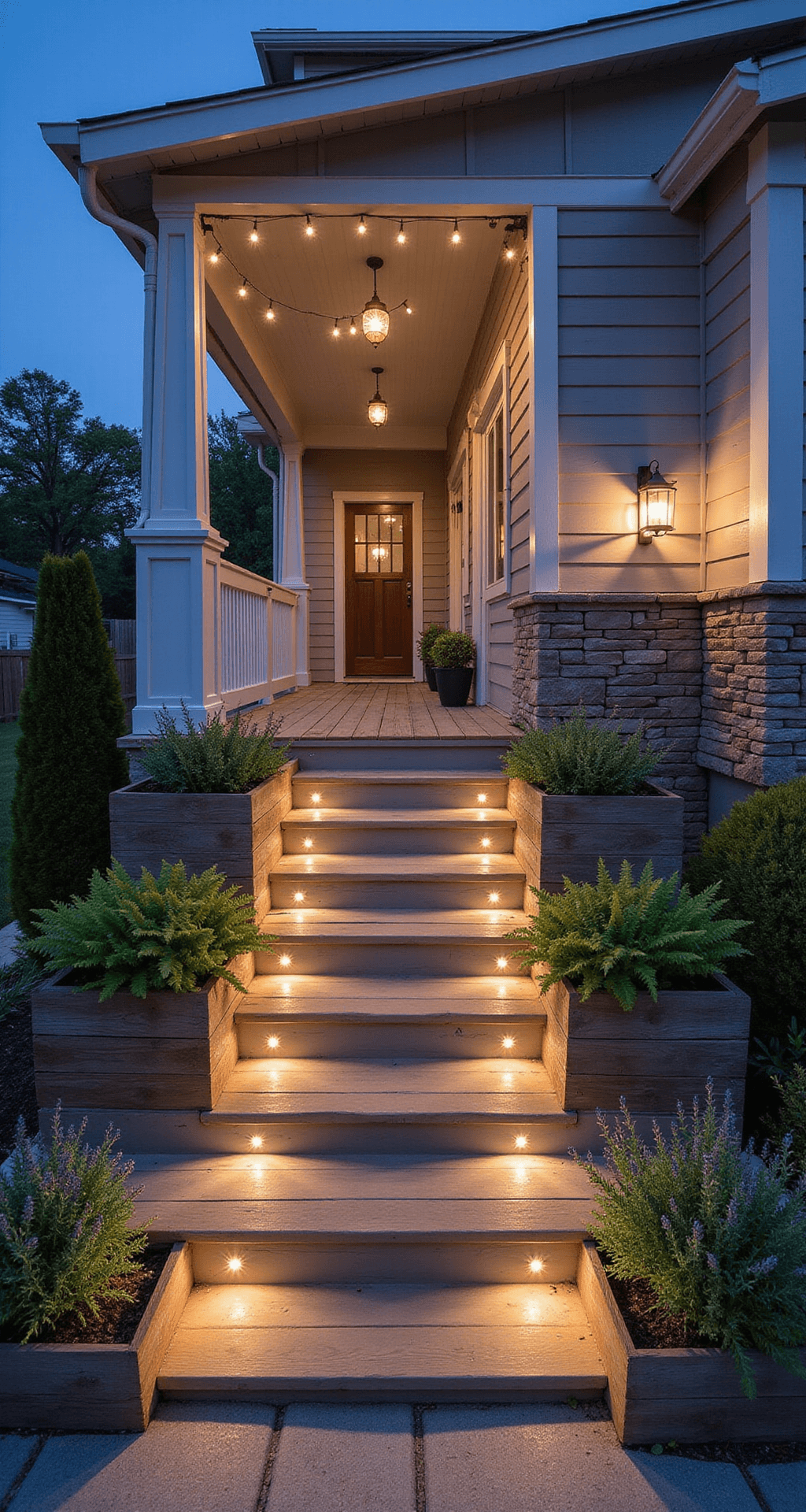
She picked a weathered grey tone that looks shockingly like real wood from more than a few feet away.
Two years later, she’s done absolutely nothing to maintain them while I’m out there with my stain brush every spring.
Who’s the smart one?
Construction Details That Separate Amateur from Pro
Here’s where most DIY projects fall apart.
The concept is simple—stairs are just repeated triangles, right?
But the details make or break the farmhouse aesthetic.
Stringer Spacing and Support
Your stringers (those diagonal support beams underneath) need to be spaced correctly.
Too far apart and your treads will bounce.
Too close and you’ve wasted money and created unnecessary weight.
Follow this rule:
- For standard step width (36-48 inches): 3 stringers minimum
- Wider steps: Add a stringer every 16 inches
- Attach stringers securely to both the porch structure and a solid base
I made the mistake of using only two stringers on 48-inch-wide steps.
Remember my mother-in-law’s wobbly comment?
Yeah.
Tread Depth and Riser Height
This isn’t just aesthetic—it’s about safety and comfort.
The magic