This post may contain affiliate links. Please see my disclosure policy for details.
How I Transform My Fireplace Into a Spring Sanctuary (And Why You Should Too)
Contents
- How I Transform My Fireplace Into a Spring Sanctuary (And Why You Should Too)
- Why Your Fireplace Deserves Better Than Winter Leftovers
- Start With What Nature’s Already Figured Out
- Early Spring: The Soft Transition
- Late Spring: Bring On the Bold
- The Core Elements That Actually Matter
- My Foolproof Strategy for Creating a Focal Point
- The Height and Layering Trick That Changed Everything
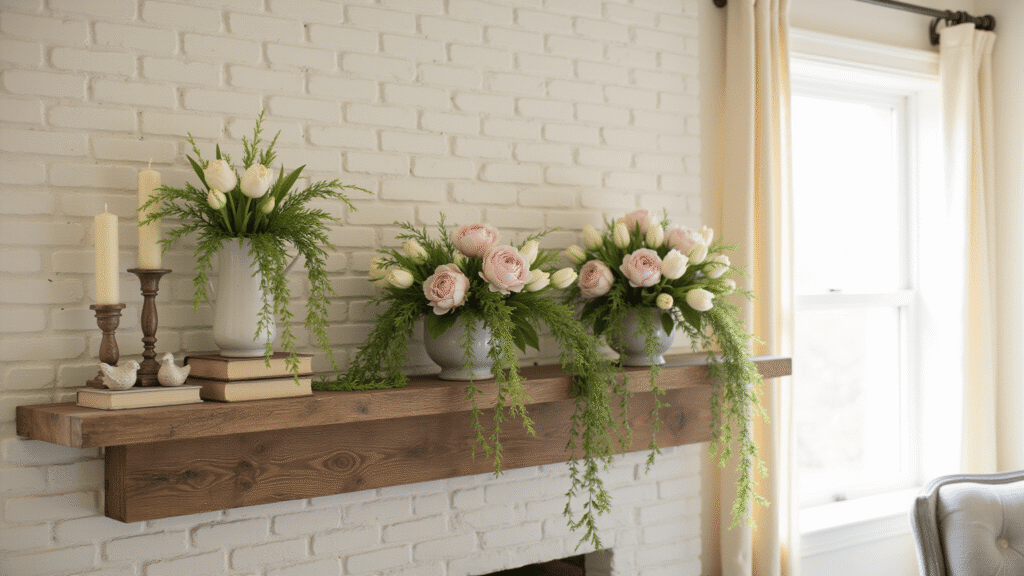
Spring fireplace decor centers on floral arrangements, greenery, and natural accents that create a fresh, seasonal focal point.
Let me tell you something that changed my entire approach to decorating.
I used to leave my fireplace looking like a sad winter leftover well into April—dusty candles, random frames I’d forgotten about, maybe a wreath from three Februarys ago.
Then one Saturday morning, I walked into my friend Sarah’s living room and stopped dead in my tracks.
Her fireplace looked like spring had personally moved in and signed a lease.
Tulips everywhere, greenery spilling over the mantel, this glow that made me want to grab a cup of coffee and never leave.
That’s when it hit me: I’d been doing this all wrong.
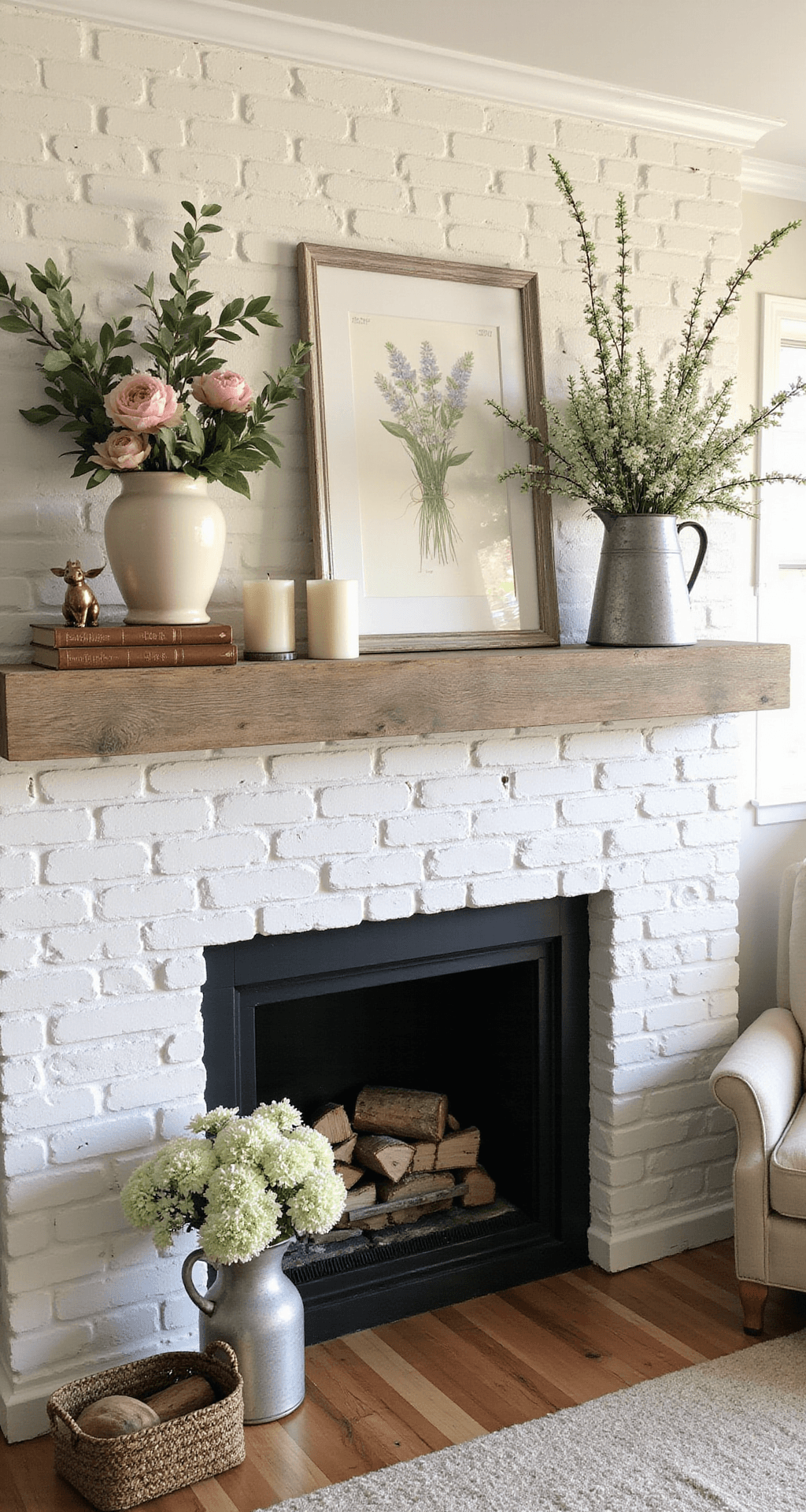
Why Your Fireplace Deserves Better Than Winter Leftovers
Here’s the truth nobody talks about.
Your fireplace is prime real estate in your home.
It’s the first thing people notice when they walk into your living room, and right now, it’s probably telling everyone that you gave up decorating sometime around Valentine’s Day.
I get it.
You’re busy, and redecorating feels like one more thing on an endless list.
But transforming your fireplace for spring doesn’t require an interior design degree or a trust fund.
It just needs a plan.
Start With What Nature’s Already Figured Out
The biggest mistake I made early on was overthinking everything.
Matching this to that, worrying about trends, buying stuff I thought I “should” have.
Then I realized something simple: nature has already done the color coordinating for us.
Pick your flowers and greenery first.
Everything else follows.
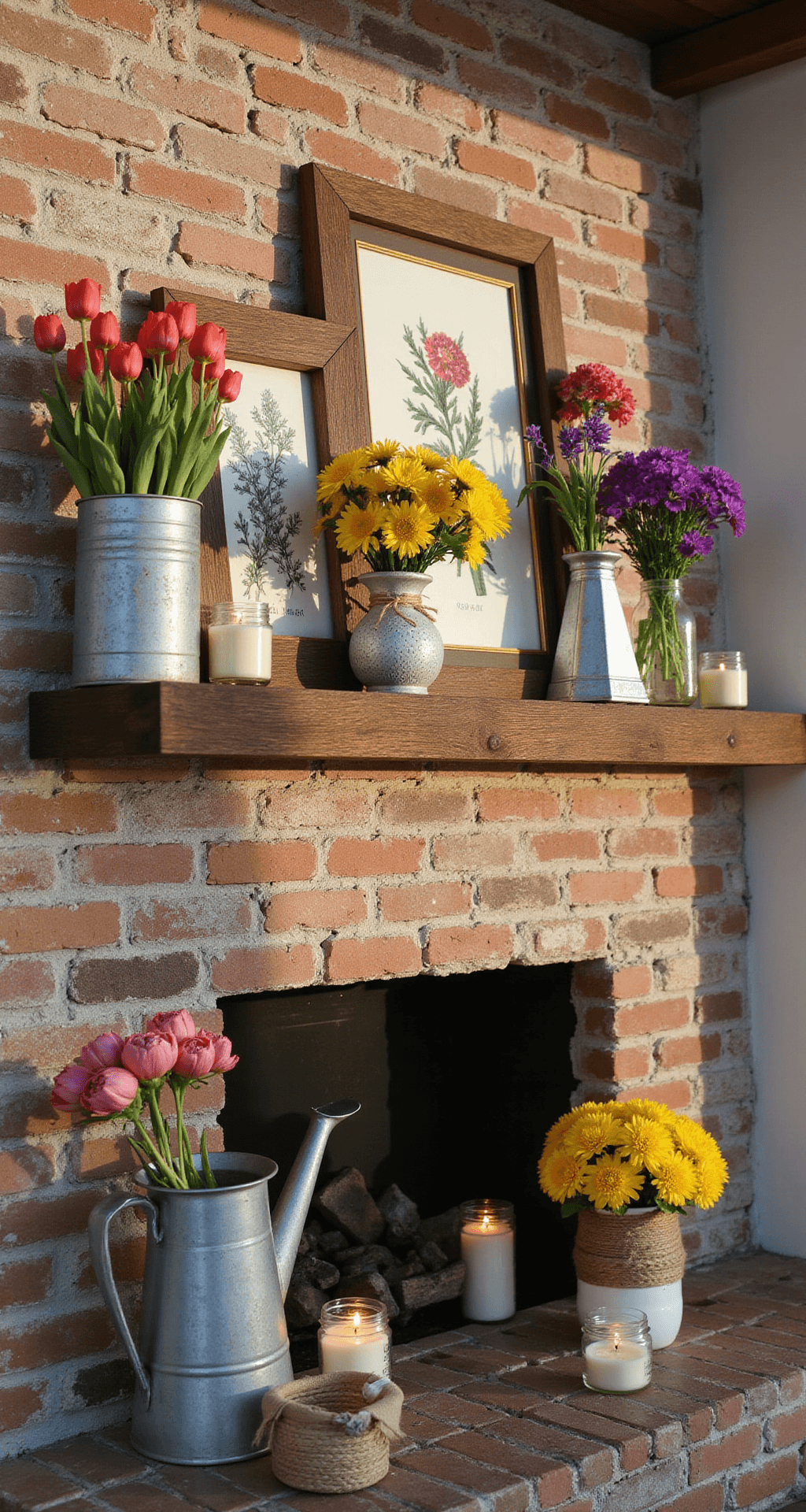
Early Spring: The Soft Transition
For March and early April, I stick with peonies, ranunculus, hydrangeas, or roses.
These beauties give you those soft, subtle hues that don’t shock your system after months of winter grays.
Think blush pinks, creamy whites, pale lavenders.
They whisper “spring is coming” instead of screaming it.
I grab fresh or artificial peonies because let’s be honest—I’m not made of money, and the fake ones last all season without turning brown and sad.
Late Spring: Bring On the Bold
Once we hit late April and May, I go full color.
Tulips, anemones, cornflowers, dahlias—the works.
This is when I want that punch of brightness that says summer’s around the corner.
Bold yellows, vibrant corals, deep purples.
No more playing it safe.
I learned this the hard way after keeping pale arrangements through May one year and feeling like my living room was stuck in perpetual March.
Not doing that again.
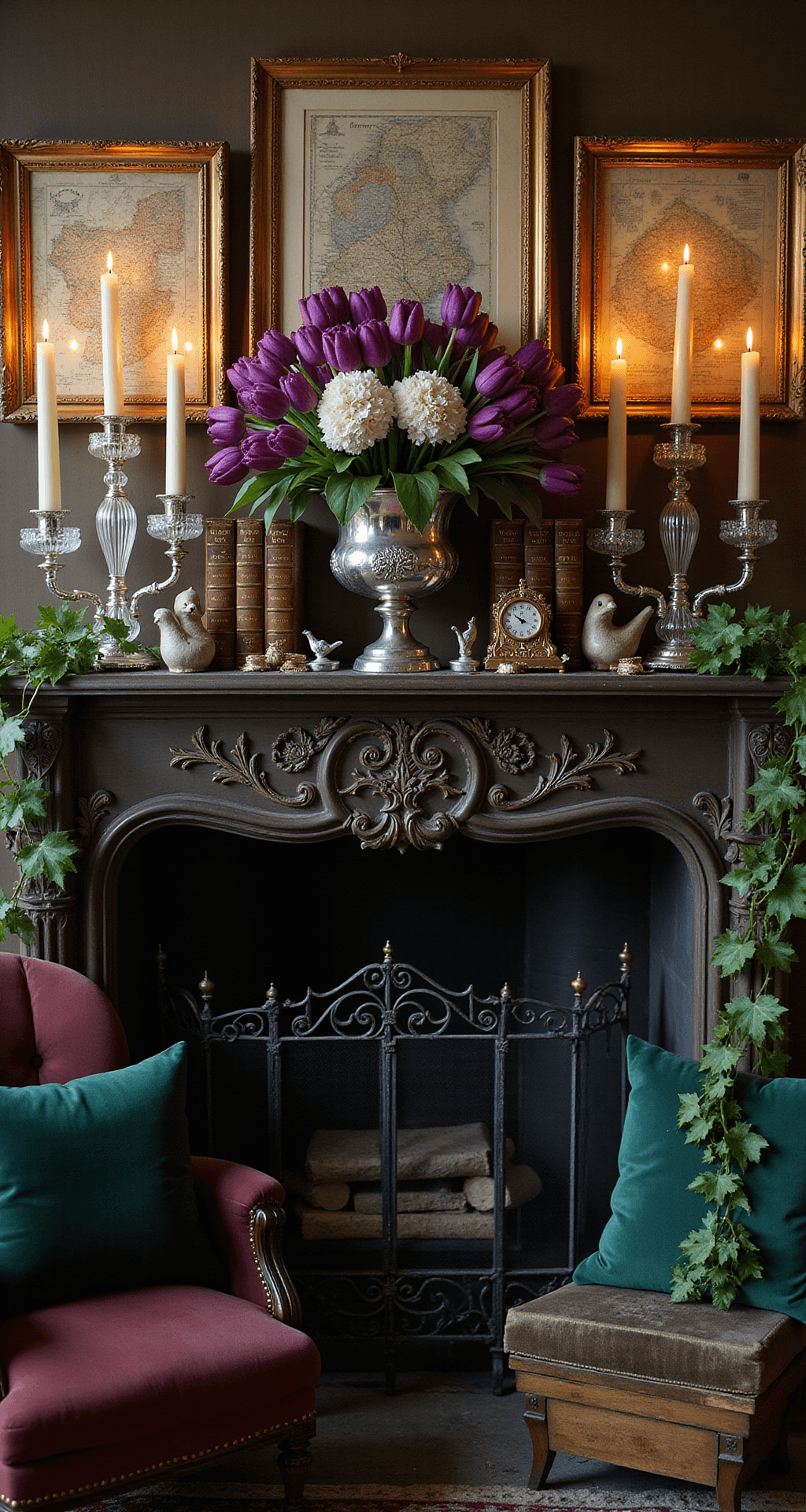
The Core Elements That Actually Matter
Let me break down what I keep on hand, because I wasted a lot of money on decorative nonsense before figuring this out.
The Non-Negotiables:
- Flowers and greenery (your stars of the show)
- Candles in varying heights (I’m obsessed with flameless candles because no fire hazard and no wax mess)
- Frames or wall art that anchor the space
- Natural accents like branches, nests, or botanical prints
The Fun Add-Ons:
- Bunny figurines (cute without being cheesy if you pick the right ones)
- Pastel-colored eggs in a vintage bowl
- Ceramic birds perched among the greenery
- Spring-blooming branches in whites and pinks
Pro tip: I buy artificial spring branches in bulk after Easter when they’re dirt cheap, then rotate them through the seasons.
Nobody knows they’re fake, and they’ve paid for themselves ten times over.
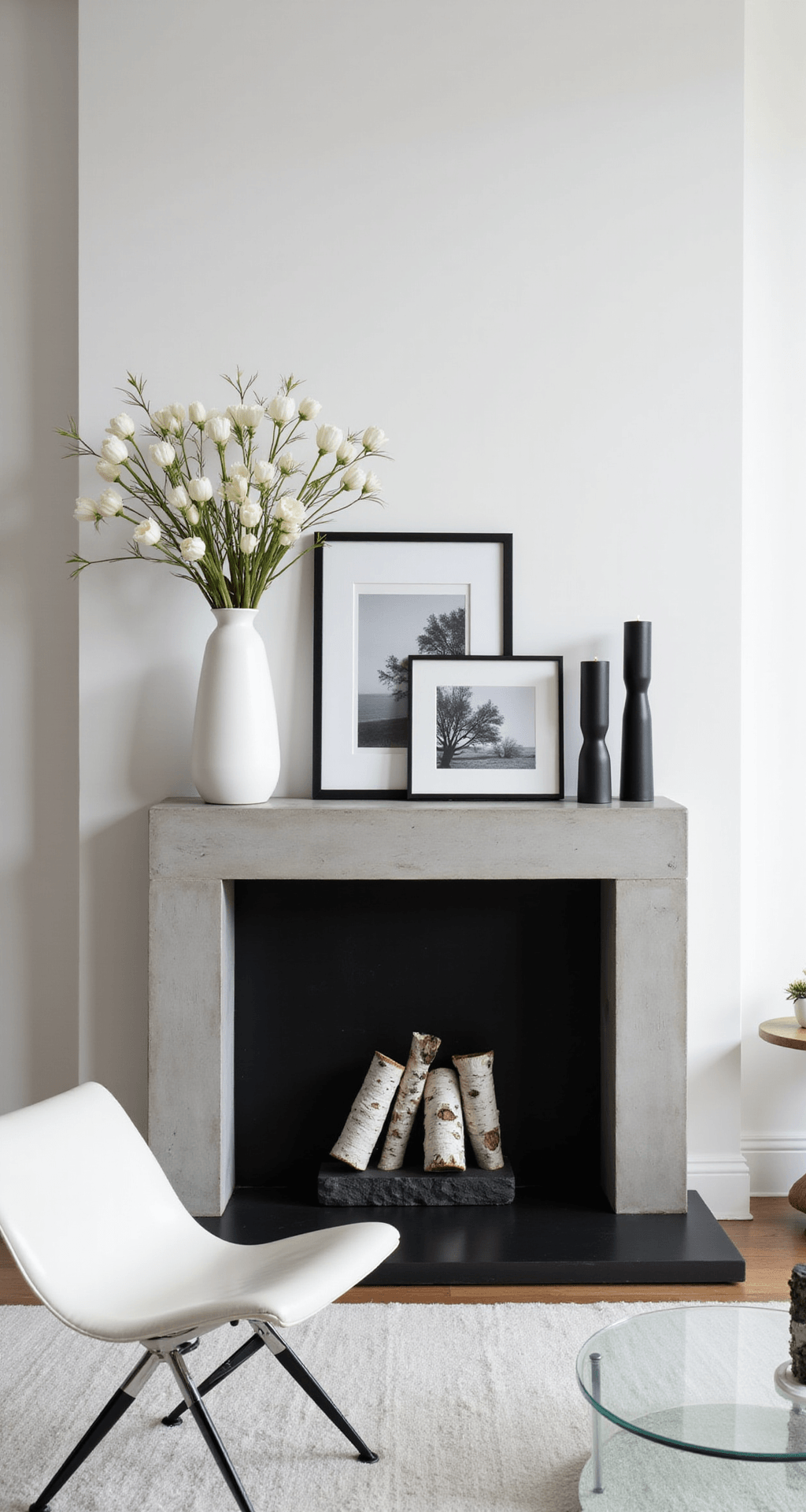
My Foolproof Strategy for Creating a Focal Point
Here’s where most people go wrong.
They put everything at the same height, same size, same level of importance.
The result? Visual chaos that your brain can’t process.
Instead, pick one hero piece.
For me, it’s usually either:
- A colorful spring wreath hung above the mantel
- A large botanical painting or mirror
- An oversized garland with trailing greenery
Everything else supports this star player.
If you’ve got artwork above your fireplace, surround it with muted-tone décor.
Let that painting breathe.
Don’t compete with it by putting a neon pink vase right underneath.
I made that mistake during my first attempt at spring decorating, and my friend politely asked if I was “going for eclectic or having a yard sale.”
Lesson learned.
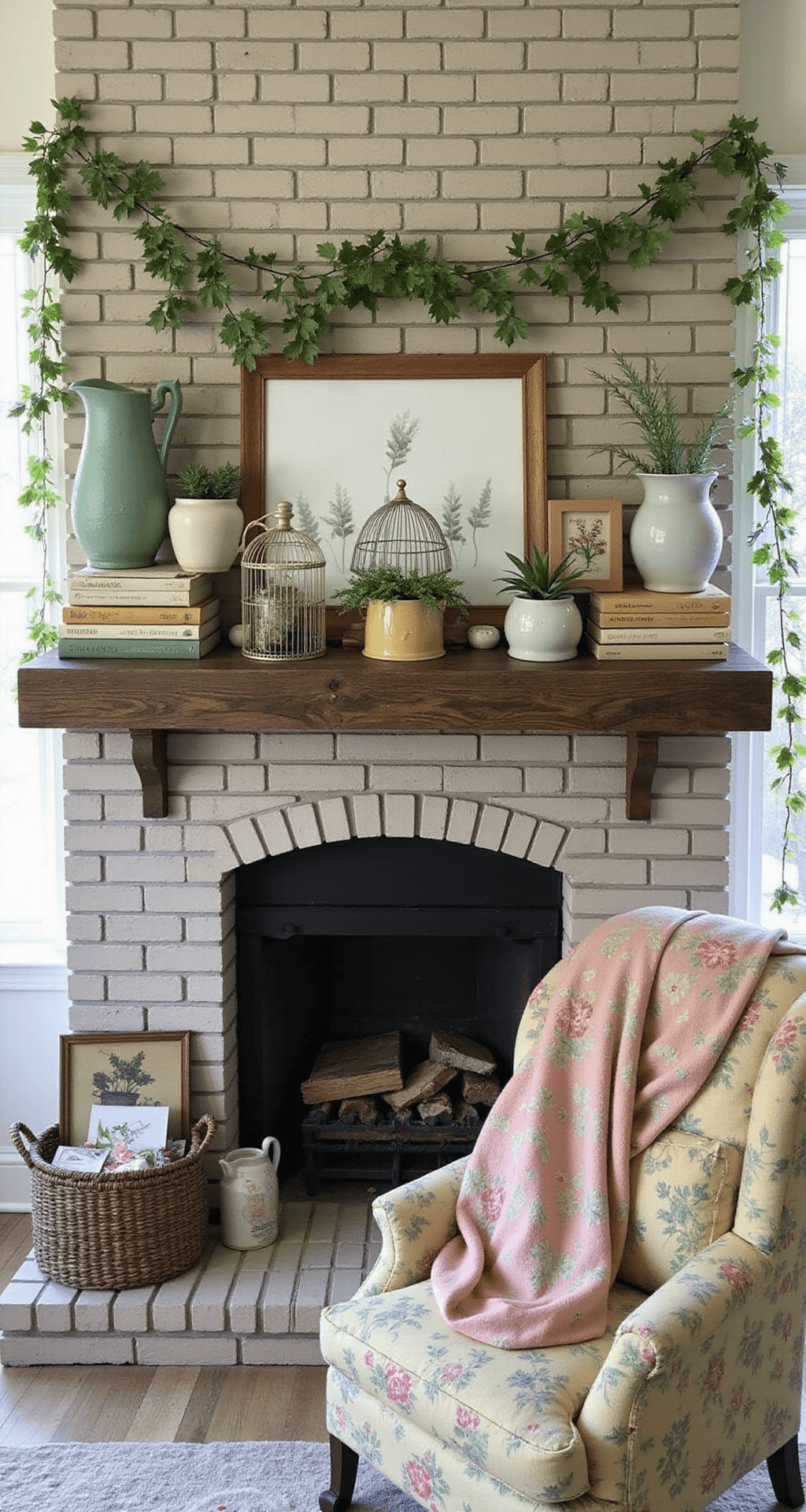
The Height and Layering Trick That Changed Everything
This technique is stupid simple but wildly effective.
Vary your heights like you’re creating a cityscape.
On one end of my mantel, I place a tall vase (we’re talking 14-16 inches).
On the other end, a stack of vintage books topped with a small ceramic bird figurine.
In the middle, medium-height elements like candles or smaller arrangements.
Your eye travels across the space instead of getting stuck.
Then layer forward and backward:
- Push some items to the back of the mantel
- Bring some to the front edge
- Let greenery spill over and trail down