This post may contain affiliate links. Please see my disclosure policy for details.
Front Porch Container Gardens That’ll Make Your Neighbors Stop and Stare
Contents
- Front Porch Container Gardens That’ll Make Your Neighbors Stop and Stare
- The One Formula That Actually Works (And It’s Dead Simple)
- Sun-Loving Combinations That Scream Summer
- Shade Solutions That Don’t Look Like Defeat
- Color Schemes That Won’t Fade Into Boring
- Design Tricks That Separate Amateurs from Pros
Front porch container gardens transform boring entryways into showstopping displays that literally stop traffic on your street.
I’ve watched too many homeowners plop a single sad petunias in a pot and call it a day. That’s not decorating—that’s giving up.
Your front porch is the first thing people see. It’s your home’s handshake, its first impression, its chance to say “someone who gives a damn lives here.”
So let’s fix this.
The One Formula That Actually Works (And It’s Dead Simple)
Forget everything you think you know about planting containers.
The thriller-filler-spiller method is the only thing you need to remember, and honestly, it’s so obvious I’m annoyed I didn’t figure it out myself years ago.
Here’s how it works:
Thriller: One tall, dramatic plant dead center that acts as your focal point
Filler: Medium-height plants surrounding your thriller, filling in the gaps
Spiller: Trailing plants that cascade over the edges like a botanical waterfall
That’s it. Three plant types, one formula, zero excuses.
I used this method last spring with a large ceramic planter on my front steps, and my mail carrier literally asked if I hired a professional landscaper. I didn’t—I just followed the damn formula.
Sun-Loving Combinations That Scream Summer
If your porch gets blasted with sunlight most of the day, you’re in luck. Sun-loving plants are the drama queens of the garden world.
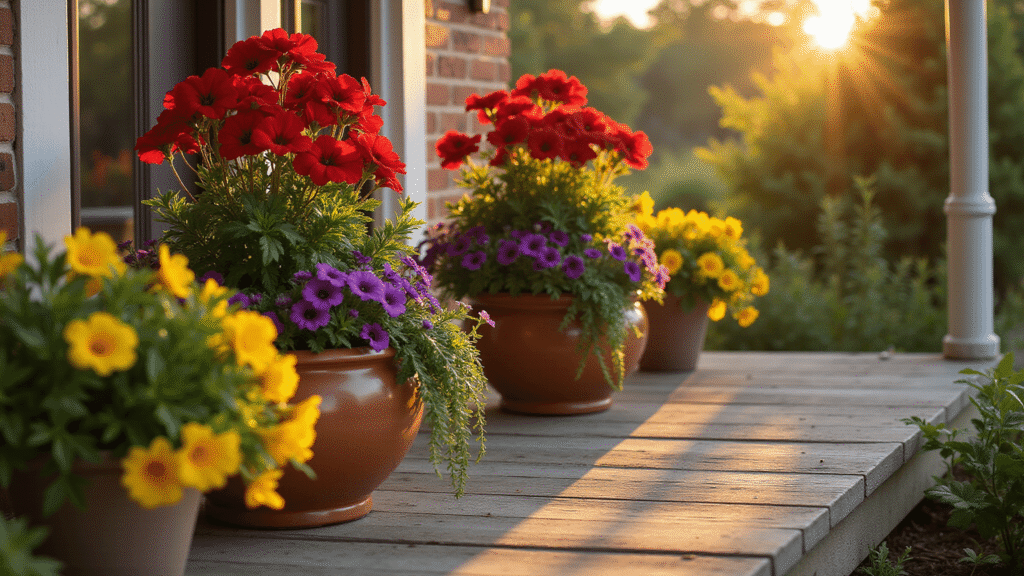
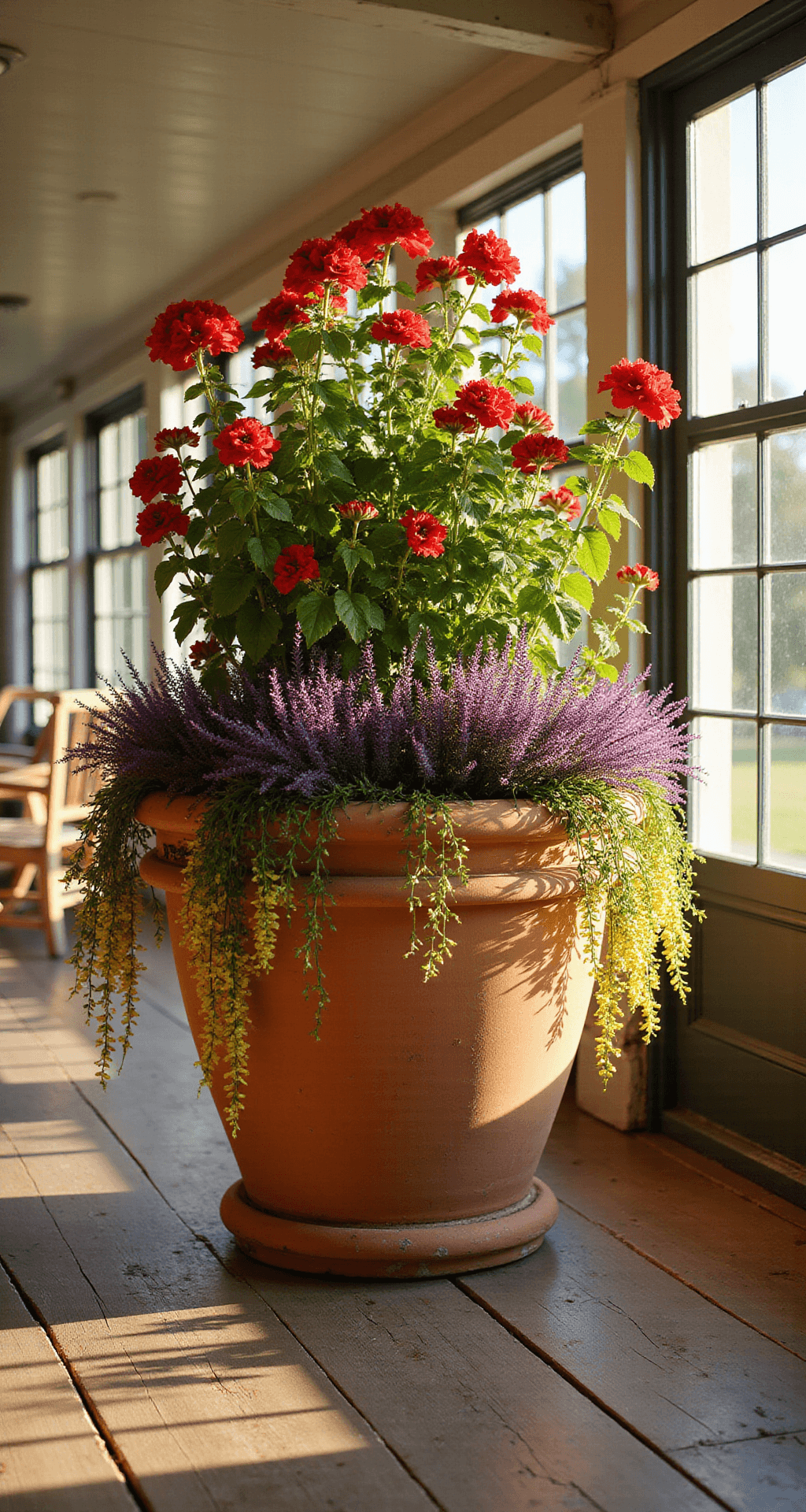
Classic Red, Purple, and Yellow Combo:
- Red geraniums (your thriller)
- Purple petunias (fillers that won’t quit)
- Yellow million bells (spillers that explode with color)
- Purple fountain grass (adds movement and texture)
This combination looks like a fireworks display planted in dirt.
The Maximum Flower Power Setup:
Mix Supertunia petunias with Angelface angelonia in whatever colors make your heart sing. These plants bloom like they’re getting paid for it. Seriously relentless bloomers.
Grab some premium potting soil for these—they’re heavy feeders and need quality soil to perform.
The Pollinator Paradise:
- Bright yellow sunflowers standing tall in the center
- Purple coneflowers filling the middle ground
- Blanket flowers adding bursts of red and orange
- Catmint spilling over with purple-blue flowers
This combo turned my porch into a butterfly convention center. Bees, butterflies, hummingbirds—the whole gang showed up.
Shade Solutions That Don’t Look Like Defeat
Shaded porches aren’t a curse—they’re just playing a different game.
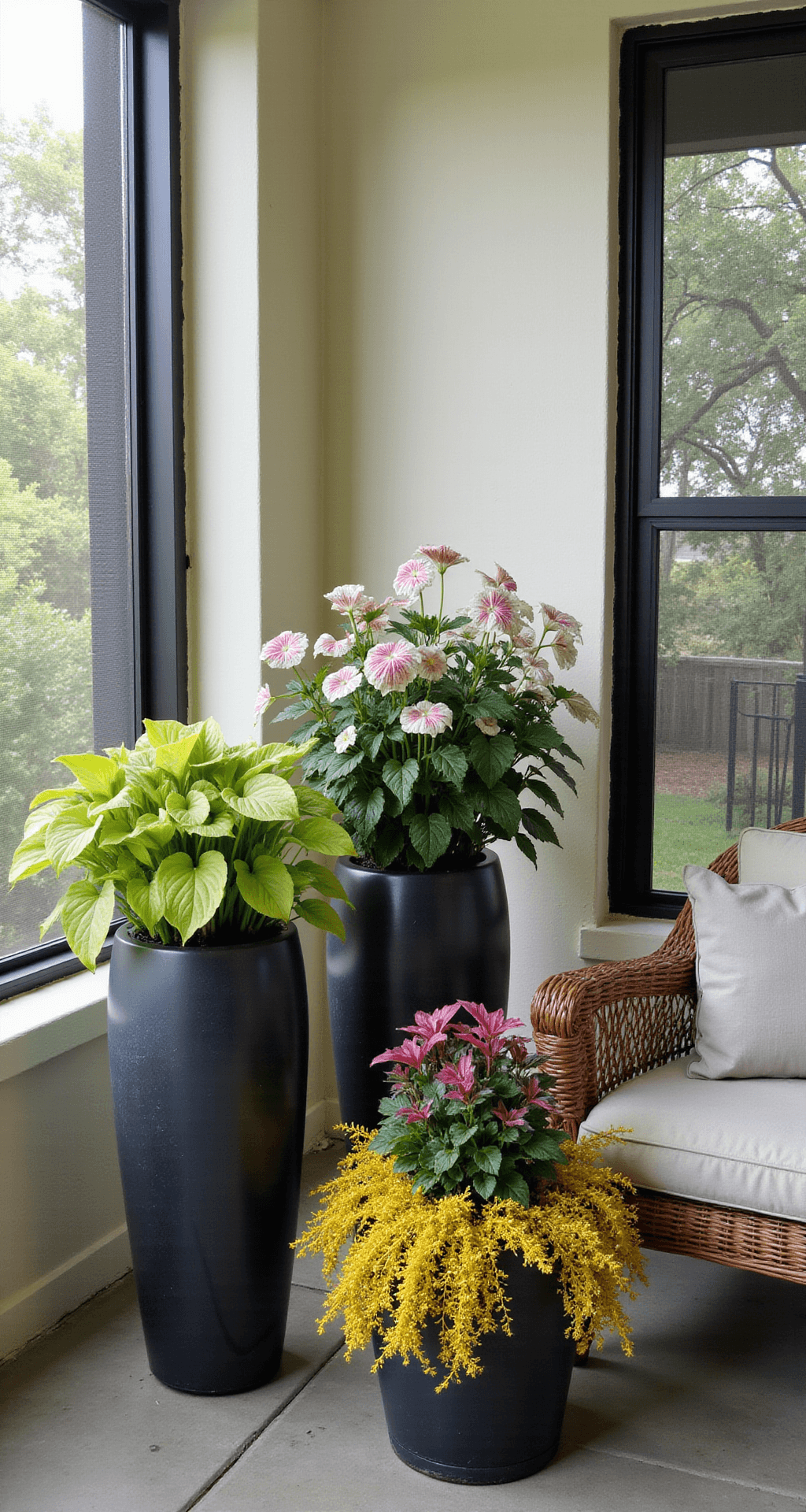
The Hosta Drama Setup:
Hostas are the unsung heroes of shade gardening, and the Guacamole variety is basically the Beyoncé of hostas. Lime-green leaves with dark green edges. Absolute showstopper.
Pair your hostas with:
- Caladiums with their heart-shaped leaves in pink, white, and green
- Coral bells for burgundy or lime foliage that pops
- Creeping Jenny spilling over edges like golden waterfalls
- Begonias adding actual flowers to the party
- Coleus because nothing else gives you that color variety
- Impatiens for reliable blooms in the shadows
- Ferns for that lush, “I live in a forest” vibe
I planted this combination in three decorative outdoor planters on my north-facing porch last year. In shade. FULL SHADE. And it looked better than my sun garden.
Color Schemes That Won’t Fade Into Boring
Summer sun is brutal on colors. Some shades wash out and look anemic by July.
Pick colors with backbone:
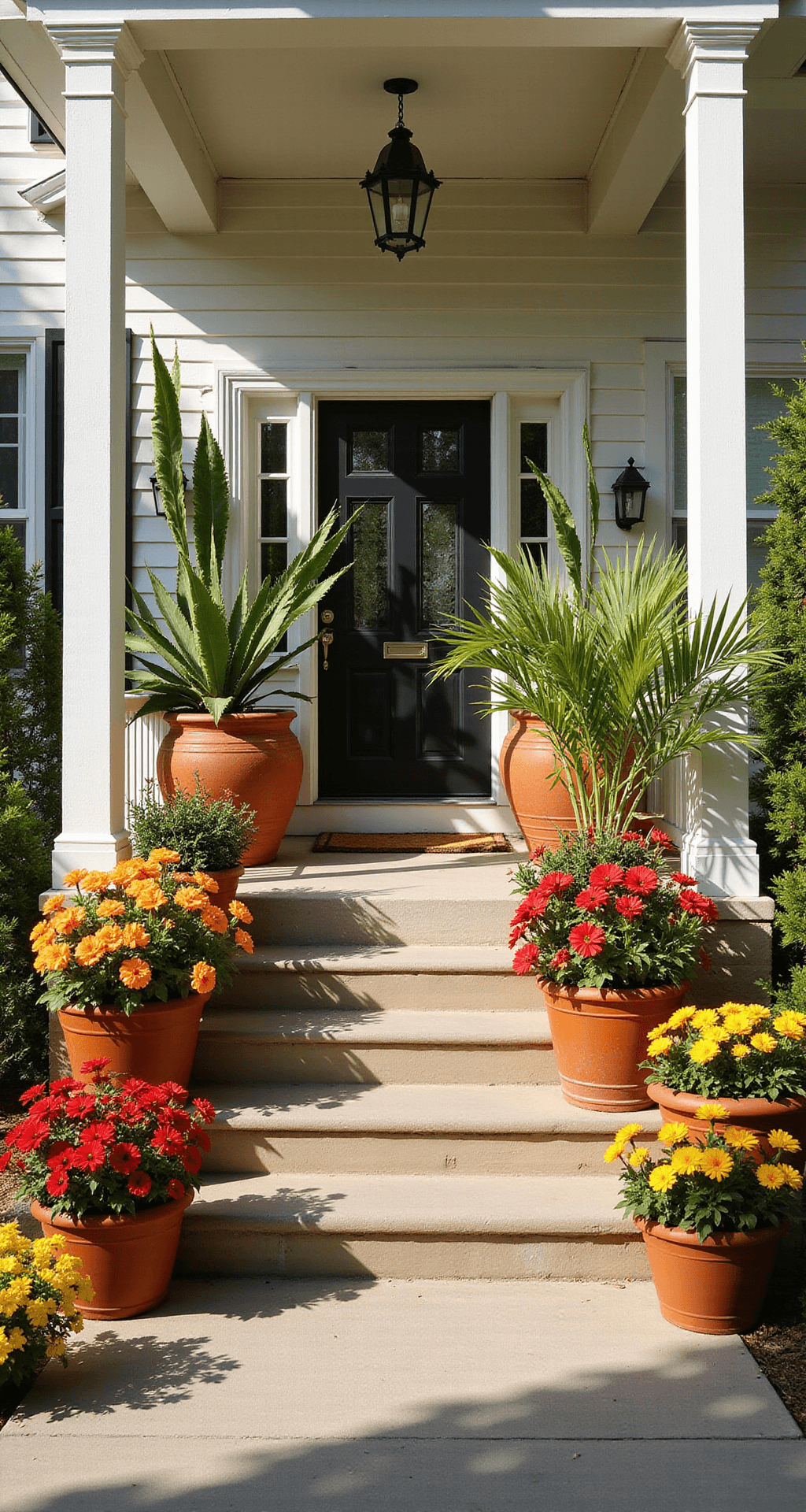
Orange, Red, and Dark Yellow:
Light orange poppies, red blooms, and dark yellow flowers with clematis climbing up behind them. This combo holds its color even when the sun is trying its hardest to bleach everything.
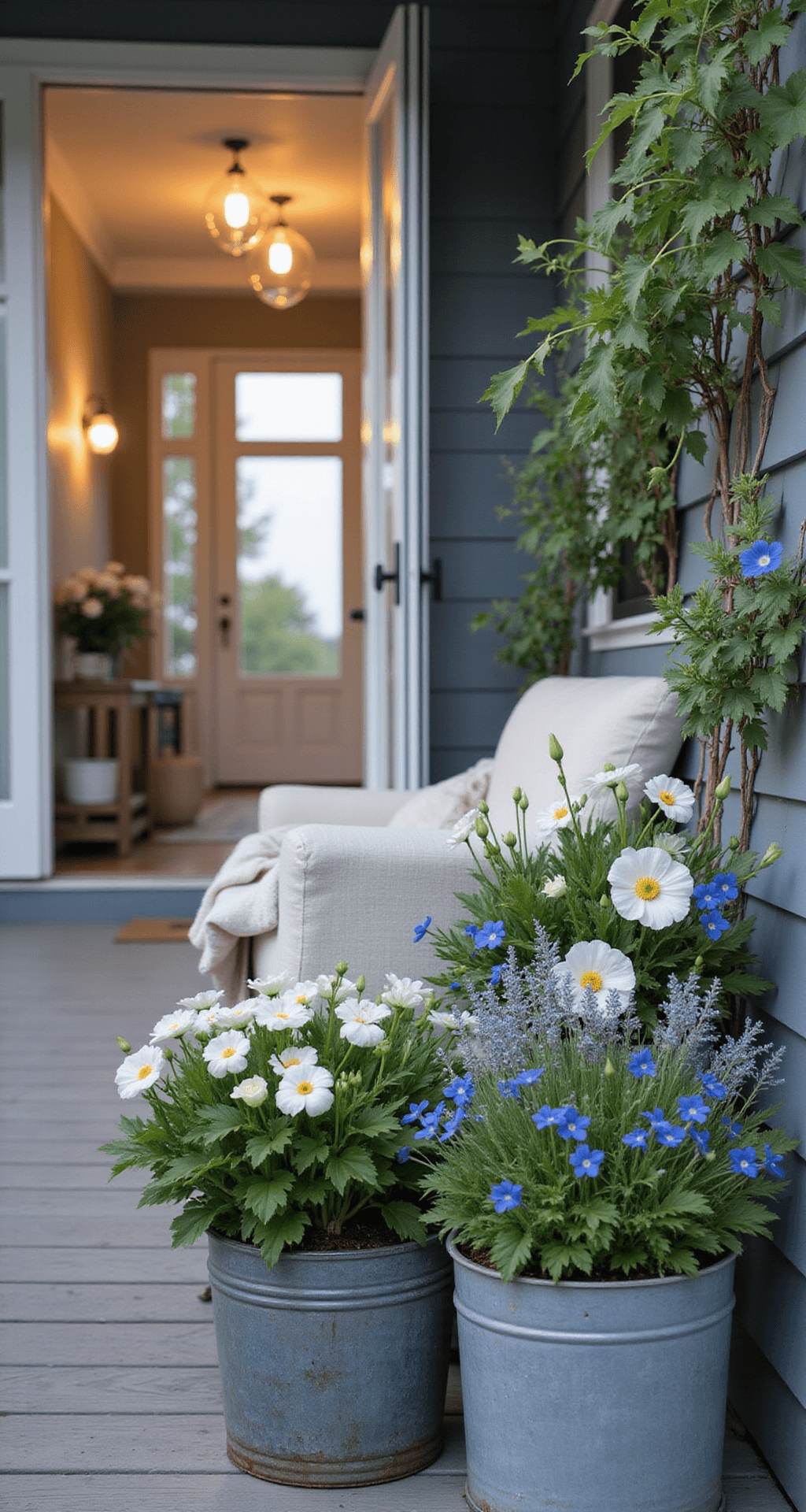
Southern Charm Blues:
Blue poppies (yes, they exist) with dusty miller’s silvery foliage and eucalyptus. Sophisticated without being stuffy.
Cream and Elegance:
Cream white poppies paired with clematis and a garden trellis behind them. This is what “classy” looks like in plant form.
Bright Green with Pinks and Purples:
Lime-green plants (like potato vine or sweet potato vine) paired with hot pinks and deep purples. This combination photographs like a dream and looks energetic without being chaotic.
Design Tricks That Separate Amateurs from Pros
Match Your Light, Not Your Pinterest Board:
Hanging baskets look gorgeous—when they’re planted correctly for your light conditions.
I learned this the hard way after killing $60 worth of sun-loving petunias in my shaded corner. RIP to those poor souls.
If both sides of your porch get equal sunlight, matching hanging baskets create beautiful symmetry.
If one side is sunny and the other’s shaded? Different plants, same pot style. Symmetry in design, not in plant choice.
Go Vertical with Height:
Flat arrangements are boring arrangements.
Add tall accent plants:
- Palm trees (yep, you can container-grow these)
- Yucca for architectural drama
- Purple fountain grass for movement
- Container stakes or plant supports for climbing vines