This post may contain affiliate links. Please see my disclosure policy for details.
Why I Switched to Fake Flowers (And Never Looked Back)
Contents
Let me be brutally honest.
I work fifty-hour weeks, forget to water myself half the time, and the last thing I need is plant guilt weighing on my conscience.
Artificial flowers require absolutely zero maintenance.
No watering schedules. No fertilizing. No deadheading. No pruning.
I leave for two-week vacations without begging neighbors to play plant-sitter, and I return to a porch that looks exactly as gorgeous as when I left.
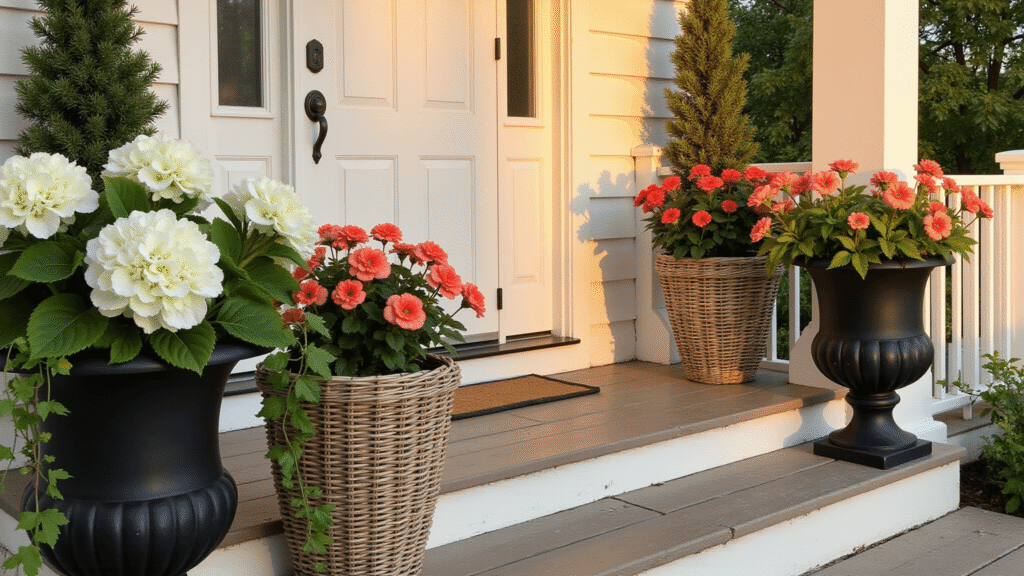
The modern artificial flower arrangements are weatherproof and UV-resistant, which means they laugh in the face of torrential downpours and brutal summer sun.
My faux hydrangeas have survived two full seasons of Midwest weather—from January blizzards to August heat waves—without fading or falling apart.
Plus, they’re completely pet-safe.
My cat Oscar treats every living plant like a salad bar, but he ignores the fake ones entirely.
No more emergency vet visits because he nibbled something toxic.
What I Wish Someone Had Told Me Before Buying
I made some expensive mistakes during my first shopping spree.
Here’s what actually matters when you’re throwing down cash on fake greenery.
UV Protection Is Non-Negotiable
This is the hill I’ll die on.
If your arrangements sit in direct sunlight, UV protection isn’t optional—it’s mandatory.
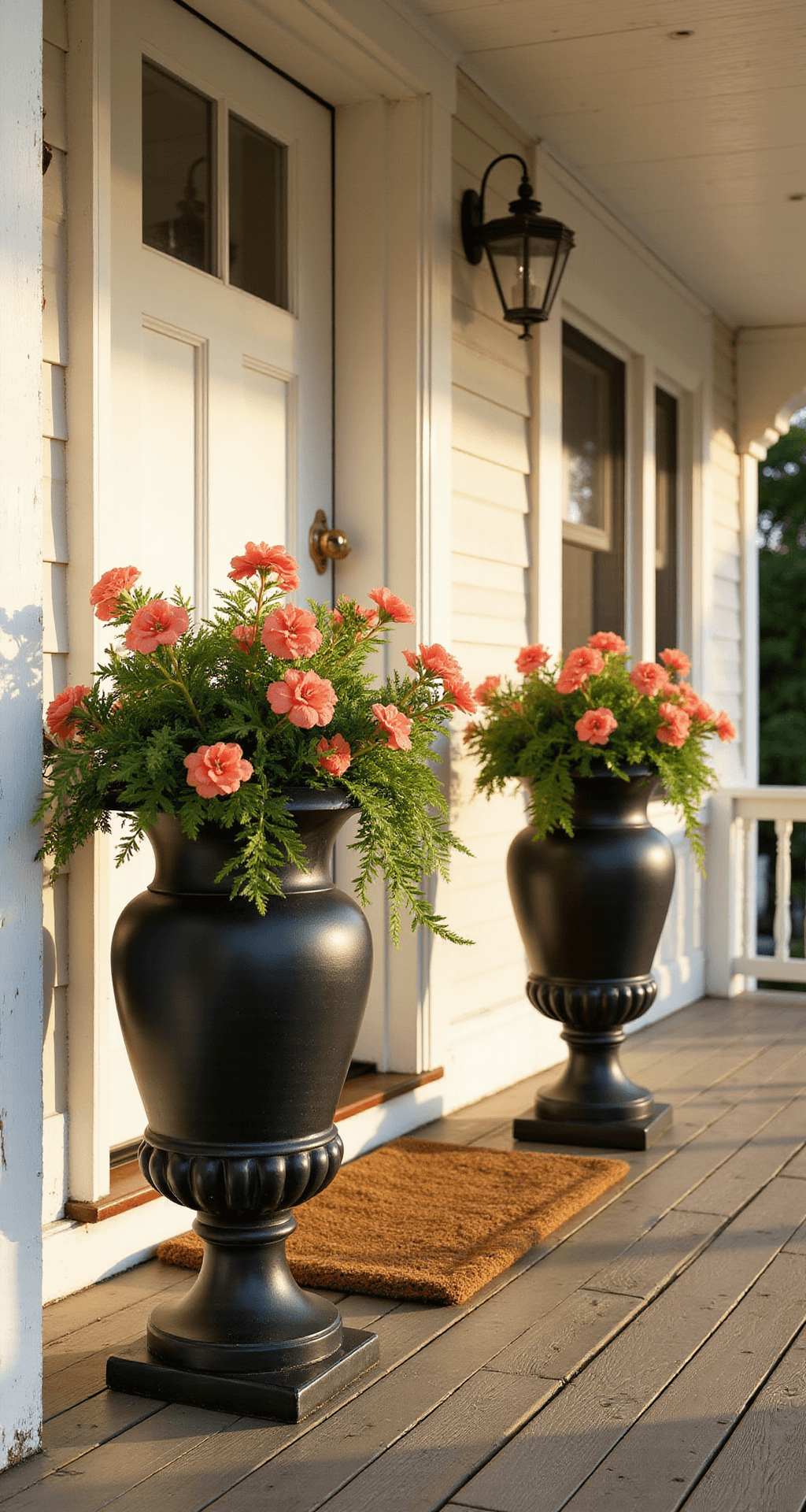
I learned this the hard way when my first batch of gorgeous geraniums turned from vibrant coral to sad, washed-out pink within six weeks.
Look for products specifically labeled UV-resistant or UV-treated.
The packaging should explicitly mention outdoor use and sun protection.
If you fall in love with flowers that don’t have UV protection, grab some ScotchGard UV protectant spray and coat them yourself before placing them outside.
I do this now with every arrangement as extra insurance.
Material Quality Makes or Breaks Realism
Not all fake flowers are created equal, and the material determines whether guests think they’re real or immediately clock them as imposters.
Polyethylene (PE) is my go-to for outdoor durability.
It holds up against weather like a champ and maintains flexibility without becoming brittle.
Plastic with matte finishes looks significantly more realistic than shiny options.
That telltale artificial sheen screams “FAKE” from across the street.
I specifically avoid anything with that plasticky gloss.
Silk or fabric flowers can look absolutely stunning and incredibly lifelike, but they need shelter.
I use these under my covered porch overhang where rain can’t directly hit them.
Direct downpours and harsh sun will destroy fabric flowers faster than you can say “waste of money.”
Size and Scale Actually Matter
Your gorgeous flowers will look ridiculous if they’re completely out of proportion with your space.
Here’s my rule of thumb:
- Tall arrangements or plants (24-36 inches) work beautifully flanking doorways
- Medium height (12-18 inches) fits perfectly on porch railings or small tables
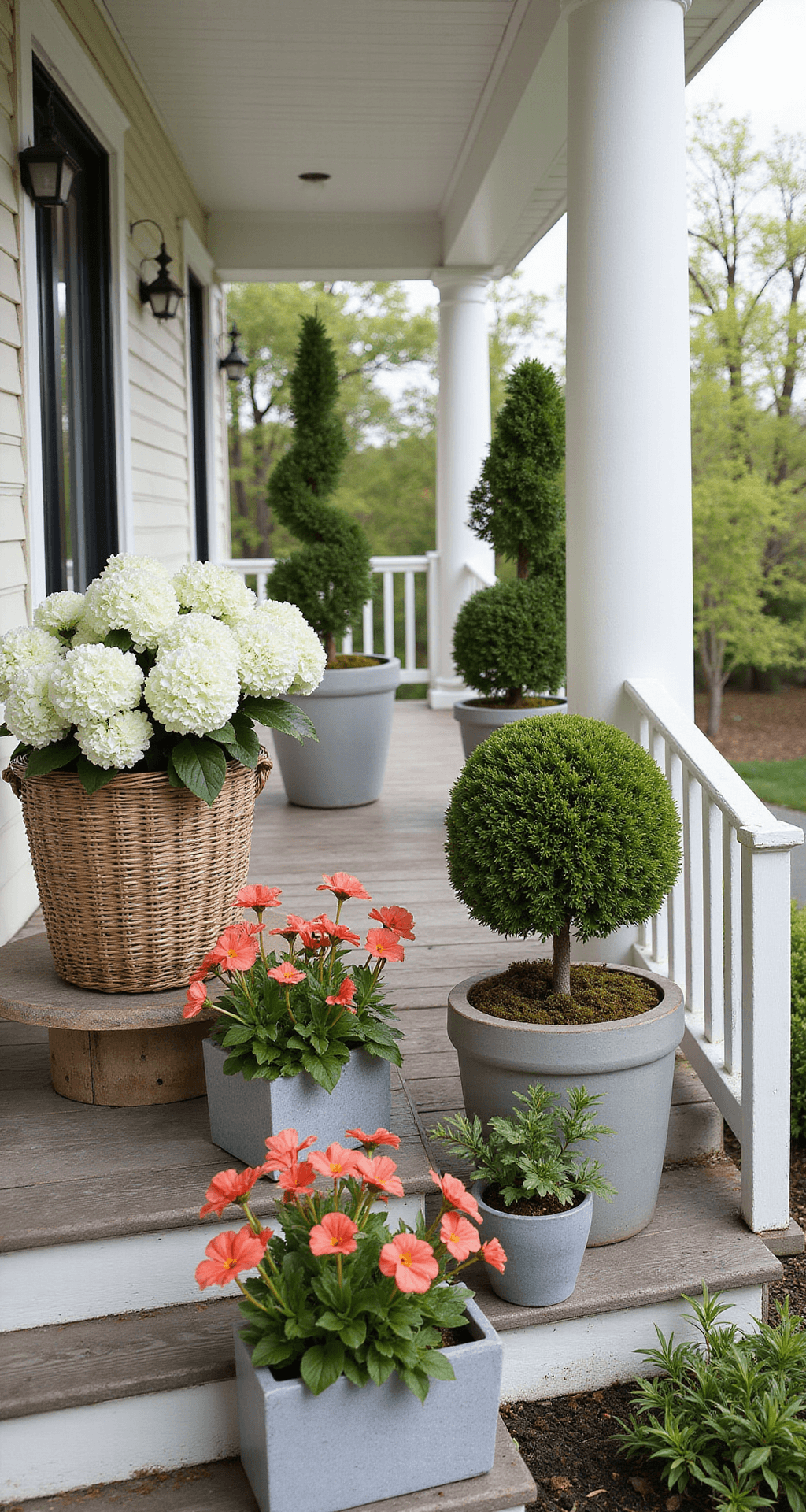
- Varying heights when grouping multiple planters creates that natural, layered look that screams “I know what I’m doing”
I place my tallest artificial boxwood topiaries on either side of my front door and use shorter arrangements cascading down the porch steps.
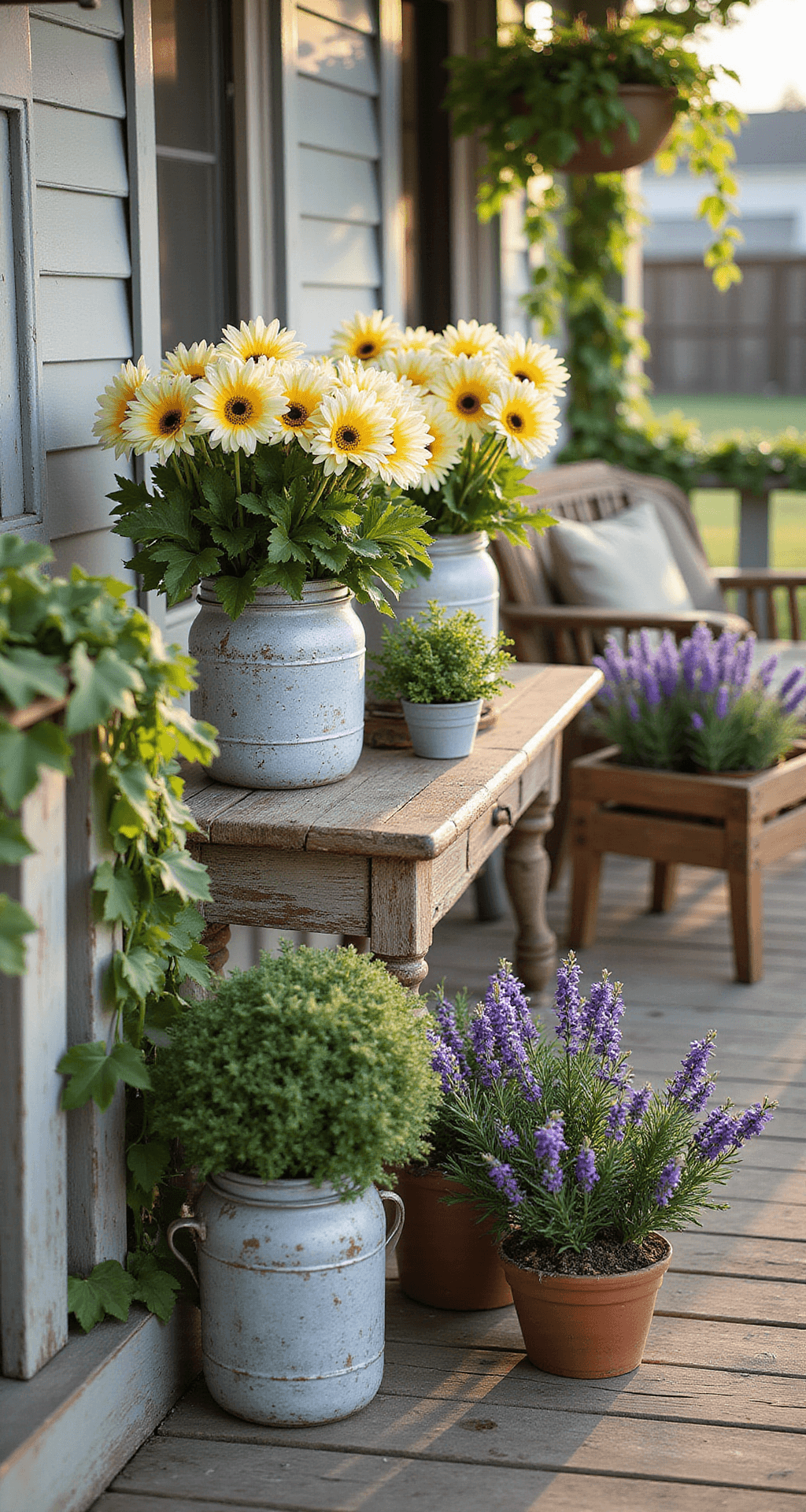
The visual flow leads eyes naturally to the entrance.
The Flowers That Actually Look Convincing
I’ve tested probably thirty different varieties at this point.
Some look amazing.
Others look like they came from a dollar store Halloween section.
Hydrangeas
Faux hydrangeas are the MVPs of my porch.
The high-quality ones have realistic petal veining that catches light beautifully.
I bought white hydrangeas with subtle green tinges on the edges, and my mail carrier asked what fertilizer I use.
Victory.
Geraniums
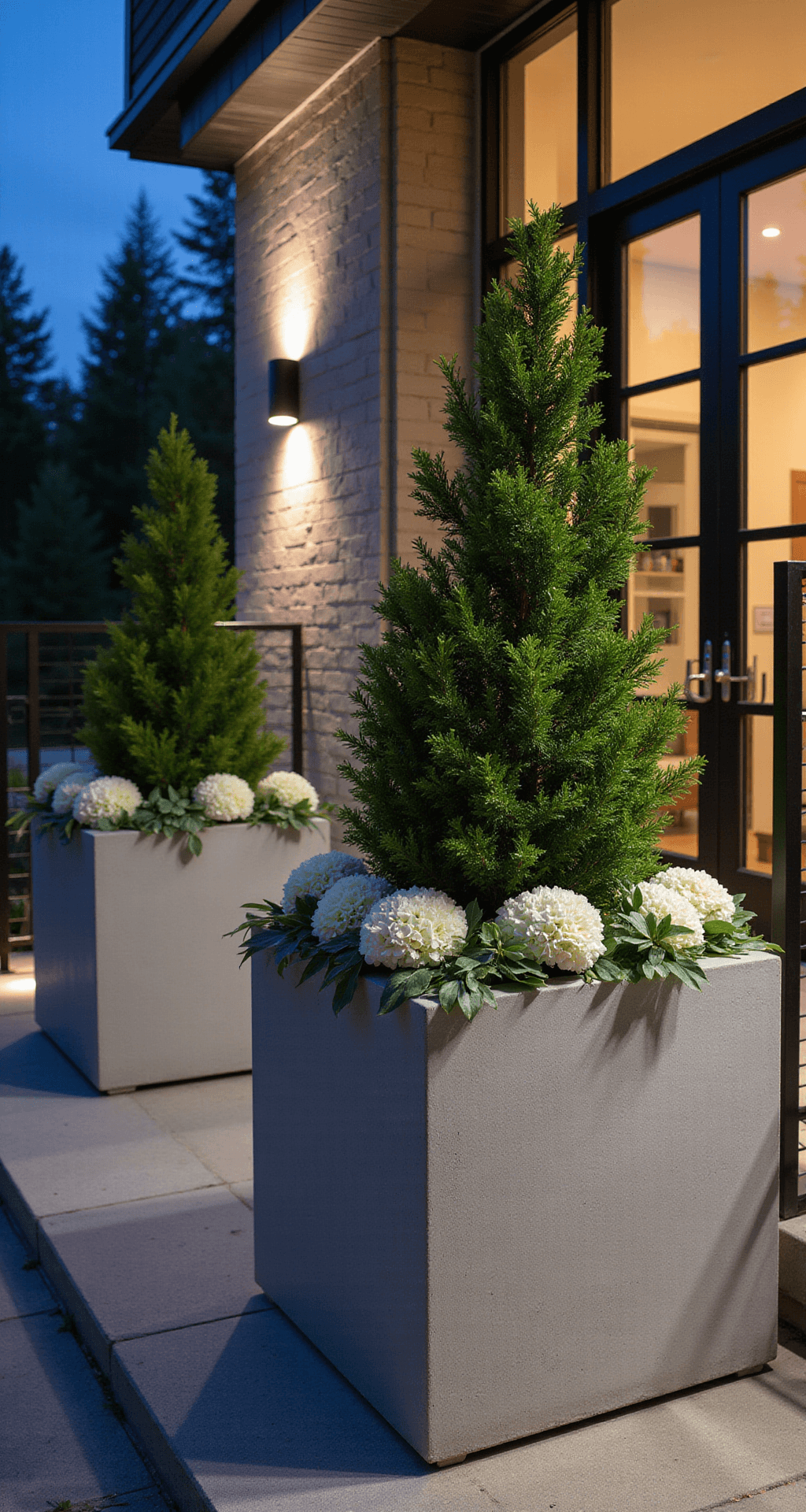
Classic UV-protected geraniums deliver those summer cottage vibes without the constant deadheading real geraniums demand.
I rotate between coral, red, and deep pink depending on the season.
Lavender
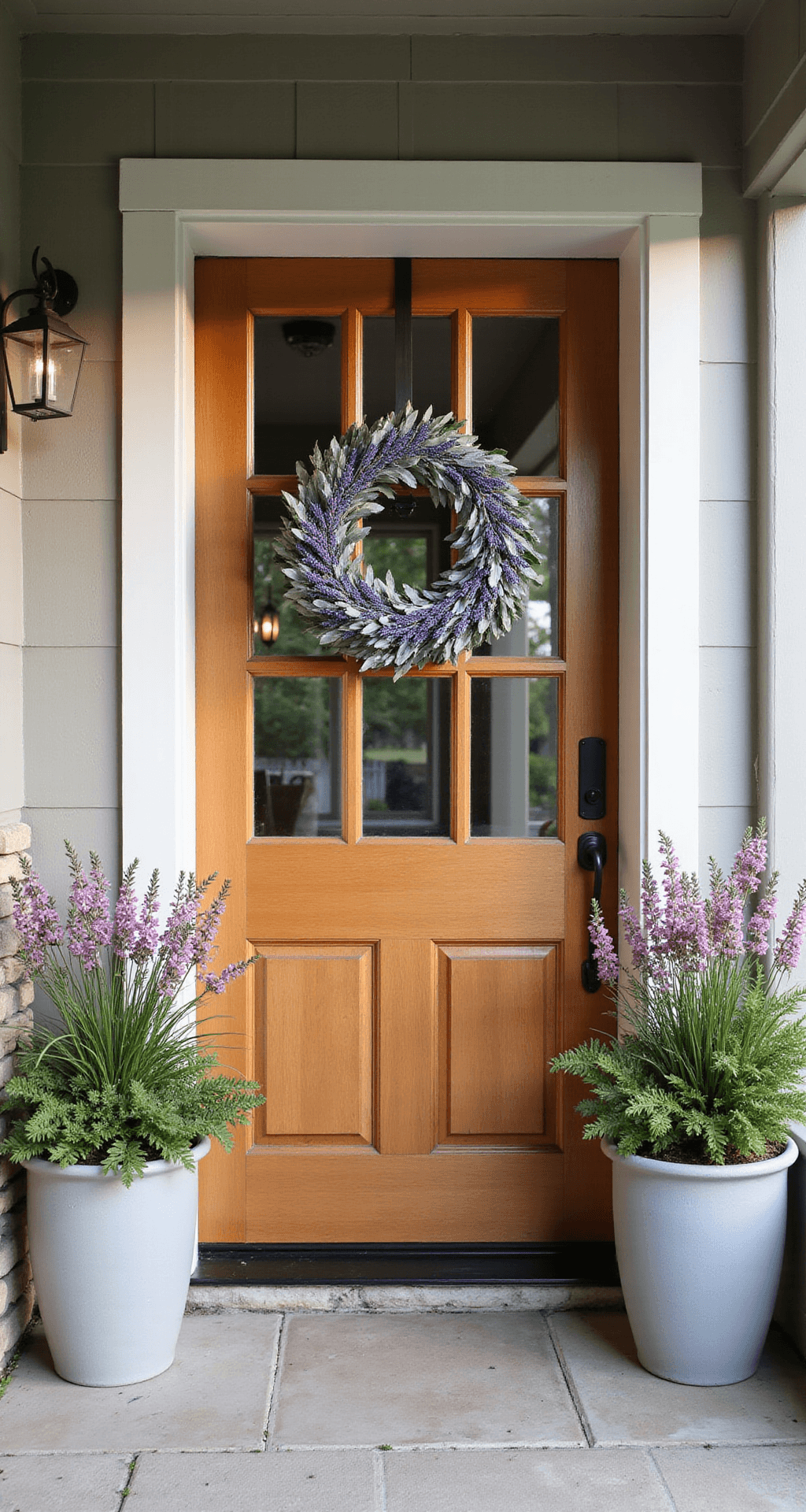
Faux lavender bundles bring rustic farmhouse appeal without attracting every bee in a three-mile radius.
I tuck these into planters as filler around larger blooms, and they add gorgeous texture.
Trailing Plants
Trailing ivy or wisteria transforms basic planters into something special.
I drape these over the edges of my decorative outdoor planters, and they cascade down beautifully.
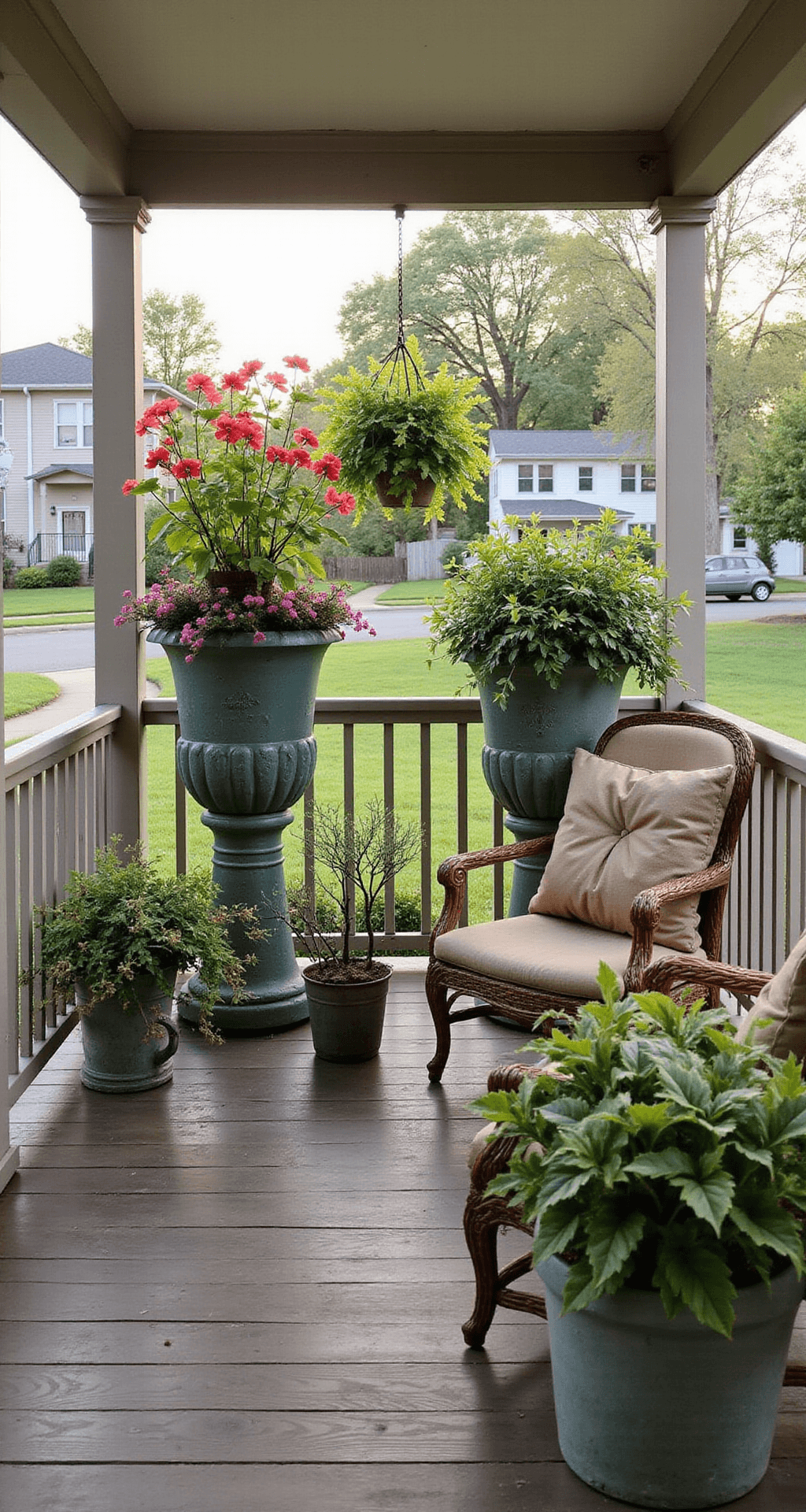
The movement adds life that static upright flowers can’t achieve alone.
Supporting Greenery
Don’t sleep on the supporting cast.
Artificial ferns add lushness.
Eucalyptus sprays provide that trendy modern touch.
Boxwood grounds everything with classic elegance.
I mix these into every arrangement because all-flower planters can look weirdly artificial, while mixed greenery mimics how plants actually grow in nature.