
This post may contain affiliate links. Please see my disclosure policy for details.
Easter Egg Wreath: Your 30-Minute Gateway to Spring Curb Appeal
Contents
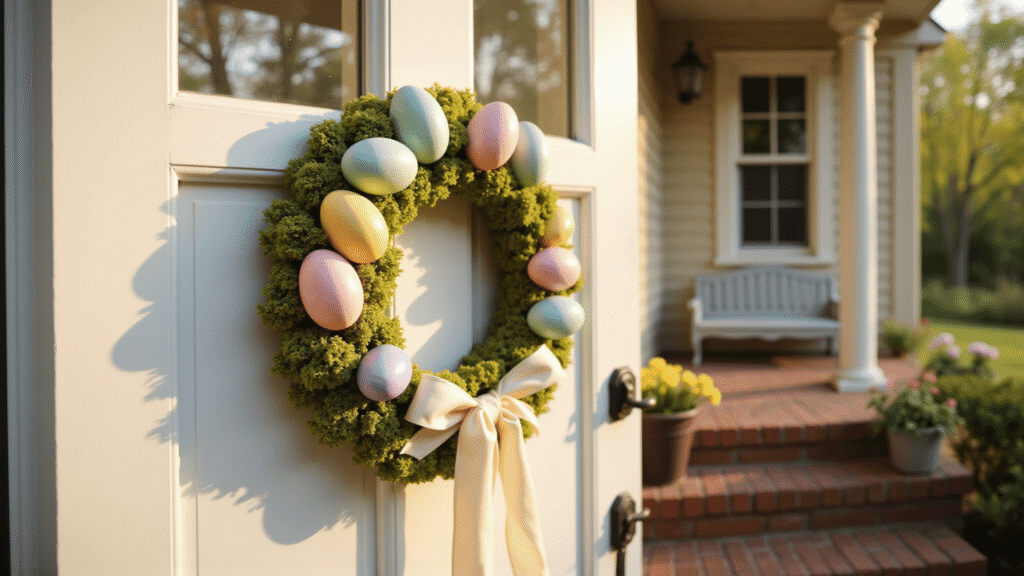
Easter egg wreaths are about to become your new obsession, and I’m not even sorry about it.
Last March, I stood at my front door holding a sad, deflated winter wreath that had seen better days. My neighbor’s door looked like something out of a magazine spread, covered in a gorgeous explosion of pastel eggs. I asked her about it, expecting to hear she’d dropped a hundred bucks at some fancy boutique. Nope. She made it in under an hour for less than twenty bucks.
That conversation changed my spring decorating game forever.
Why Your Front Door Needs This (And Why Right Now)
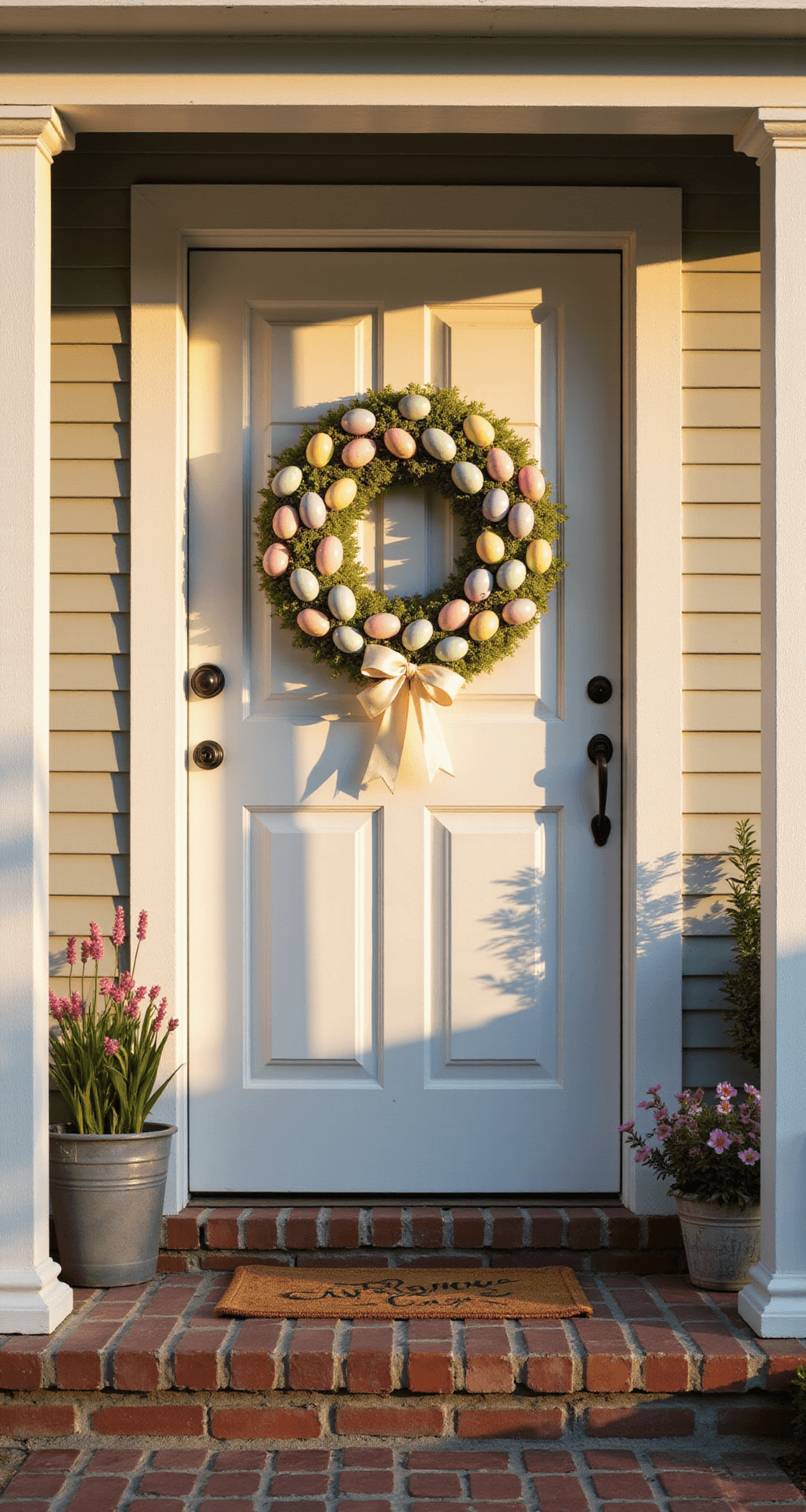
Let me be brutally honest with you. Your front door is the first thing guests see, and if it’s looking blah, your whole home feels blah.
You’ve probably scrolled past dozens of spring wreath ideas thinking:
- “That looks too complicated for me”
- “I don’t have time for craft projects”
- “I’m not creative enough”
- “I’ll probably mess it up”
Stop right there.
If you can operate a hot glue gun without gluing your fingers together (and honestly, even if you can’t), you can make this wreath. I’ve taught my technique to friends who claimed they “weren’t crafty” and they knocked it out in 45 minutes flat.

Everything You Actually Need (No Fancy Craft Store Nonsense)
Here’s what’s going into your cart, and I promise this list is as short as it gets.
The Non-Negotiables
Wreath form – Your foundation. I started with foam because I’m not trying to win craft competitions here. Foam forms are forgiving, cheap, and don’t fight back when you’re gluing things at weird angles. Grapevine looks more rustic if that’s your vibe, but it requires more fussing. Wire forms work too, but they’re the advanced level nobody needs as a beginner.
Plastic Easter eggs – The star of the show. You’ll need around 55 to 70 eggs depending on your wreath size and how gaps-averse you are. I’m moderately gaps-averse, so I landed at 65 eggs for my 14-inch wreath. Buy them in bulk bags at dollar stores or wait for the post-Easter sales when craft stores practically give them away.
Hot glue gun and glue sticks – Your best friend. Don’t cheap out here. Get a full-size glue gun, not those tiny ones that run out of glue every three eggs. Stock up on glue sticks because you will use more than you think. I always buy twice as many as I think I need.
Ribbon or twine – For the finishing touch and hanging. Go with wired ribbon if you want your bow to hold its shape like it means business. Regular ribbon works fine too, but it’s floppier and requires more patience to arrange.
The Nice-to-Haves
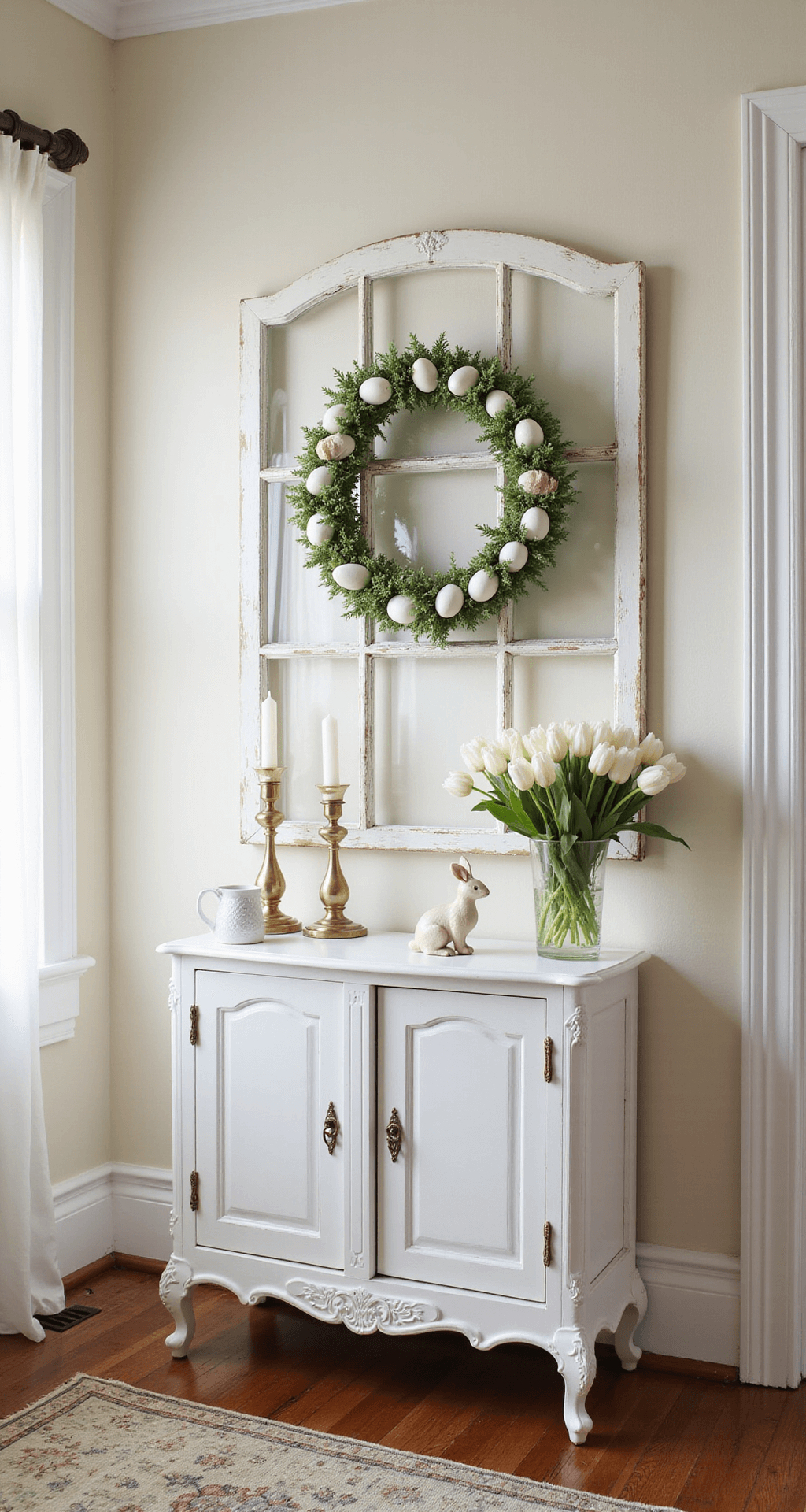
Spanish moss or Easter grass. These gap-fillers are lifesavers when you inevitably have bare spots showing through. I prefer Spanish moss because Easter grass can look cheap if you’re not careful with it.
Extra embellishments. Tiny florals, miniature bunnies, or silk greenery if you’re feeling fancy. I added some small white flowers to mine last year and got so many compliments I started charging my friends for wreath-making lessons. (Just kidding. Mostly.)
The Damage to Your Wallet
Total cost runs between $15 and $25 if you shop smart. I hit up the dollar store for eggs, grabbed my wreath form during a 50% off sale at the craft store, and already had a glue gun. Final tally: $17.50.
Compare that to buying a pre-made Easter wreath online that’ll run you $40 to $80, and you’re basically making money by crafting. That’s how I justify all my projects to my husband anyway.
The Actual Making Part (Where the Magic Happens)
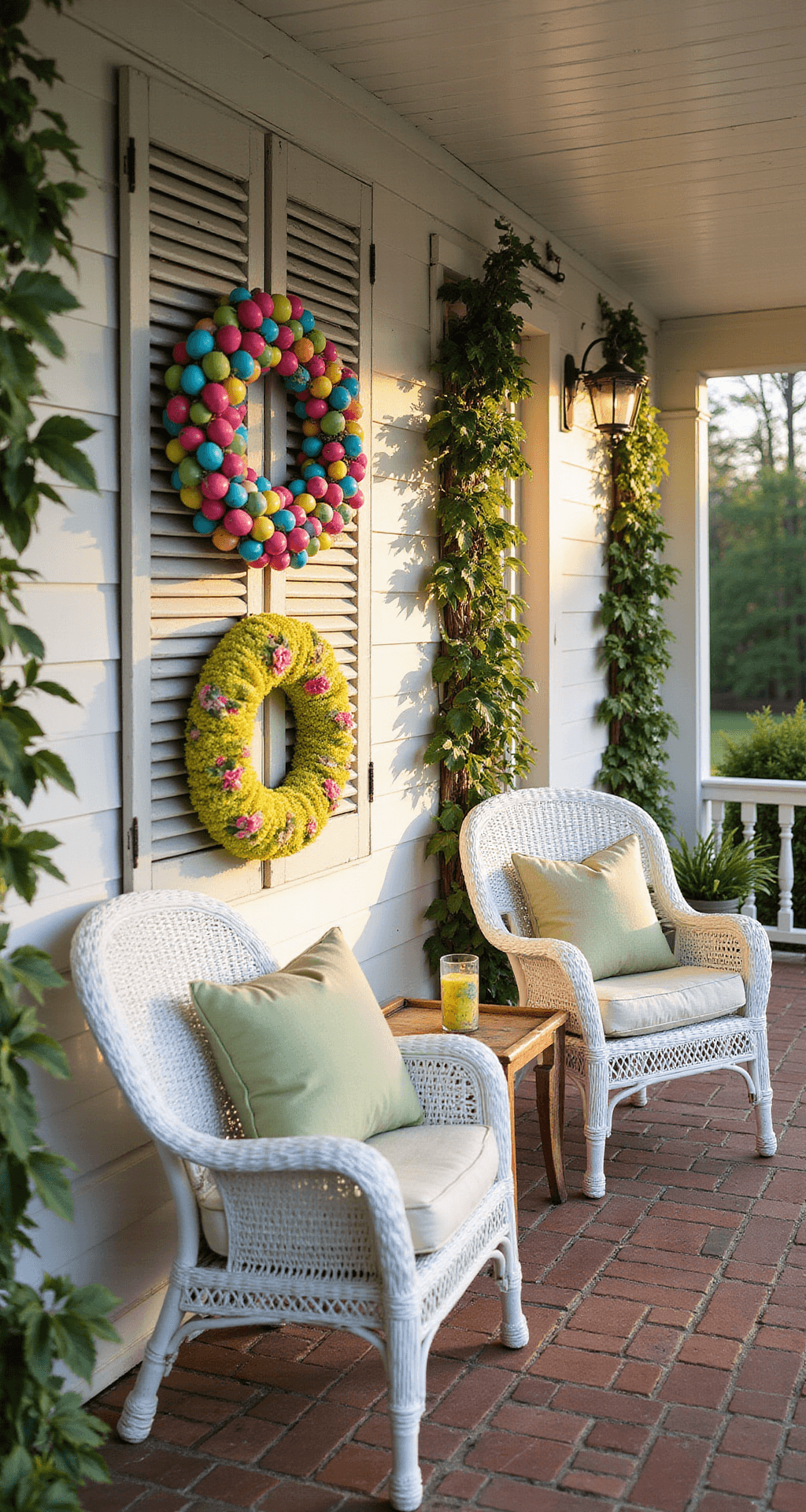
Clear your kitchen table or claim a corner of your dining room. Put on your comfiest clothes because you will get glue somewhere on yourself. It’s not a matter of if, it’s when.
Step One: Prep Your Base
If you went with foam, you’re golden. Skip ahead.
If you chose grapevine because you’re feeling adventurous, wrap that sucker in ribbon or cover it with moss. I use hot glue for moss attachment because spray adhesive gets everywhere and makes your workspace smell like a chemical factory.
Work in small sections. Add glue, press moss firmly, hold for five seconds, move on. Don’t overthink this part—the eggs will cover most of it anyway.
Step Two: Egg Attachment Strategy
This is where people either wing it or follow a plan. I’m a plan person, so here’s my method.
Start with your largest or boldest eggs first. Place them evenly around the wreath to establish your color pattern. I go with a roughly alternating color scheme so I don’t end up with all the pink eggs clumped in one sad section.
Apply hot glue to the flat side of the egg—the side that opens. Press it firmly onto your wreath base. Hold for 10 seconds because hot glue is impatient and will betray you if you let go too early.
Work in sections around the wreath. I divide my wreath into imaginary quarters and complete one section before moving to the next. This keeps me from getting overwhelmed and helps me see the pattern developing.
Fill in the gaps with smaller eggs. Once your main eggs are placed, tuck smaller eggs into the spaces between them. Angle them slightly for dimension instead of laying everything flat like pancakes.
Pro tip from my many wreath-making adventures: If you’re using a grapevine base, glue your eggs to small pieces of moss first, then attach the moss-backed eggs to the wreath. The moss gives you more surface area for adhesion, and grapevine can be slippery.
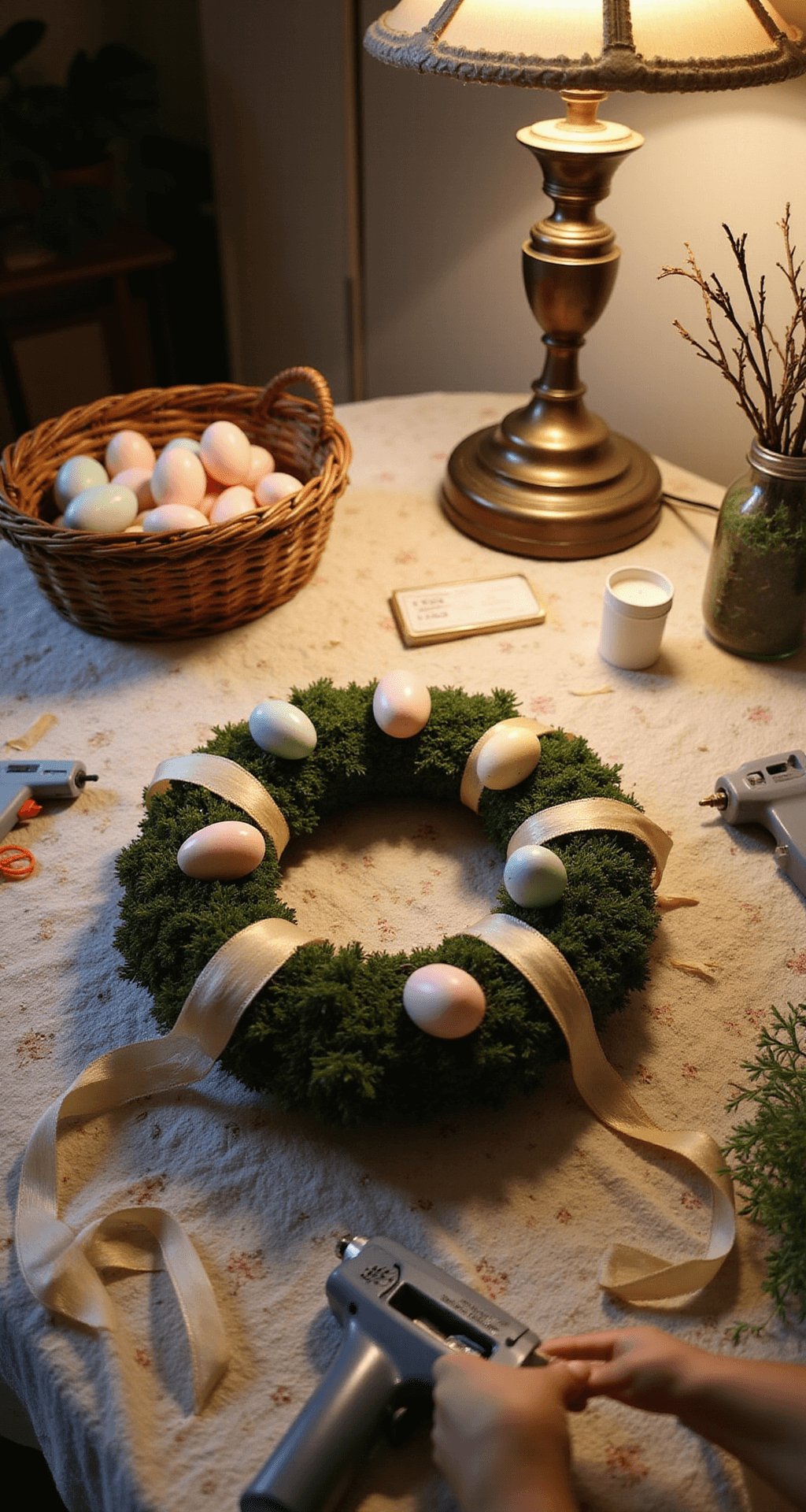
Step Three: The Gap-Filling Mission
Step back and look at your wreath from a few feet away. You’ll spot the bare patches immediately.