This post may contain affiliate links. Please see my disclosure policy for details.
Winter Front Porch Planters That’ll Make Your Neighbors Jealous (Even in a Blizzard)
Contents
- Winter Front Porch Planters That’ll Make Your Neighbors Jealous (Even in a Blizzard)
- Why Your Winter Porch Probably Looks Sad Right Now
- The Three-Layer Secret Every Gorgeous Winter Planter Uses
- When You Actually Want Living Plants (Not Just Sticks)
- How I Actually Build These Things (Without Losing My Mind)
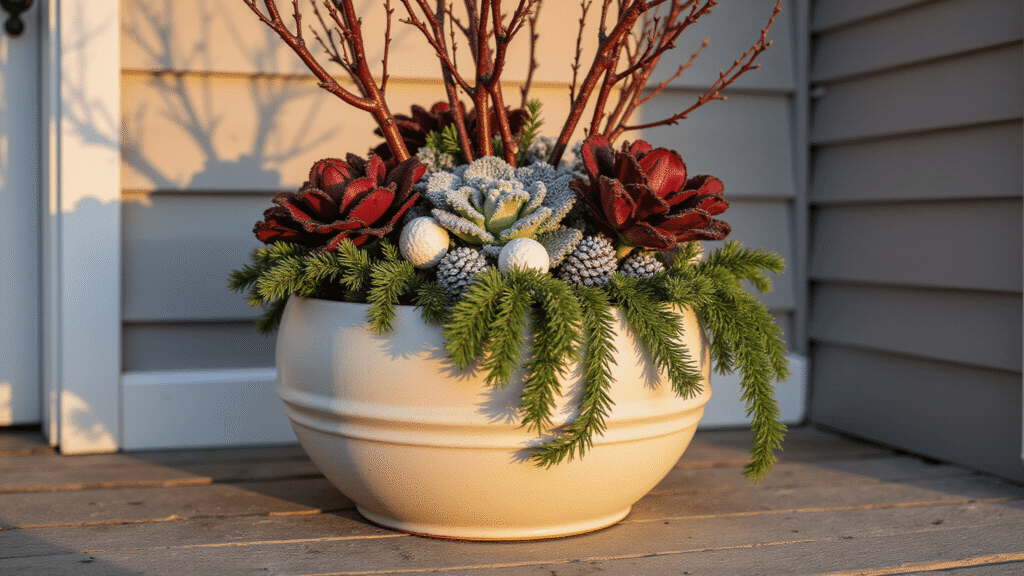
Winter front porch planters saved my sanity last January when I stared out at my depressingly bare entryway and realized I’d turned into one of those people who gives up on their home the second Halloween ends.
You know the feeling, right?
Everyone else’s porch looks like a Pinterest board exploded in the best possible way, while yours screams “we’ve given up until spring.”
I’m here to tell you that creating stunning winter displays isn’t just for people with unlimited budgets or horticultural degrees.
After years of trial and error (and one embarrassing incident involving frozen petunias that looked like soggy cereal), I’ve cracked the code on planters that actually survive the cold months and look incredible doing it.
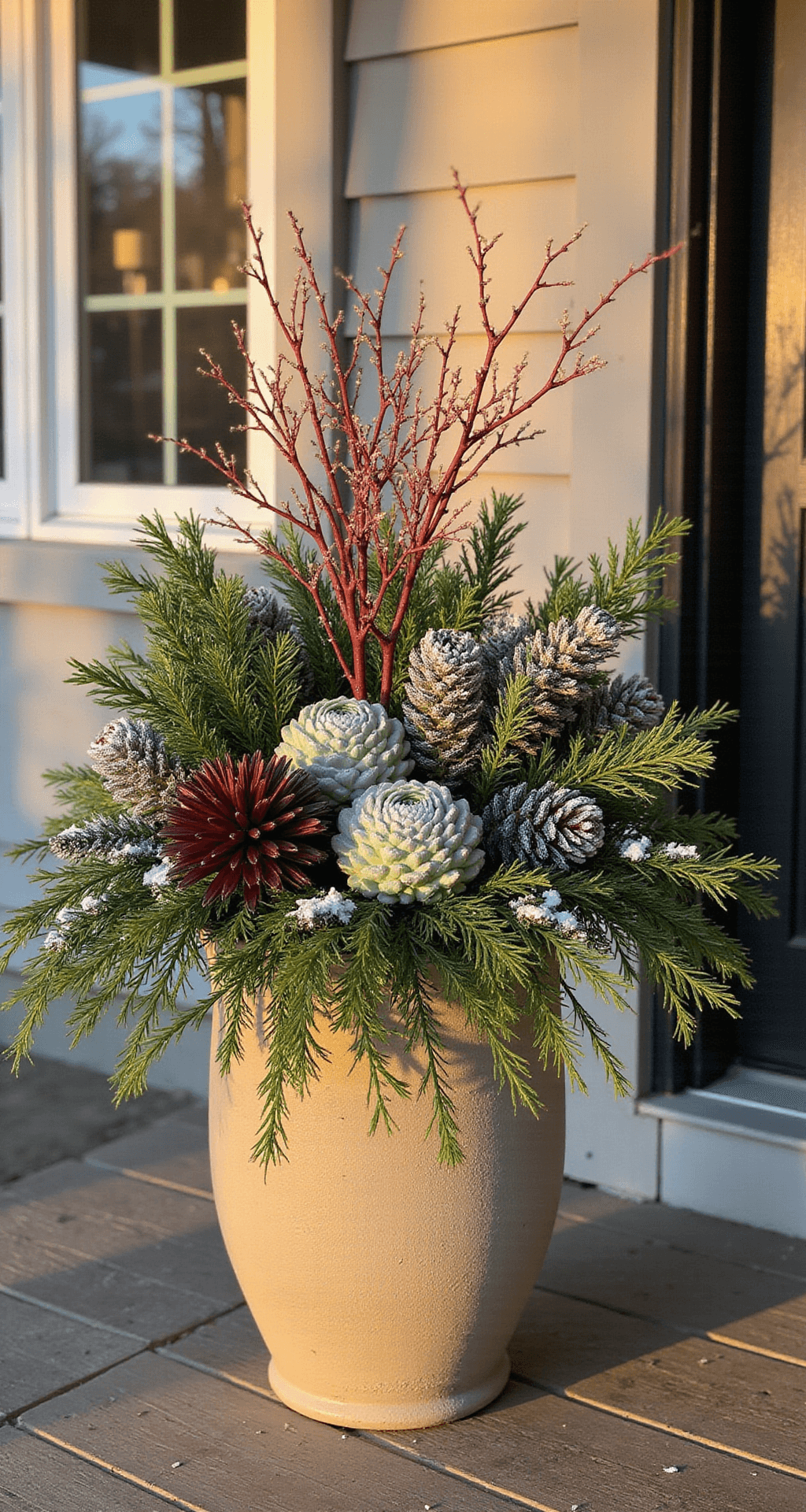
Why Your Winter Porch Probably Looks Sad Right Now
Let me guess what happened.
You planted some cute mums in October, they died by Thanksgiving, and now you’ve got containers filled with brown sticks and regret.
Or maybe you just hauled everything inside and left empty decorative planters staring at everyone who walks by like sad tombstones.
I’ve been there.
The problem isn’t you—it’s that most people try to treat winter containers like summer ones, and that’s about as effective as wearing a bikini in a snowstorm.
Winter planters need a completely different approach, and once you understand the basics, you’ll wonder why you ever stressed about it.
The Three-Layer Secret Every Gorgeous Winter Planter Uses
Here’s what actually works.
Think of your winter planter like getting dressed for cold weather—you need layers that each serve a purpose.
Layer 1: The Evergreen Foundation
This is your base layer, your thermal underwear if you will.
You’ll want flexible, cascading greenery that fills space without looking stiff:
- Cedar clippings (the MVP of winter greenery)
- White pine branches that drape beautifully
- Fir and juniper for that classic Christmas tree vibe
- Leland cedar if you want something fuller
I literally walk around my neighborhood with pruning shears in December, asking neighbors if I can trim their overgrown cedars.
Everyone says yes because you’re basically offering free landscaping.
Layer 2: The Structural Drama
This is where your planter goes from “nice” to “how much did you pay someone to do that?”
You need vertical elements that create height and catch the eye:
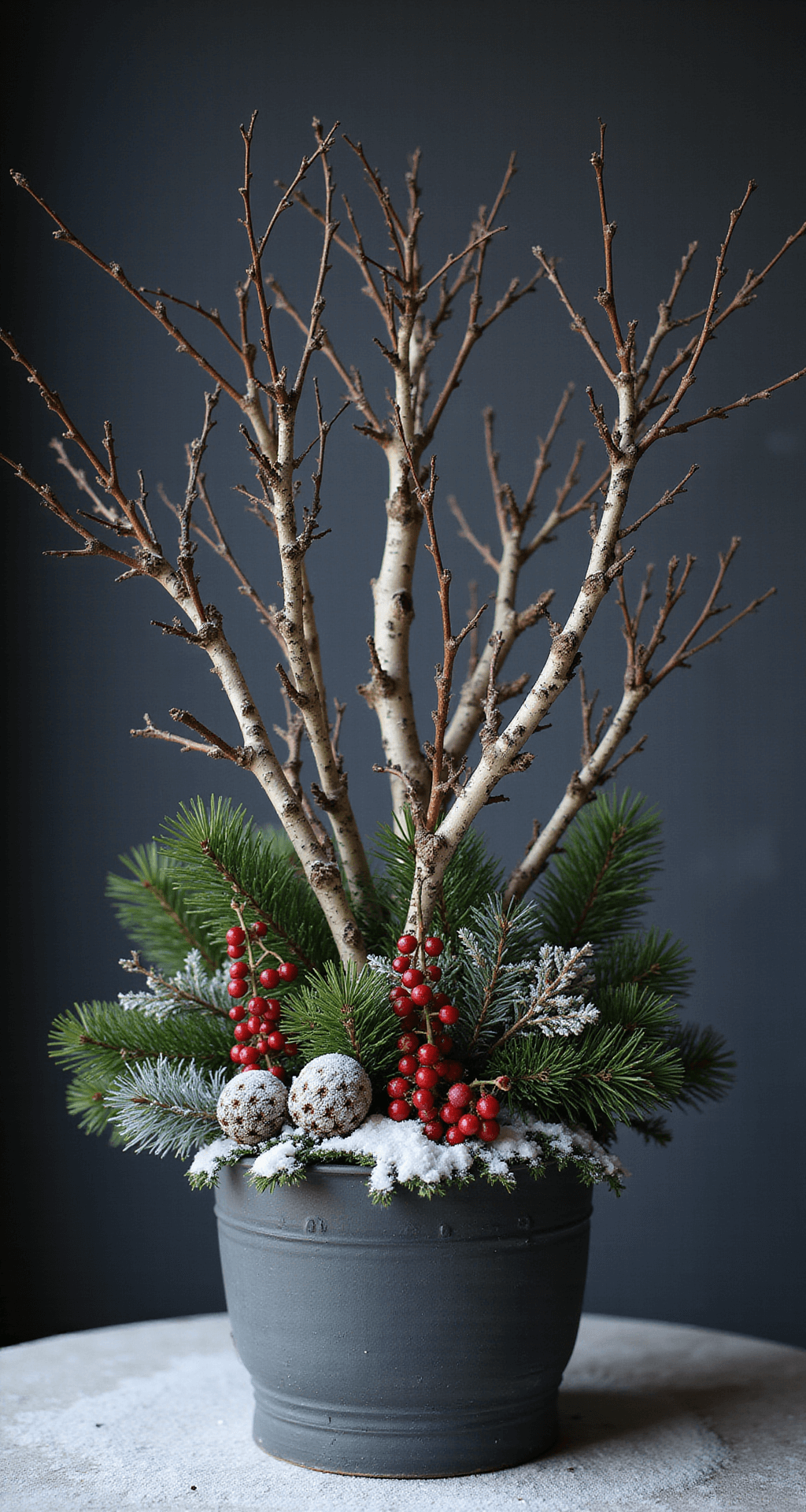
- Birch branches (stripped or natural)
- Red twig dogwood that literally glows against snow
- Small cut pine trees shoved right into the soil
- Curly willow for that windswept artistic look
Here’s a trick that changed everything for me: I buy the scraggly, sad-looking Christmas trees from the lot on December 23rd for like five bucks, chop them into sections, and stick them in my planters.
They last for months and look intentional, not desperate.
Layer 3: The “Look At Me” Accents
This is your statement jewelry.
The stuff that makes people slow down while driving by:
- Oversized decorative pinecones (frosted ones are chef’s kiss)
- Berry sprays in red or white
- Winterberry branches with those gorgeous red clusters
- Ornamental picks or bows if you’re feeling fancy
I’m obsessed with those massive white-painted pinecones you can find at craft stores.
They look expensive and impressive but cost basically nothing.
When You Actually Want Living Plants (Not Just Sticks)
Look, I get it.
Sometimes you want actual growing things in your planters, not just a fancy arrangement of dead plant parts.
The good news? Several plants actually thrive in cold weather and will make you look like a gardening genius.
The Cold-Weather Champions:
Pansies and Violas
These little overachievers laugh at frost. I’ve had pansies bloom through snow in Zone 6, poking their cheerful faces up like nothing’s wrong. They come in every color, and they’re ridiculously cheap at any garden center.
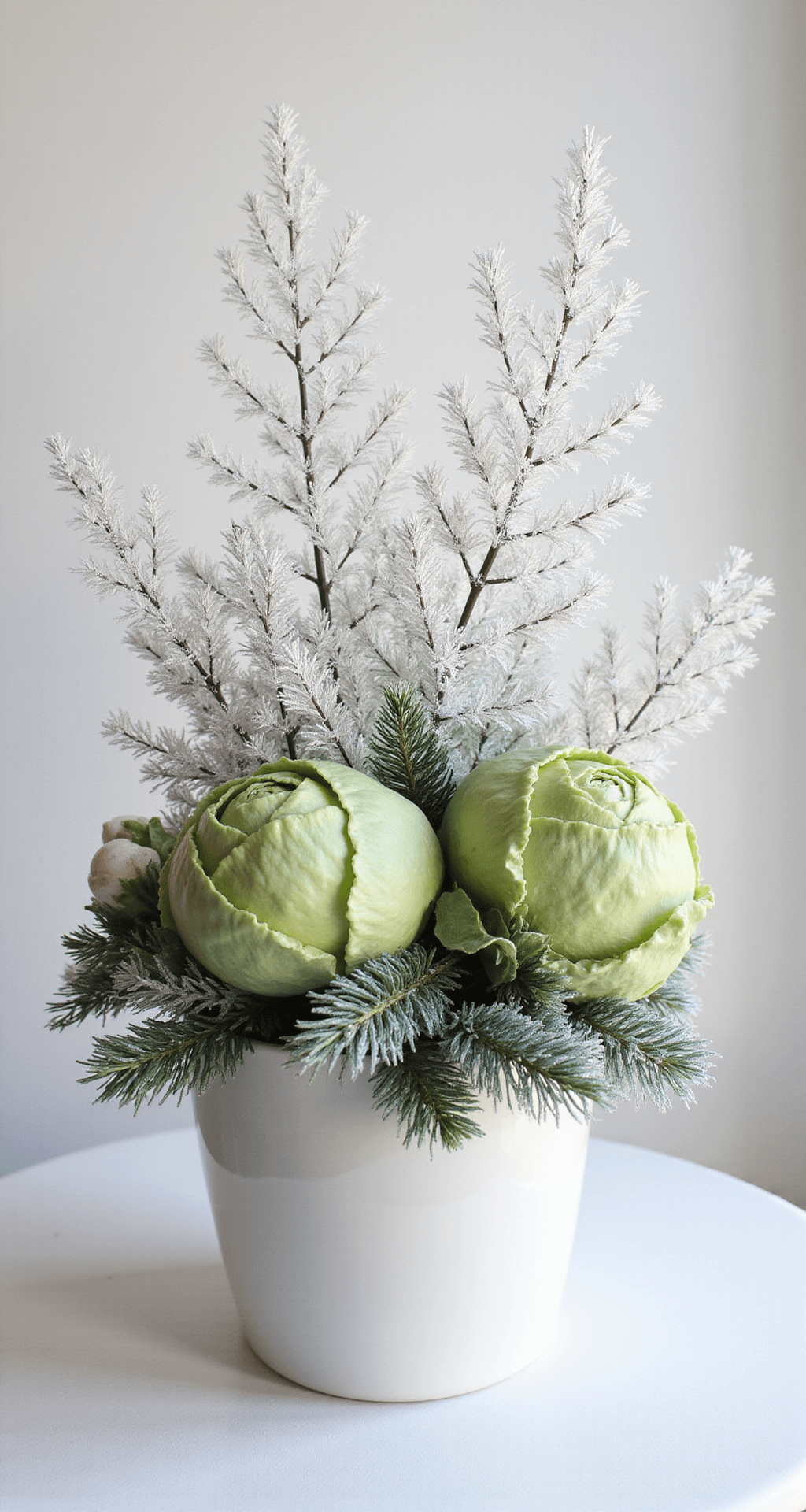
Ornamental Kale and Cabbage
Hear me out before you make that face. These aren’t your grandma’s dinner vegetables—they’re sculptural works of art that get MORE colorful as it gets colder. The purple and cream varieties look insanely expensive and sophisticated.
Coral Bells (Heuchera)
These beauties come in burgundy, caramel, silver, and about fifty other shades. They’re evergreen in most climates, hardy to Zone 3, and have this ruffled texture that catches frost like glitter. I planted three varieties in one large ceramic planter and it’s been going strong for three winters.
Boxwoods
The little black dress of winter planters. Timeless, classic, works with everything. They look spectacular with snow sitting on their dense foliage, and you can use them in your landscape come spring.
Dwarf Conifers
Alberta spruce, compact junipers, false cypress—these provide structure and stay green no matter what Mother Nature throws at them. Plus they make your porch smell amazing.
Ivy
Basic? Maybe. Effective? Absolutely. Trailing ivy softens hard container edges and stays green through serious cold.
How I Actually Build These Things (Without Losing My Mind)
Last year I tried to wing it and ended up with a lopsided mess that looked like a tree fell into my planter.
This year I followed an actual process and it made all the difference.
Step 1: Fill Your Container
Use regular potting soil if you’re planting living plants. For cut greenery arrangements, you can honestly use whatever—even old soil from summer planters works fine since nothing’s actually growing.
Step 2: Stick In Your Tall Stuff First
This is where most people screw up (including past me). Put your birch poles, branches, or small trees in the CENTER first. This creates your structure and height. Think of it like building a teepee—everything else will lean against this framework.
Step 3: Add Your Base Greenery
Now work your cedar clippings and pine branches around the outside edges. Let them dr