This post may contain affiliate links. Please see my disclosure policy for details.
How to Create a Warm, Cozy Christmas Living Room That Actually Feels Like Home
Contents
Creating a warm, cozy Christmas living room starts with understanding what “cozy” really means.
I’ve spent years transforming cold, sterile spaces into rooms where people actually want to curl up with hot cocoa and stay awhile.
The secret isn’t expensive decorations or a complete room overhaul. It’s about layering textures, incorporating soft lighting, and choosing a cohesive color palette that wraps around you like your favorite sweater.
Why Your Living Room Feels Cold (And How to Fix It)
You know that feeling when you walk into a room and something just feels… off?
The Christmas tree is up, ornaments are hung, but the space still feels empty and unwelcoming.
I’ve been there, standing in my own living room wondering why it looked like a catalog photo instead of a cozy gathering spot.
The problem isn’t what you have—it’s how you’re layering it.
Most people make one critical mistake: they decorate at their room instead of with their room.
They add holiday items on top of their existing space without creating connection between elements.
Essential Elements for Coziness
Textiles and Soft Furnishings Are Your Foundation
Textiles and soft furnishings are fundamental to achieving that warm feeling everyone craves during the holidays.
I learned this the hard way after spending a fortune on decorations one year, only to realize my room still felt sterile.
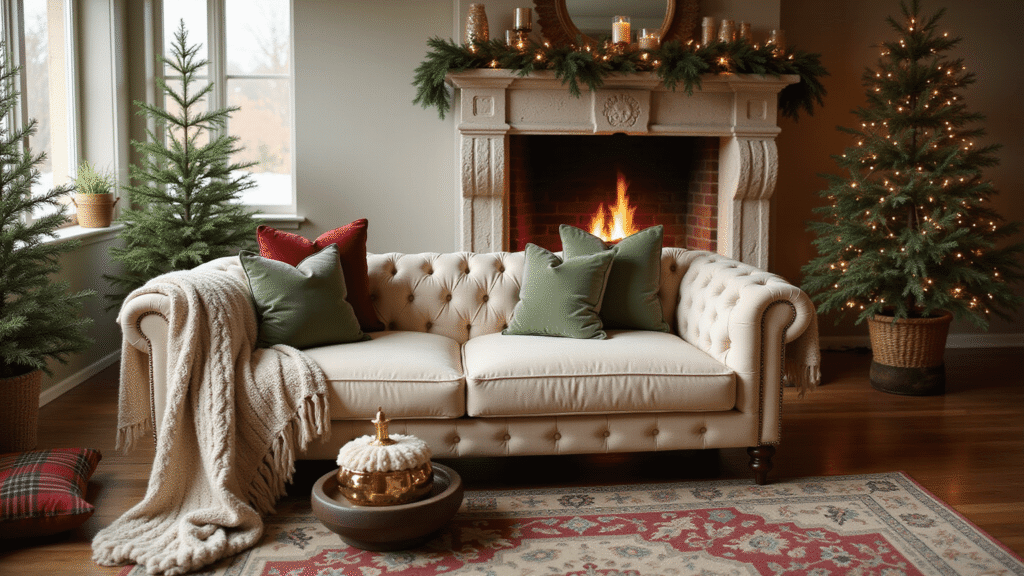
The game-changer? Layers upon layers of throw blankets and decorative throw pillows.
Here’s what works:
- Velvet pillows in deep jewel tones or soft neutrals
- Plaid throws that add pattern without overwhelming
- Sheepskin accents for tactile interest
- Chunky knit blankets draped casually over furniture
- Woven textures that catch the light beautifully
You don’t need to buy holiday-specific textiles, and honestly, I’d recommend you don’t.
Neutral-toned throws, solid pillows, and basic linens work beautifully and remain appropriate throughout winter.
This approach adds both comfort and visual warmth without breaking your budget or leaving you with storage bins full of stuff you’ll only use for three weeks.
Greenery Creates Natural Texture and Depth
Greenery and garlands create natural texture and depth in ways that artificial decorations simply cannot replicate.
I remember the first time I used real cedar garland throughout my home.
The scent alone transformed the atmosphere, but the visual impact was even more striking.
Cedar garland is particularly effective for softening spaces between rooms and creating visual flow.
Drape it along mantels, wind it up stair railings, or layer it across bookshelves.
Here’s a professional trick I picked up from a florist friend: layer different types of evergreens together.
Combining Fraser fir, boxwood, and white pine creates a fuller, more dimensional look than a single variety.
The different needle shapes and shades of green add complexity that reads as “expensive” even when it’s not.
Color Palettes That Actually Work (No Matter Your Style)
I’ve tested countless color combinations over the years.
Some looked gorgeous in my head and terrible in reality.
Others surprised me with how well they transformed a space.
Here are the approaches that consistently deliver that cozy, inviting atmosphere:
Sage Green and Cranberry: Modern Meets Traditional
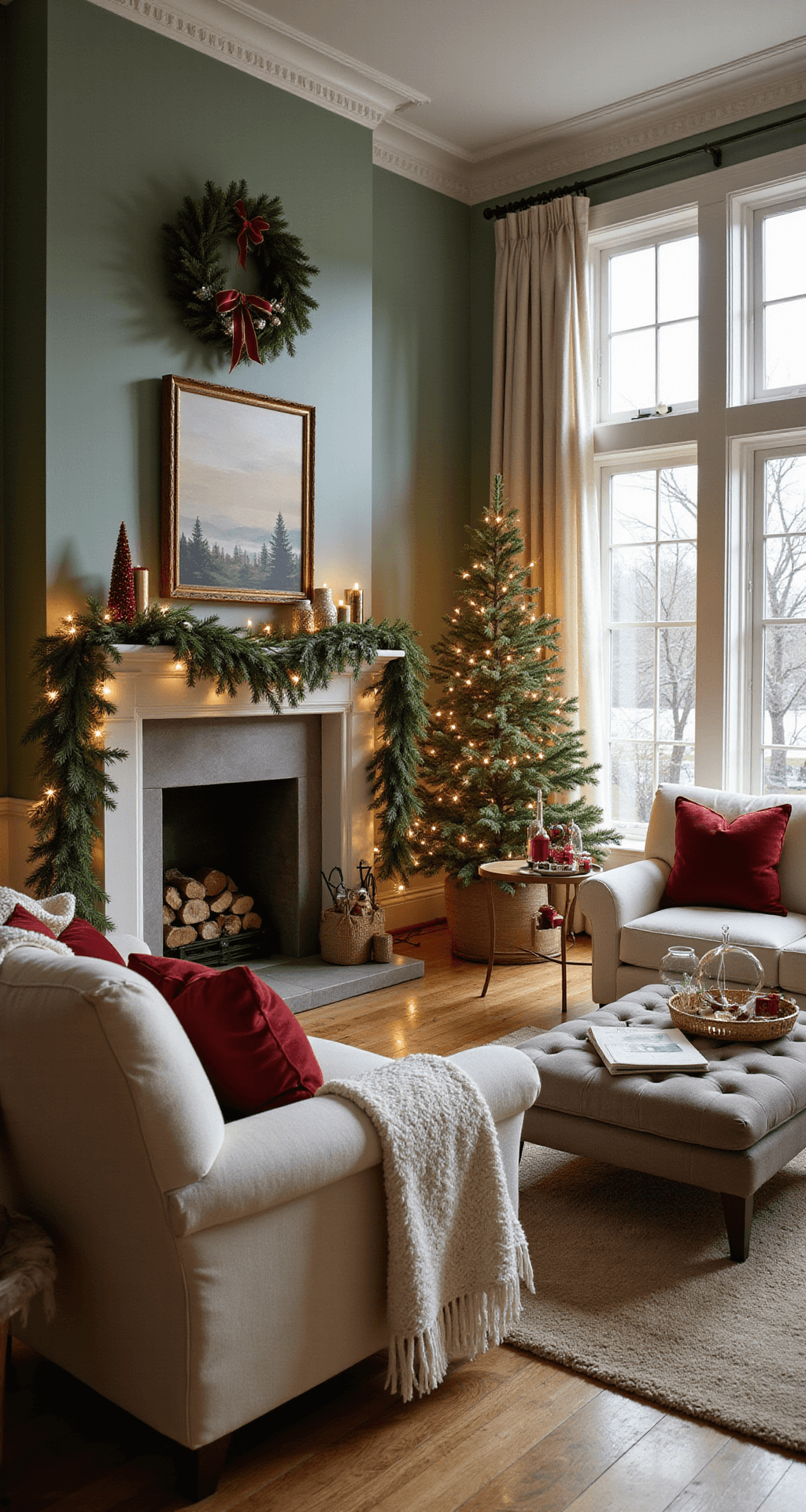
Sage green and cranberry is my current obsession.
Sage green creates a calm, serene atmosphere while cranberry adds festive warmth and visual interest.
This combination feels fresh and contemporary without abandoning the Christmas spirit.
I use sage green as my dominant color through throw pillows, table linens, and even painted accent pieces.
Cranberry appears in smaller doses—ornaments, candles, berry stems in arrangements.
The ratio matters: about 60% sage, 30% neutral (cream, white, natural wood), and 10% cranberry.
Neutral with Gold Accents: Timeless Elegance
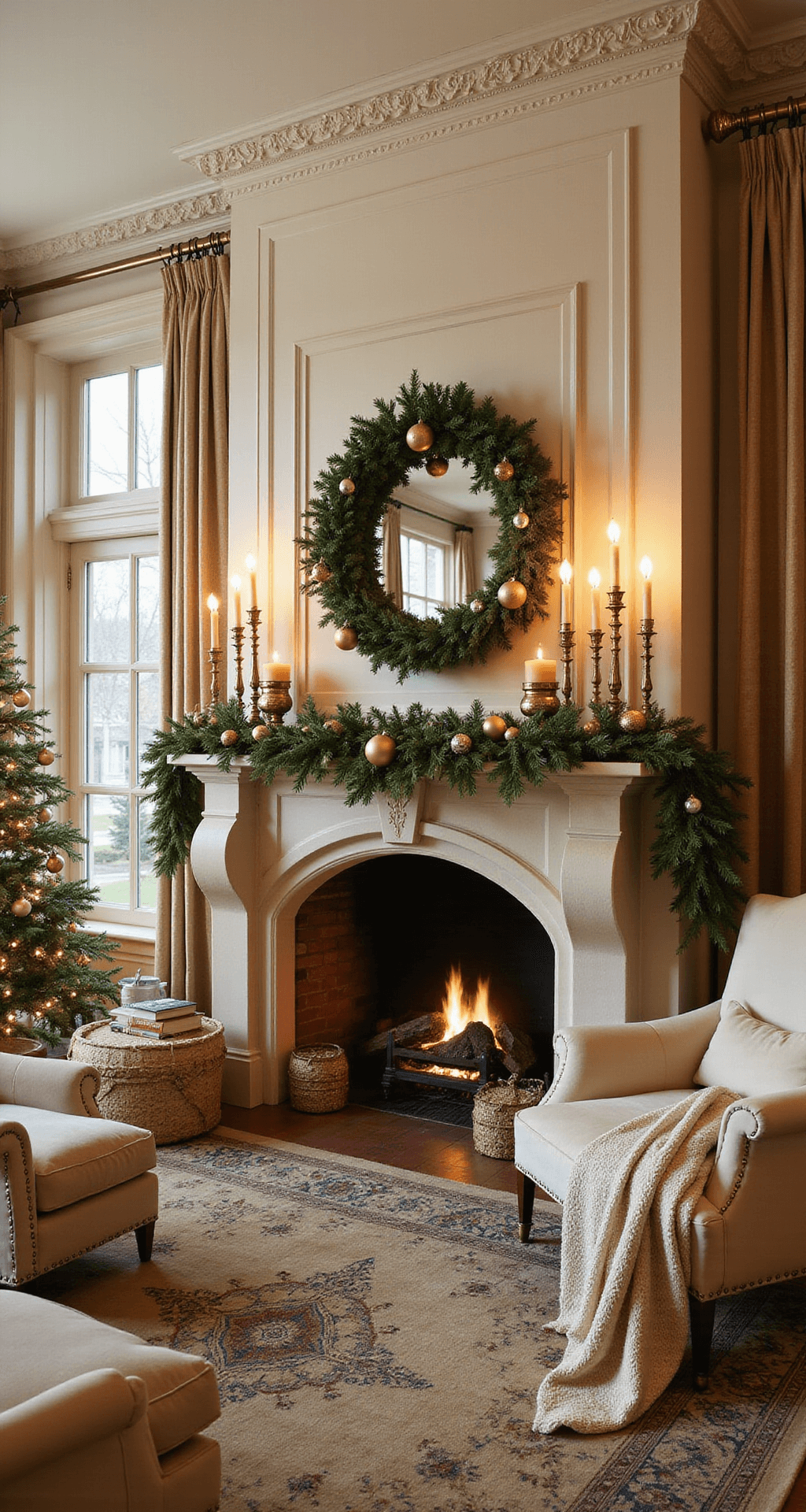
Golds and warm metallics add elegance when paired with cream, off-white, and natural wood tones.
This palette never goes out of style and photographs beautifully if you’re someone who actually wants to remember what your home looked like.
I incorporate gold pillar candles on the mantel, gold-rimmed ornaments on the tree, and brass candlesticks on side tables.
The warmth of the metallics reflects light around the room, making everything feel more luminous.
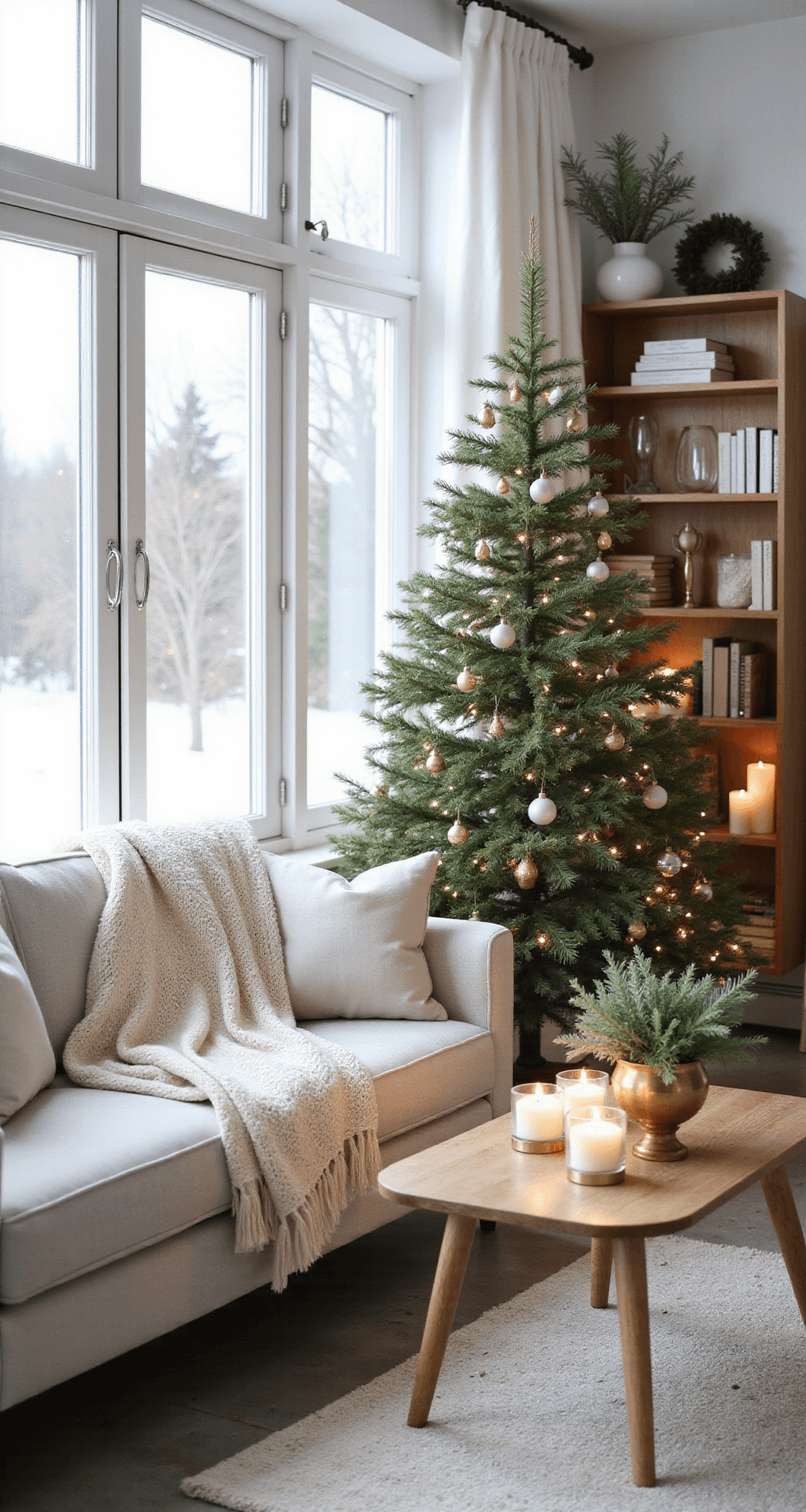
White linens, natural greenery, and layered textures create modern coziness without clutter.
This approach works brilliantly if you’re overwhelmed by traditional Christmas excess.
I’ve designed entire holiday schemes using only white, cream, natural wood, and fresh greenery.
The secret is in the texture variation—smooth white ceramics next to rough wood, soft knits against crisp linen.
It feels serene, clean, and surprisingly cozy.
Key Decorative Elements That Make the Difference
Multiple Trees Add Visual Interest and Height
Multiple trees changed how I think about Christmas decorating entirely.
Instead of one massive tree dominating the room, I use several smaller trees strategically placed.
This could include:
- A large family tree as your focal point (6-7 feet typically works in standard living rooms)
- Smaller trees flanking a fireplace for symmetry and balance
- Tabletop trees on side tables, bookshelves, or the coffee table
- Handmade trees made from books, wood, or other creative materials
The multi-tree approach creates layers of interest at different heights.
Your eye moves around the room instead of landing in one spot and staying there.
Vintage Ornaments Bring Nostalgic Charm
Vintage ornaments in coordinating colors bring a sense of history and personality that new ornaments rarely achieve.
I hunt for these at estate sales, antique shops, and even my parents’ basement.
Vintage glass ornaments in sage green and silver became the foundation of my entire color