This post may contain affiliate links. Please see my disclosure policy for details.
Your Guide to Creating Stunning Vintage Christmas Decor That Actually Looks Expensive
Contents
Vintage Christmas decor transforms ordinary spaces into nostalgic wonderlands without breaking the bank.
I’ve spent years hunting down authentic pieces and creating vintage-inspired displays, and I’m going to show you exactly how to nail this timeless aesthetic.
Why Your Vintage Christmas Setup Might Be Falling Flat
You’ve bought the ornaments. You’ve arranged them carefully. But something still feels… off.
Here’s the truth: vintage Christmas decor isn’t just about old stuff. It’s about understanding texture, color balance, and the stories these pieces tell.
Most people grab random “vintage-looking” items and wonder why their mantel looks like a cluttered thrift store shelf instead of a Pottery Barn catalog.
What Makes Vintage Christmas Decor Actually Work
Time investment: 2-4 hours for a complete room transformation
Budget range: $50-$500+ depending on your sourcing strategy
Skill level: Easy to moderate (no power tools required)
The secret lies in three elements:
- Intentional color coordination (not just “red and green”)
- Texture layering that creates depth
- Strategic focal points that guide the eye
I learned this the hard way after my first attempt looked like Christmas threw up in my living room.
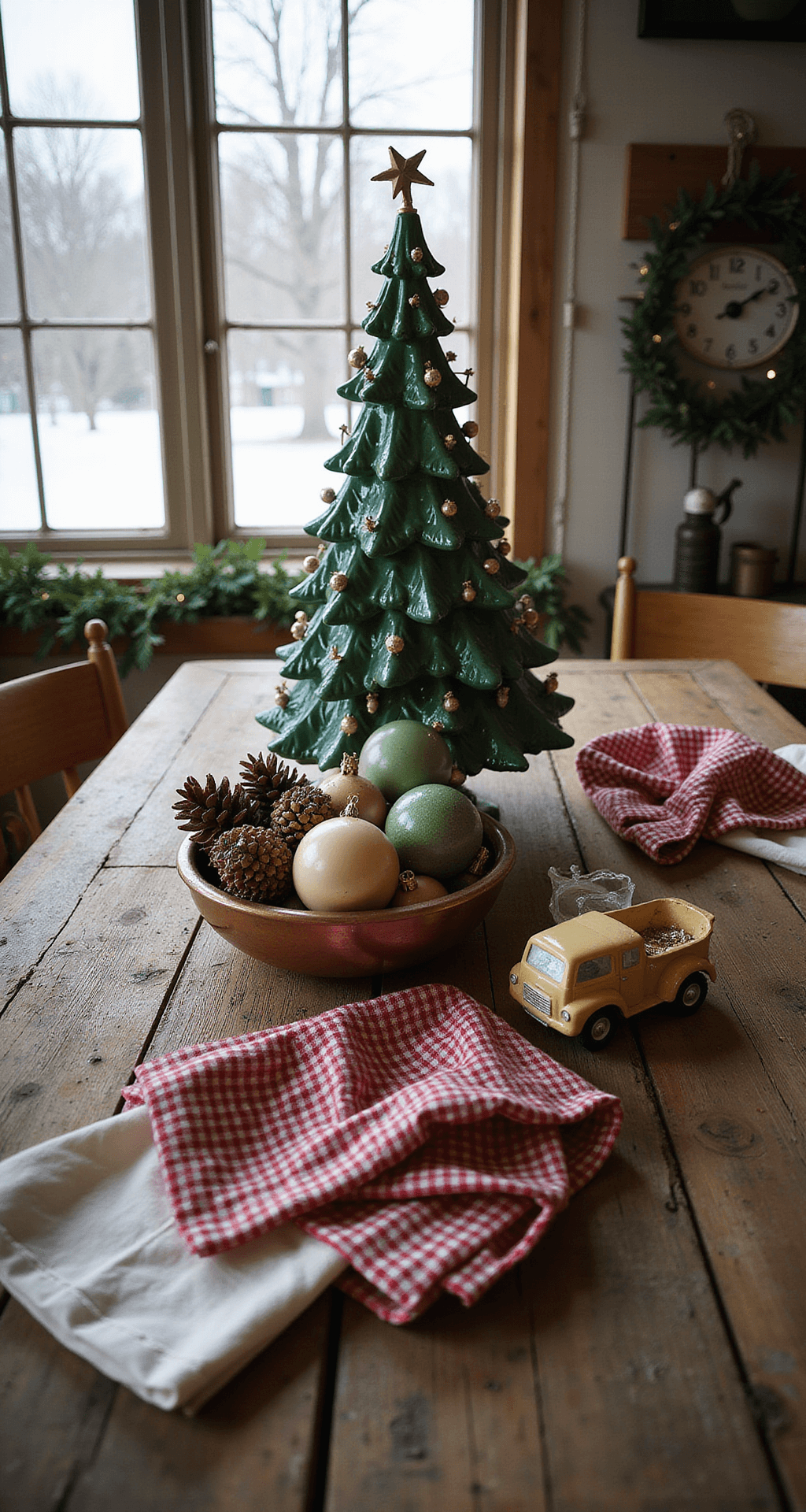
The Color Palette That Never Fails
Forget what you think you know about Christmas colors.
Vintage aesthetics work because they follow specific color rules:
Primary palette:
- Deep forest green (not neon)
- Rich burgundy red (not fire engine)
- Antique gold and tarnished silver
- Creamy whites and ivories
1950s-60s retro variation:
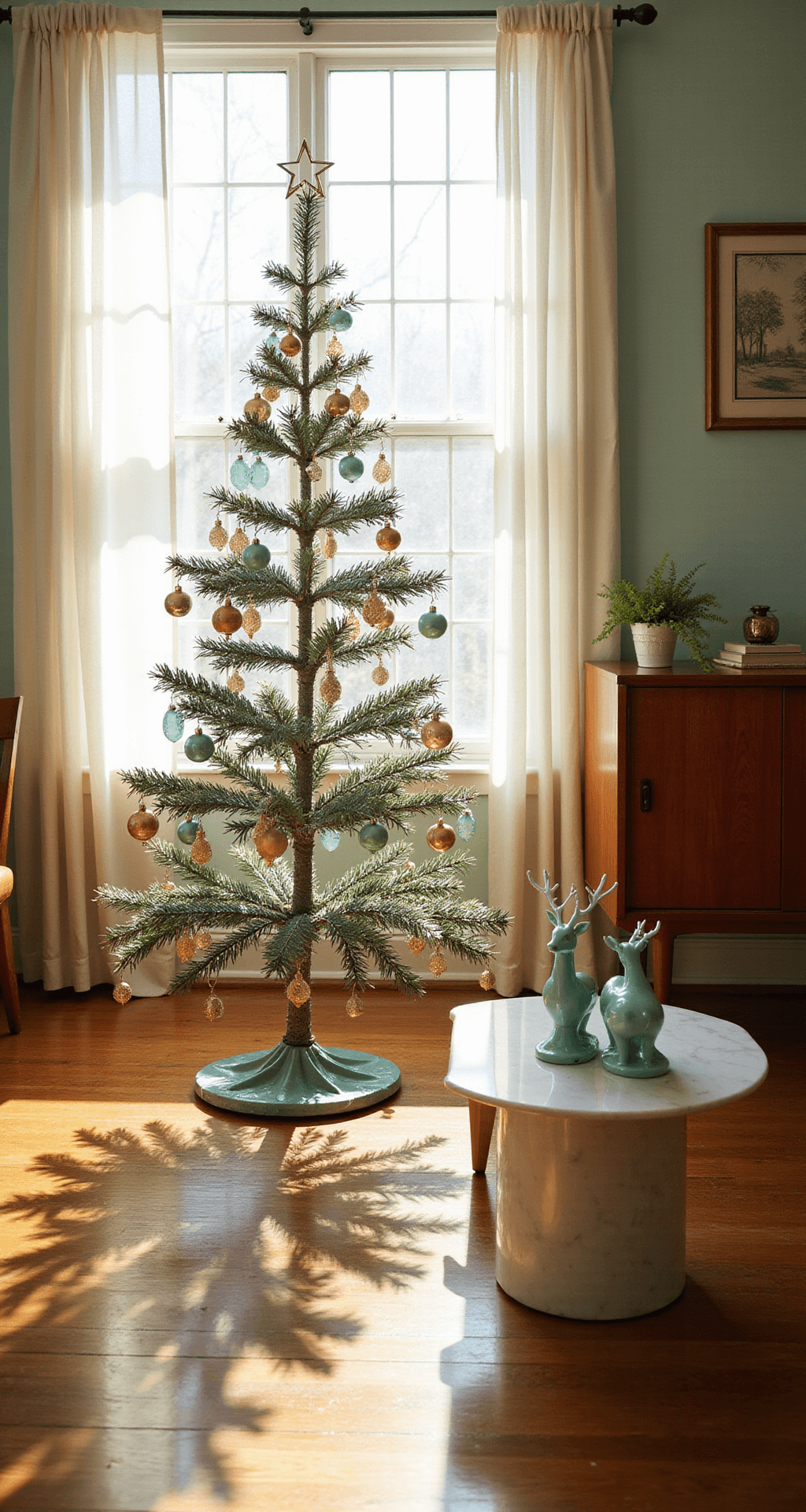
- Pastel pinks and mint greens
- Turquoise and coral accents
- Champagne gold
- Powder blue
Victorian-inspired approach:
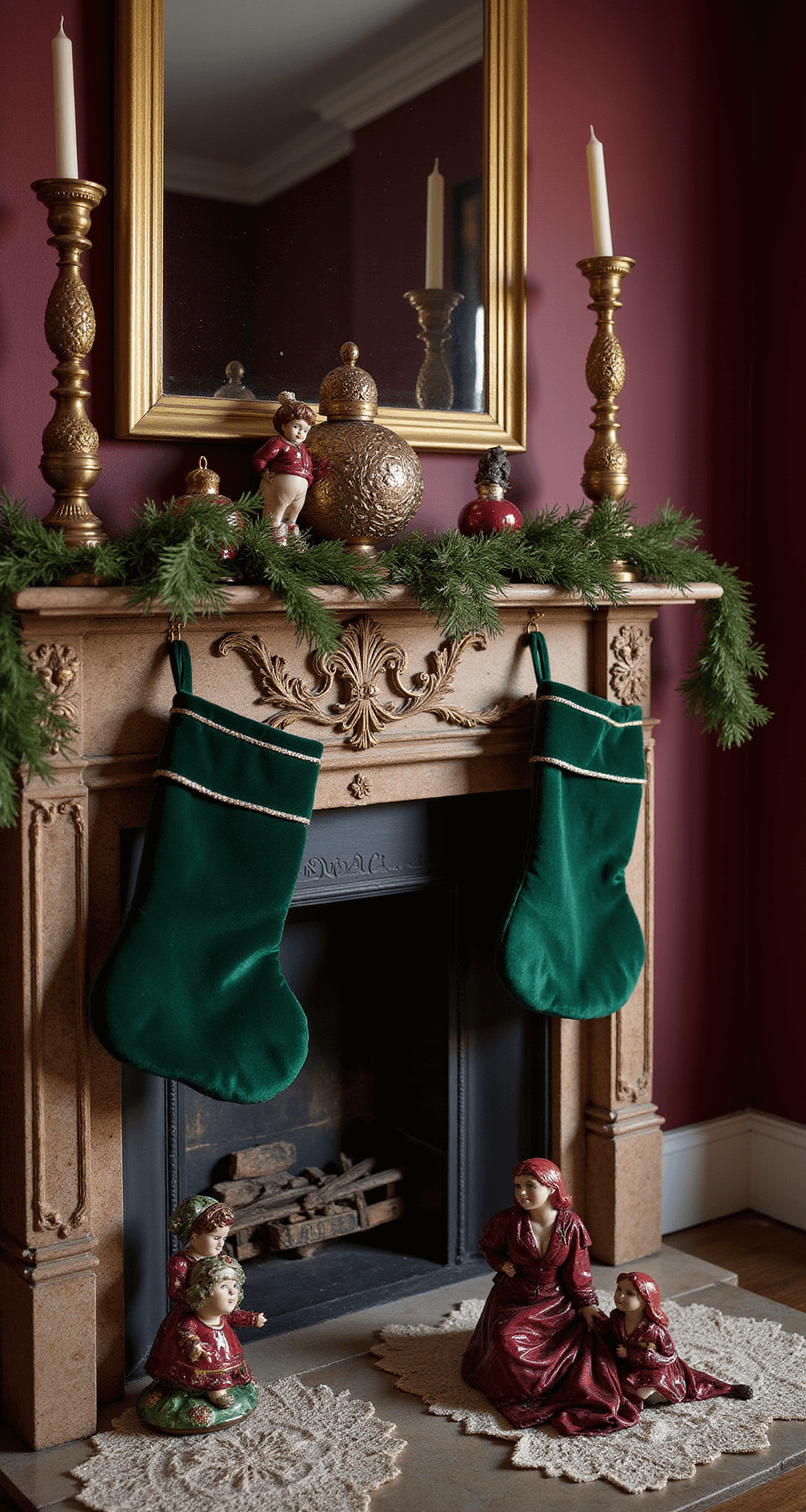
- Deep jewel tones (emerald, ruby, sapphire)
- Aged brass and copper
- Chocolate browns
- Plum and wine shades
The colors shouldn’t compete—they should whisper to each other across the room.
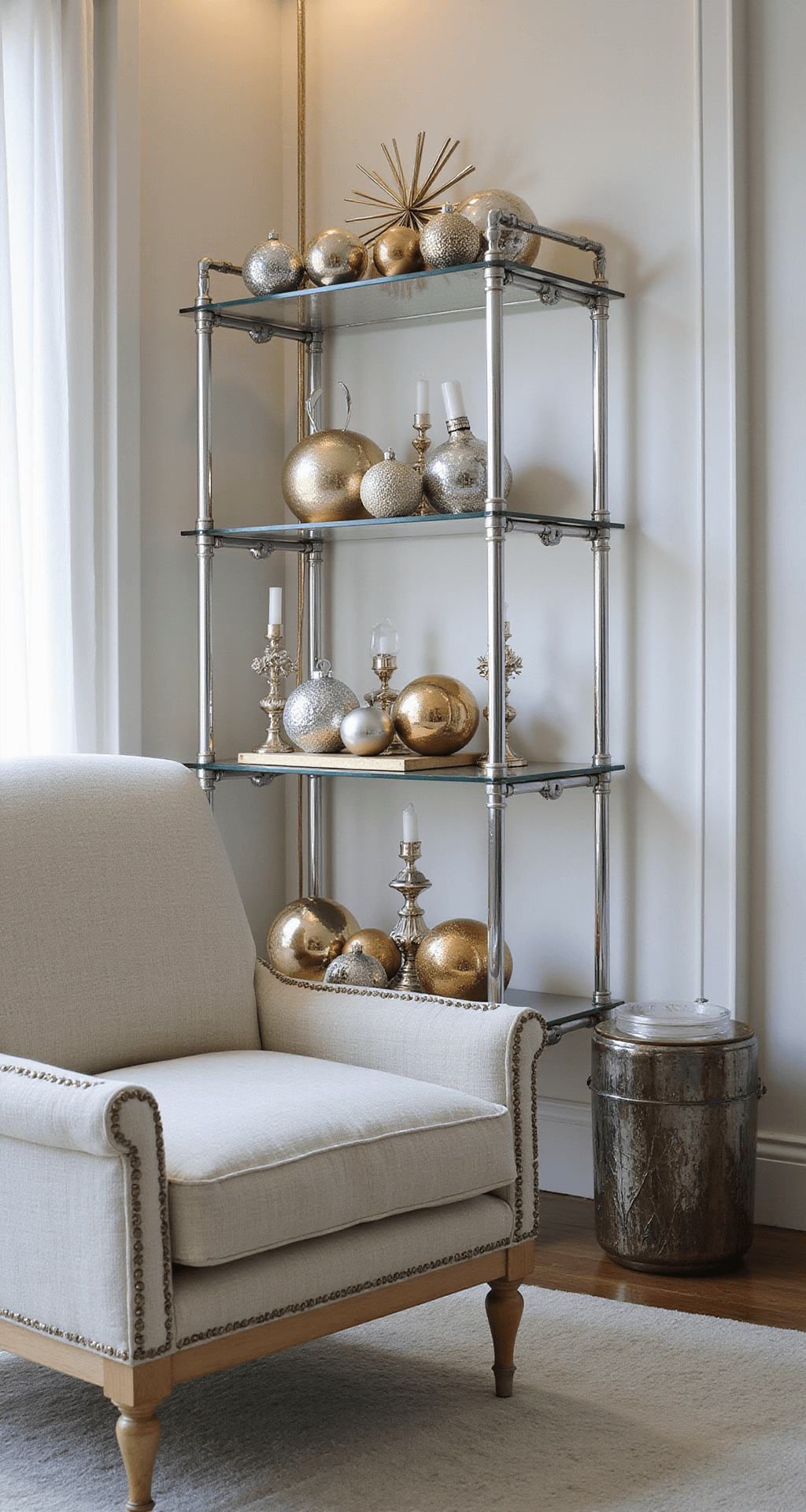
Where to Actually Find Quality Vintage Pieces
I’ve wasted countless hours (and dollars) in the wrong places.
Best sources for authentic vintage:
Thrift stores and estate sales
- Visit weekly during October and November when people donate old decorations.
- Arrive early on restock days.
- Bring cash for negotiation leverage.
Online marketplaces that deliver
- Etsy shops specializing in curated vintage (The Vettel Farm has incredible country-style pieces)
- eBay for specific searches like “1960s glass ornaments” or “vintage tinsel garland”
- Facebook Marketplace for local pickup deals
Specialty retailers worth the investment
- Christmas Traditions carries both reproductions and authentic antique pieces.
- Weston Table curates high-end vintage items.
- Retro Brites collection offers 1950s-60s styled pieces that look authentically aged.
Budget-friendly reproduction sources
- Amazon carries vintage-style glass ornaments that fool most guests.
- Target’s Wondershop occasionally releases vintage-inspired collections.
- HomeGoods stocks random vintage-style finds if you’re patient.
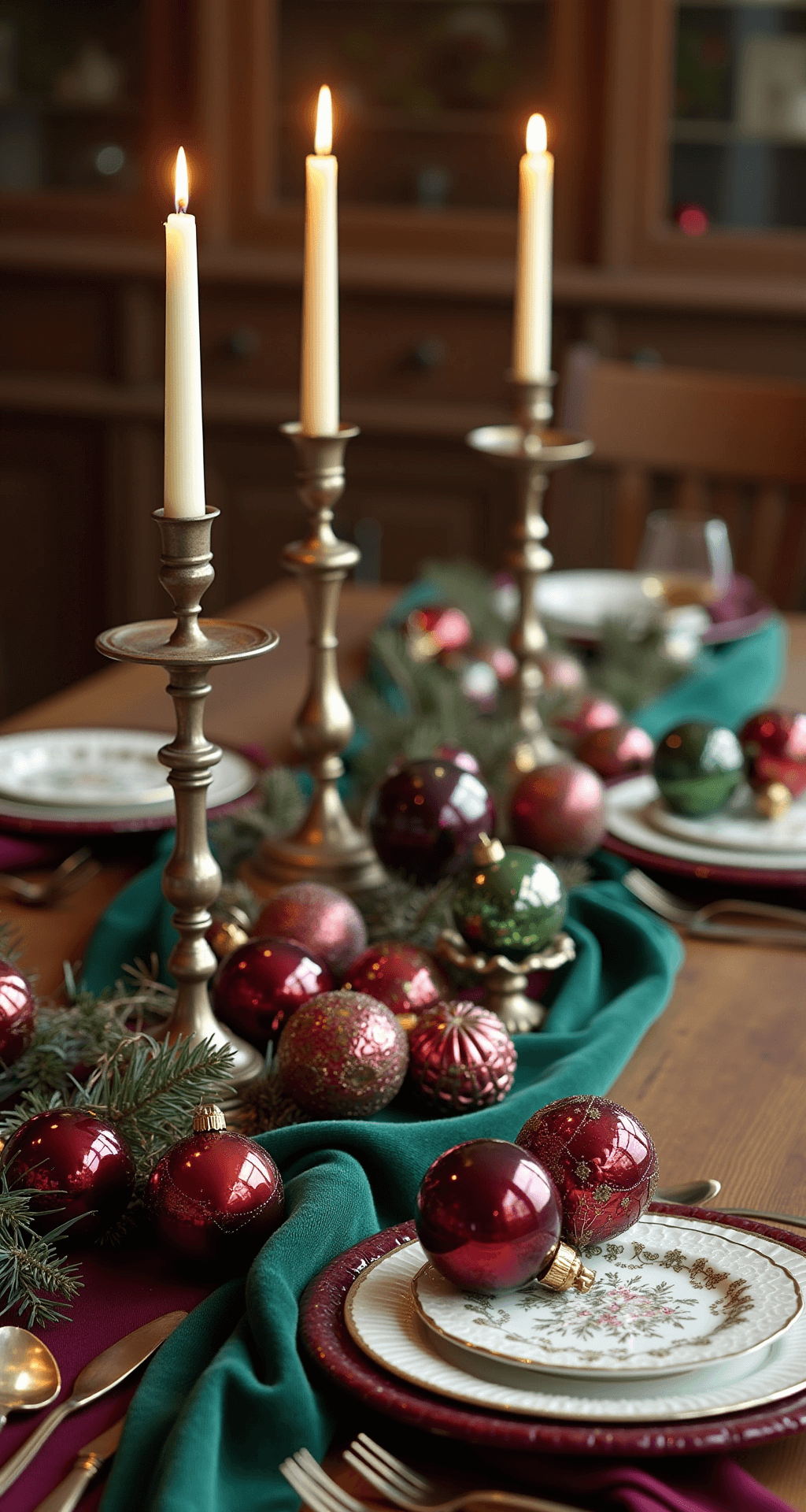
The Pieces Worth Investing In
Not all vintage Christmas decor holds equal value.
Investment-worthy items:
Blown glass ornaments
- Look for hand-painted details and internal glitter.
- Avoid cracked or chipped pieces unless the price reflects it.
- Original boxes increase value but aren’t necessary for display.
Ceramic pieces
- Vintage ceramic Christmas trees remain wildly popular.
- Quality matters—check for even glaze and no cracks.
- Vintage ceramic Christmas trees range from $30-$300 depending on condition.
Blow mold figures
- Large outdoor pieces (3+ feet) command premium prices.
- Smaller tabletop versions offer vintage charm at lower costs.
- Check electrical components carefully on lighted pieces.
Mercury glass and reflector ornaments
- These create magical light reflection.
- Authentic mercury glass from the 1940s-60s feels heavier than reproductions.
- Reflector ornaments with intact paint command higher prices.
Skip these common mistakes:
- Plastic ornaments claiming to be “vintage style” (they just look cheap)
- Damaged pieces unless you’re crafty enough to repair them
- Trendy “vintage” items that won’t age well aesthetically
- Anything with obvious modern manufacturing (visible mold lines, perfect paint)