This post may contain affiliate links. Please see my disclosure policy for details.
Thanksgiving Turkey Charcuterie Board: A Step-by-Step Guide
Contents
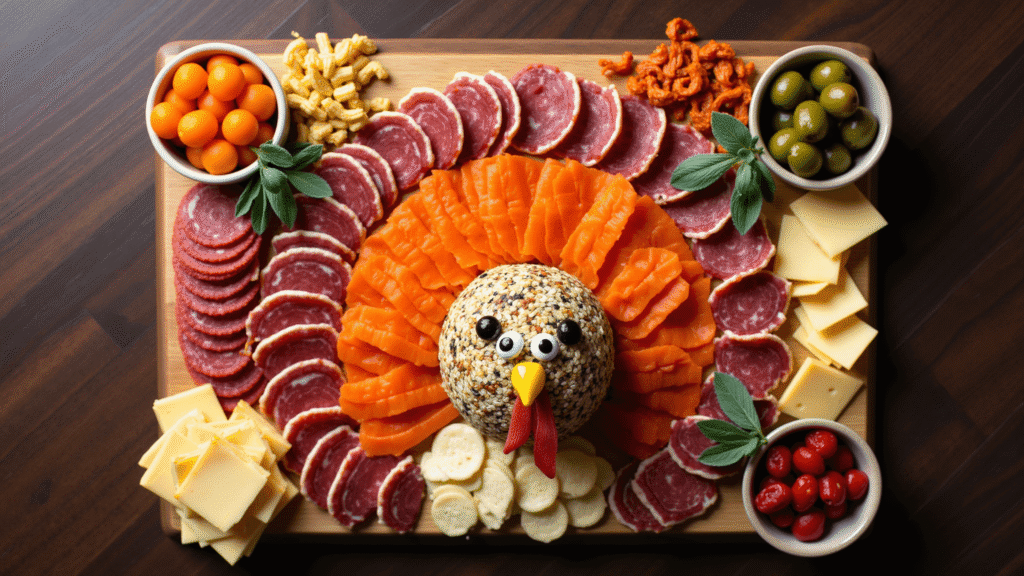
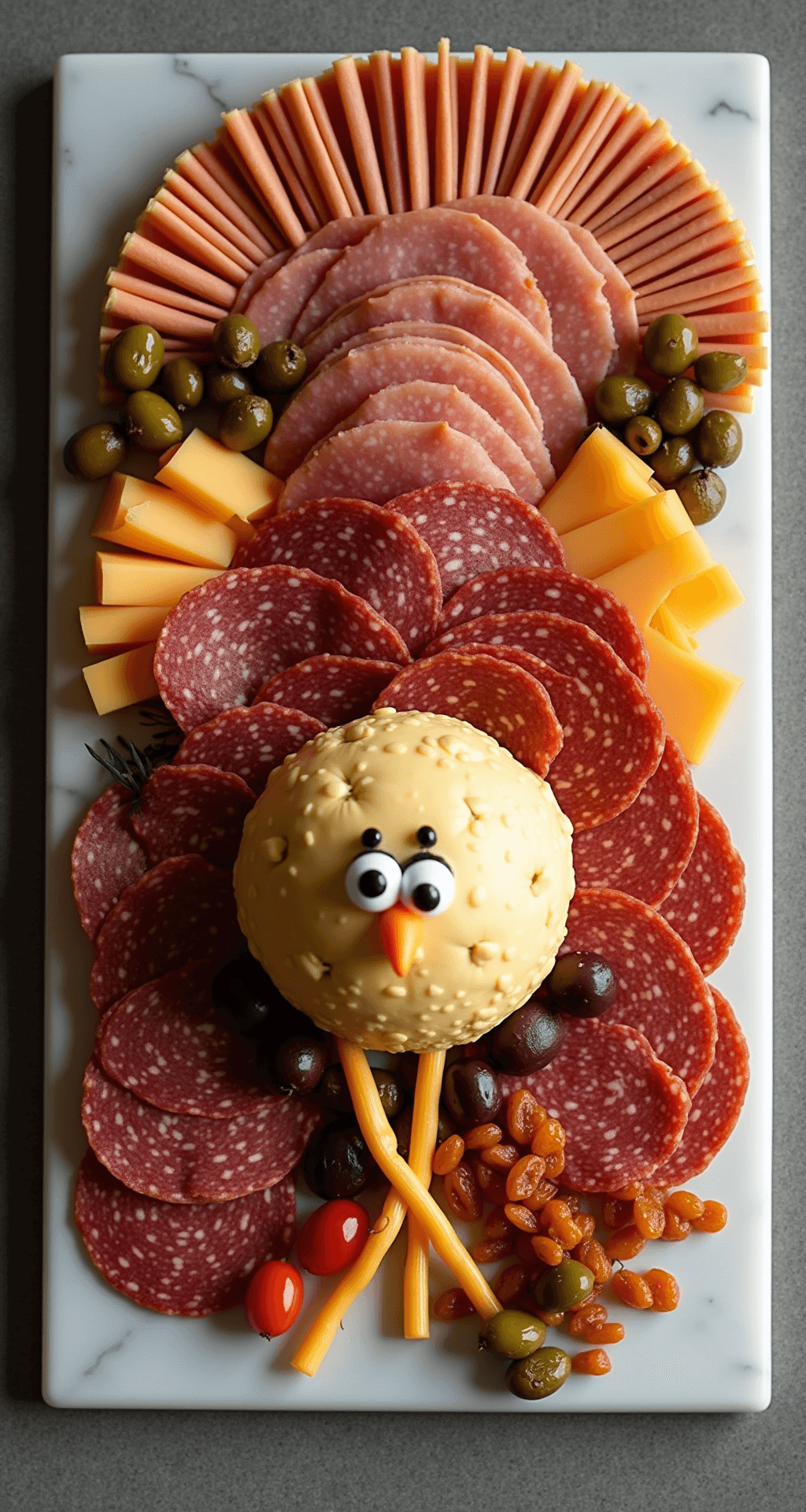
Thanksgiving turkey charcuterie boards transform your appetizer spread from forgettable to Instagram-worthy in under 30 minutes.
I’m going to be honest with you. The first time I attempted one of these turkey boards, it felt like assembling IKEA furniture with a blindfold on. Pepperoni slices sliding everywhere, cheese refusing to cooperate, and my “turkey” looked more like a roadkill pigeon.
But here’s the thing—once you understand the simple framework, these boards become ridiculously easy. And they impress people way more than the effort you actually put in.
What You Actually Need (No Fancy Garbage Required)
Your Protein Lineup
I’m not sending you on a wild goose chase for artisanal meats from some boutique deli. Hit your regular grocery store and grab:
- Sliced honey ham or turkey breast
- Pepperoni slices (the pre-sliced kind works perfectly)
- Genoa salami
- Prosciutto if you’re feeling fancy (but honestly, it’s not mandatory)
The Cheese Situation
Here’s where people overcomplicate things. You don’t need seventeen varieties of aged European cheese. What actually works:
- Cheddar slices – these become your structural pieces
- Pepper jack – adds color and a slight kick
- Provolone – mild and crowd-pleasing
- A store-bought cheese ball – this is your turkey’s body, and yes, store-bought is absolutely fine
The cheese ball is non-negotiable. It’s literally the foundation of your turkey, and making one from scratch when perfectly good ones exist at the store is a waste of your precious time.
Your Cracker Collection
Mix textures and shapes:
- Pretzel crackers (the square ones)
- Club crackers
- Triscuits
- Water crackers if you want something neutral
The Fun Stuff That Makes It Look Like a Turkey
- Two candy eyeballs (find them in the baking aisle)
- One small pepperoni slice for the gobbler
- Fresh sage leaves for that “I know what I’m doing” vibe
Fill-in-the-Gaps Ingredients
Pitted olives, dried apricots, grapes, cornichons—basically anything that fills empty spaces and adds color contrast.
The Board Itself Matters More Than You Think
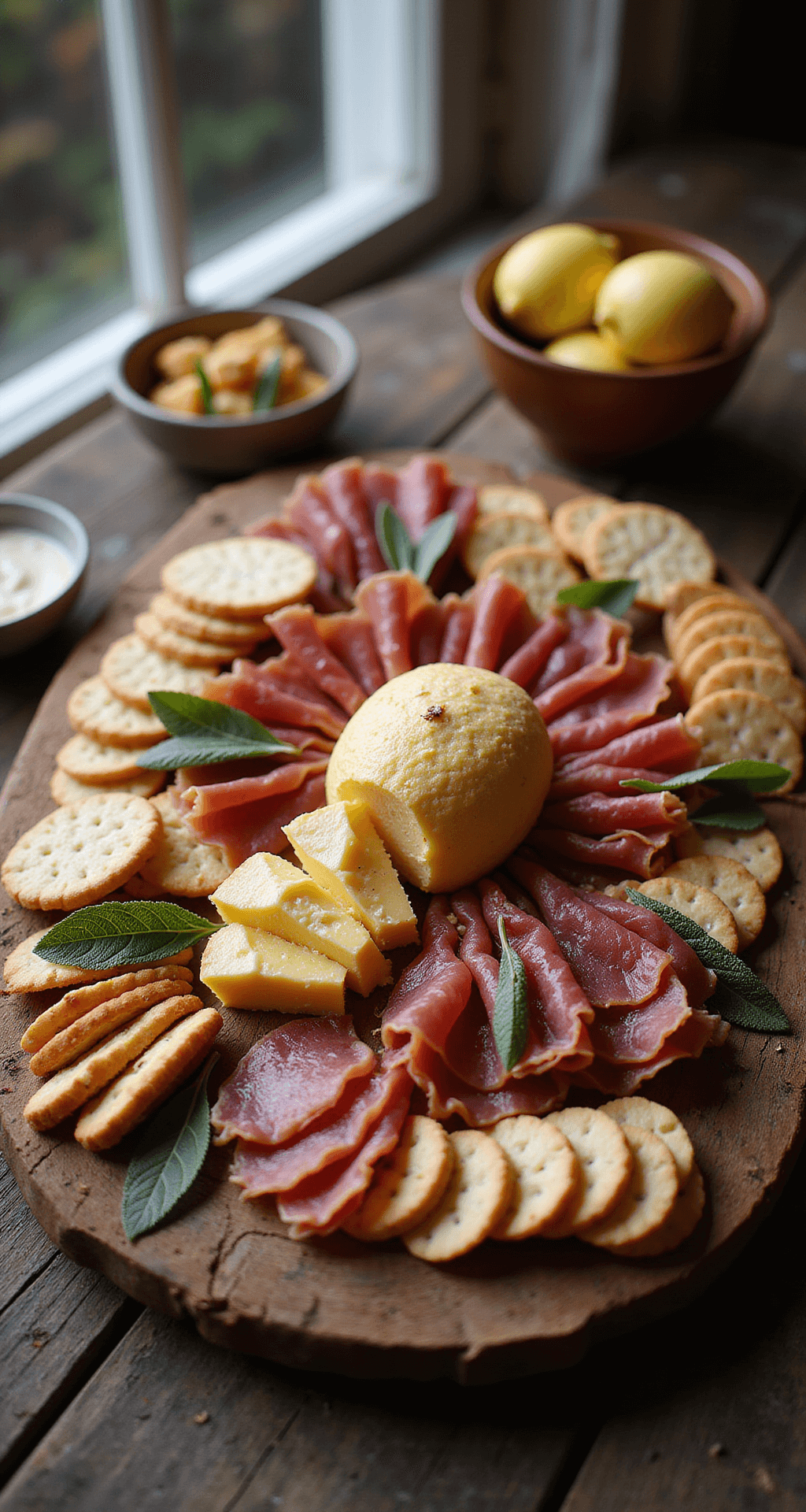
Grab a large round serving platter or wooden board. Round works better than rectangular for the turkey shape. Aim for at least 16 inches in diameter.
If you’re planning to photograph this (and let’s be real, you absolutely are), choose a board that contrasts with your ingredients. Light meats and cheeses pop against dark wood. Dark salamis stand out on white marble or ceramic.
Building Your Turkey: The Actual Step-by-Step
Step One: Stop Overthinking and Start with the Body
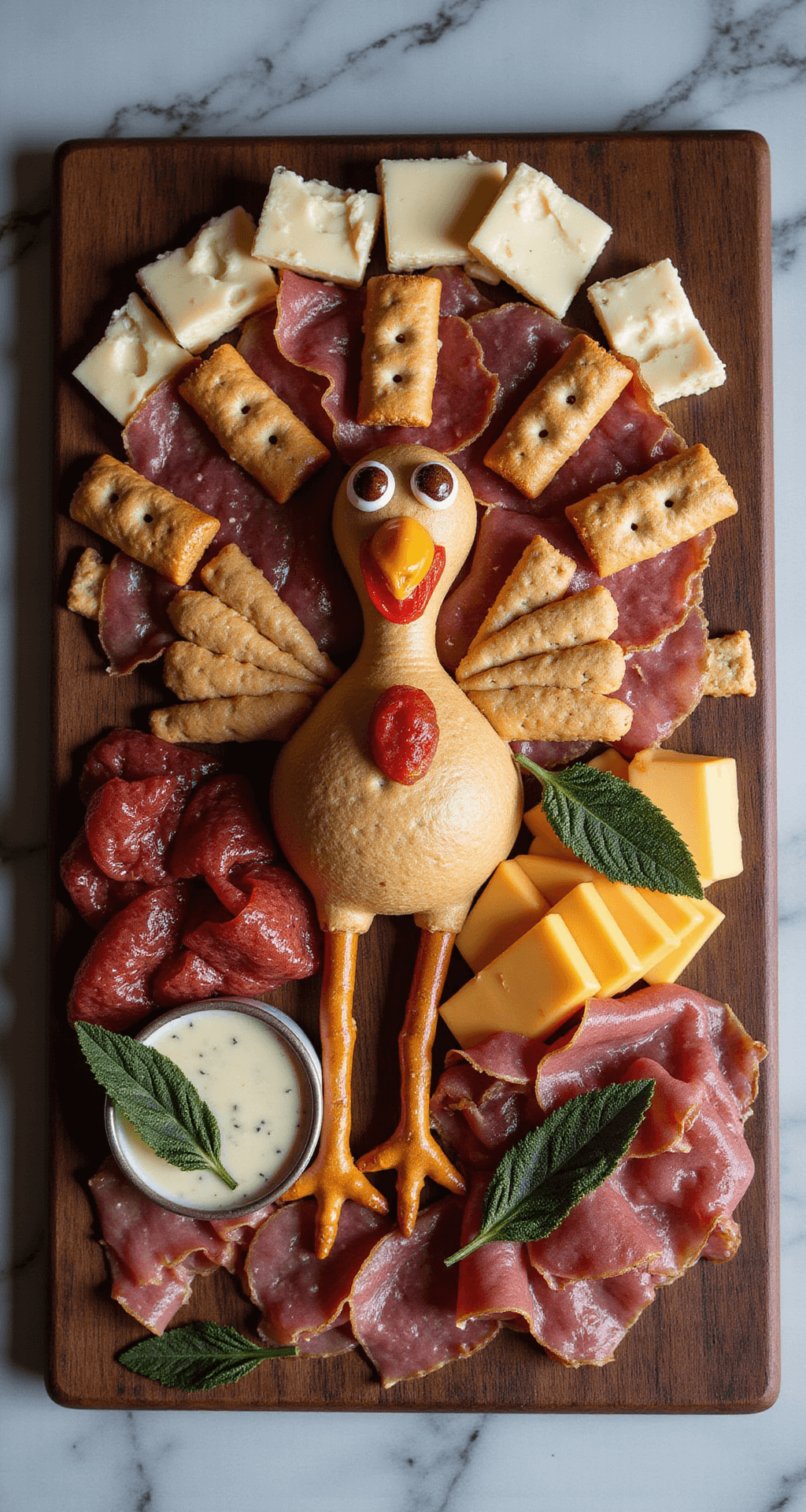
Place your cheese ball slightly off-center on the board, positioned where you want the turkey’s chest to be. This is your anchor point. Everything else radiates from here.
Behind the cheese ball, arrange 3 cheddar cheese squares in a small semicircle. These support the “head” and create the turkey’s neck area.
Step Two: Create the Feather Effect
Now we’re building concentric semicircles moving outward from the cheese ball. Think of it like creating a sunrise pattern behind the turkey’s body.
- 5 pepperoni slices in a semicircle
- 7 pretzel crackers
- 6 pepper jack cheese slices
- 7 salami slices
- 11 club crackers
Each row should slightly overlap the previous one. You’re creating dimension here, not laying everything flat like floor tiles.
Step Three: The Lower Feathers (Where It Gets Fun)
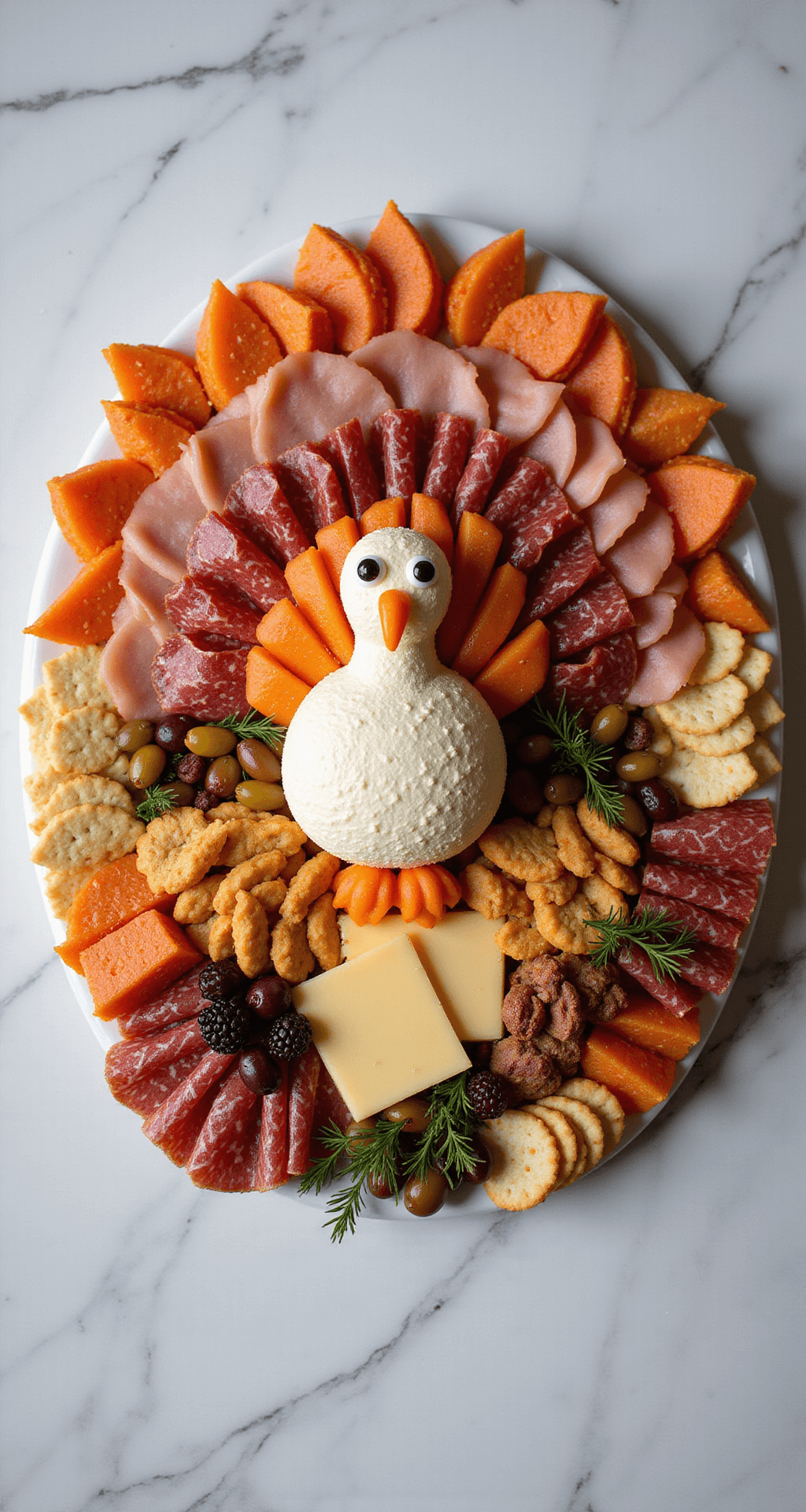
Take 21 honey ham slices. Fold each one accordion-style—back and forth, back and forth. Thread 3 folded pieces onto each toothpick. You’ll end up with 7 ham-loaded toothpicks.
Arrange these underneath your cracker layer. The accordion folds create this gorgeous ruffled texture that photographs beautifully.
Add 15 Triscuits below the ham layer to complete your feather display.
Step Four: Give Your Turkey a Face
Remember that cheese ball? Time to make it look less like a blob and more like a bird.
Press two candy eyeballs into the cheese ball. Cut a small triangle from your cheddar slice—that’s the beak. Grab one pepperoni slice and position it below the beak as the red gobbler.
Suddenly, you’ve got a turkey face. It’s honestly a bit creepy, but in a charming Thanksgiving kind of way.
Step Five: Legs (Because Turkeys Have Those)
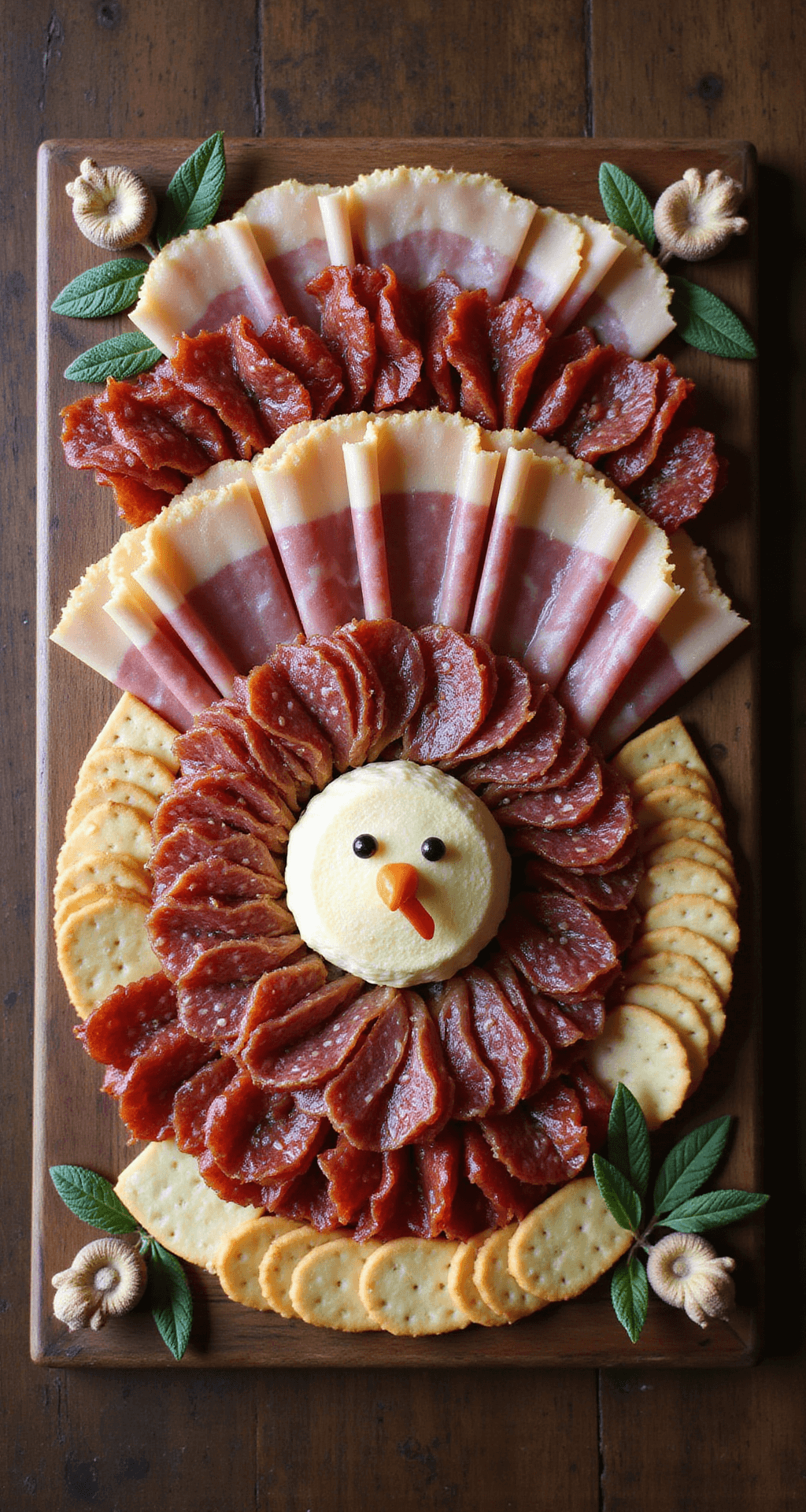
Cut two thin rectangles from cheddar. Position them angled downward from the body. These are your turkey legs.
Are they anatomically correct? Absolutely not. Does anyone care? Also no.
Step Six: Fill the Awkward Gaps
This is where your olives, grapes, and apricots come in. Tuck them into any spaces that look empty or weird.
Place three small bowls around the base of your turkey:
- Red pepper jelly in one
- Pickle slices in another
<