This post may contain affiliate links. Please see my disclosure policy for details.
Why Your Current Wreath Isn’t Cutting It
Contents
- Why Your Current Wreath Isn’t Cutting It
- The Unexpected Natural Element Combinations That Work
- The Container Hack Nobody’s Talking About
- When Bigger Actually Is Better
- The Color Combination You’re Probably Ignoring
- The DIY Wreaths That Actually Look Professional
- The Timing Strategy That Extends Your Wreath Investment
- The Apple Orchard Approach
Most people grab whatever’s on sale at the craft store in September and call it done. The problem? Everyone else does the same thing.
Your wreath should reflect your personality, not mass production. It should complement your home’s architecture and color scheme. And honestly, it should look like you put some actual thought into it.
The Unexpected Natural Element Combinations That Work
I learned this the hard way after creating a wreath so orange it practically glowed in the dark.
Here’s what actually creates visual interest:
- Foliage and berries in varying shades of green create depth without screaming “FALL IS HERE”
- Pine cones paired with magnolia and maple leaves give you that rustic vibe without looking like you raided a forest floor
- Pomegranate and pine cone combinations add unexpected pops of deep red that feel sophisticated
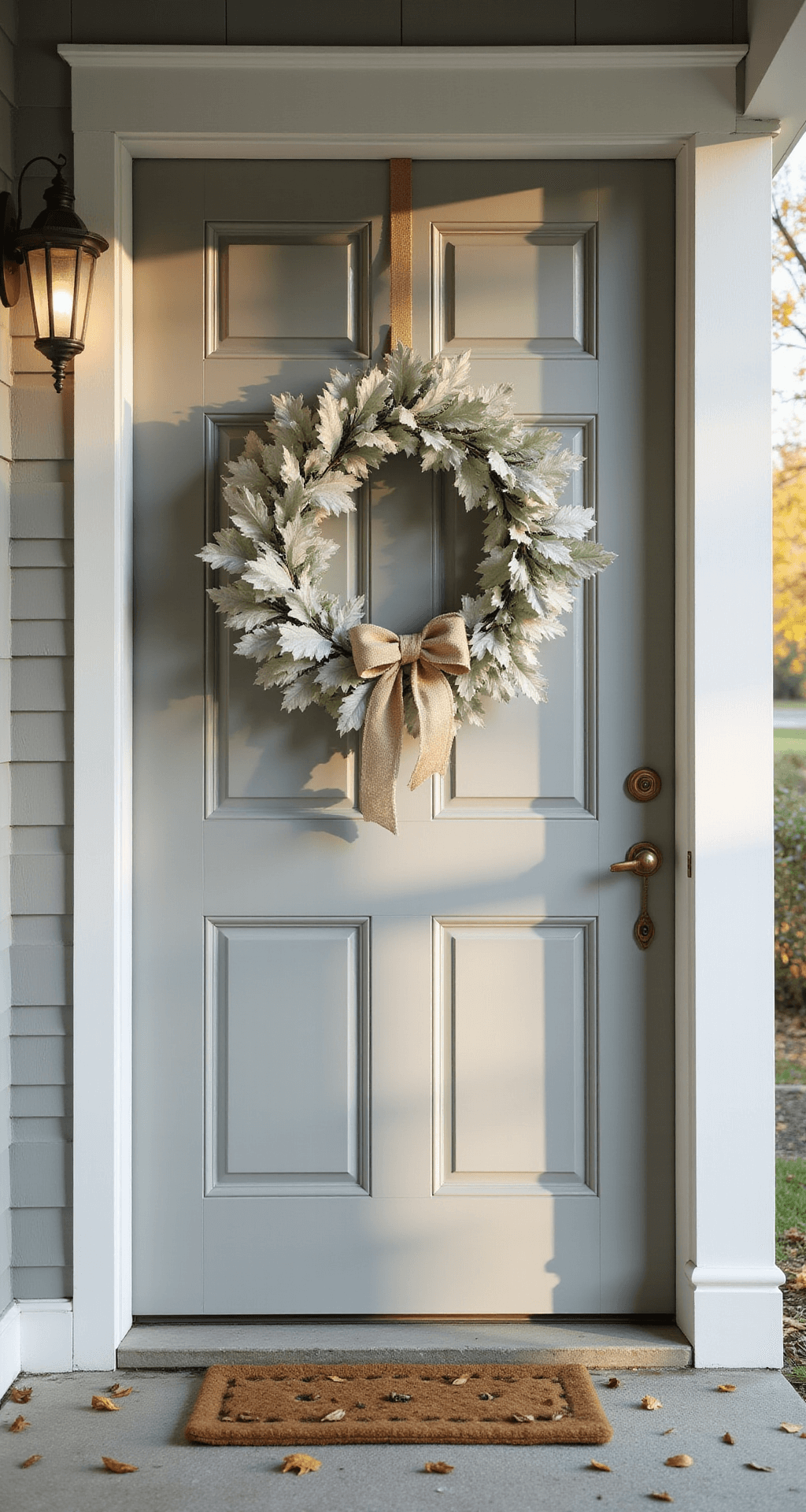
The real game-changer for me was using bleached-white or neutral oak leaves. Everyone expects warm autumn tones. Nobody expects elegant neutrals. That’s exactly why they work.
The Container Hack Nobody’s Talking About
Forget traditional wire forms for a second.
I stumbled onto this idea after visiting a farmhouse in Vermont, and it completely changed how I think about door decor.
Alternative containers that create instant impact:
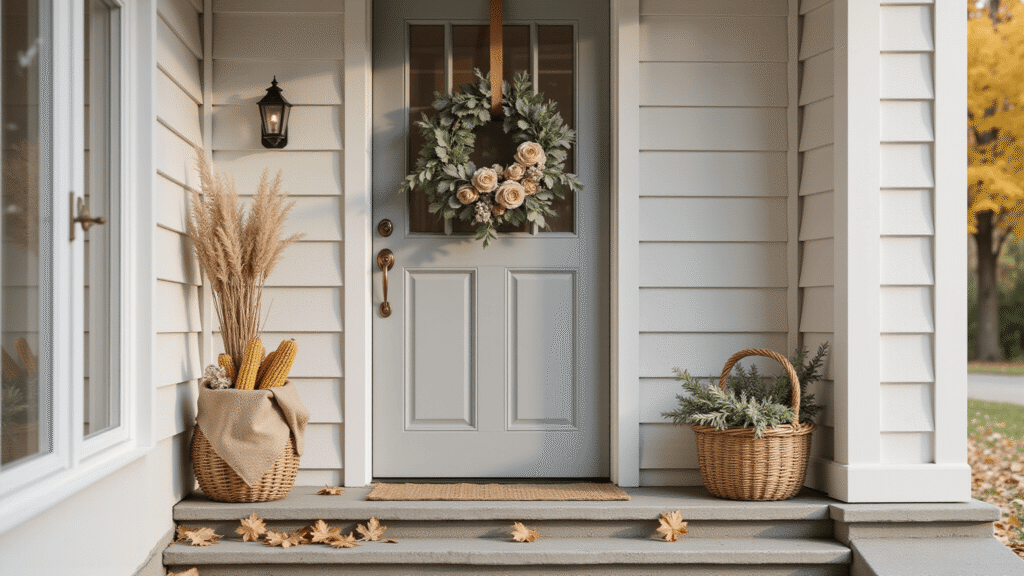
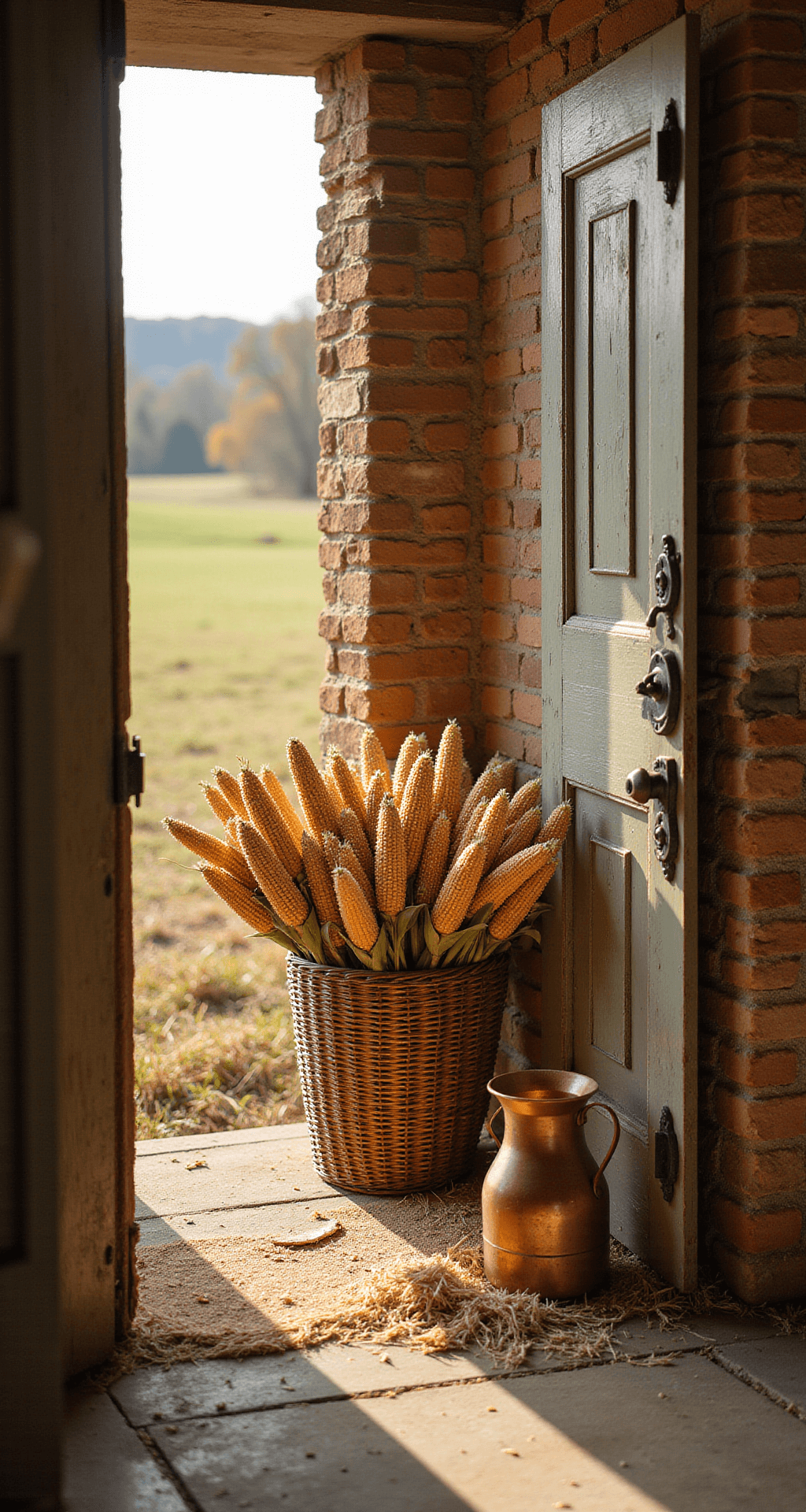
- Hang corn in a wicker flower basket for rustic charm
- Fill vintage grain sacks or feed sacks with goldenrod and magnolia clippings
- Use burlap coffee sacks secured with jute string for industrial-meets-farmhouse vibes
The wicker basket approach is ridiculously easy. Buy ears of corn at the farmer’s market. Arrange them in a hanging wicker basket. Hang it on your door. Done.
When Bigger Actually Is Better
I used to think more was too much. Then I tried doubling my wreaths.
The doubled wreath technique:
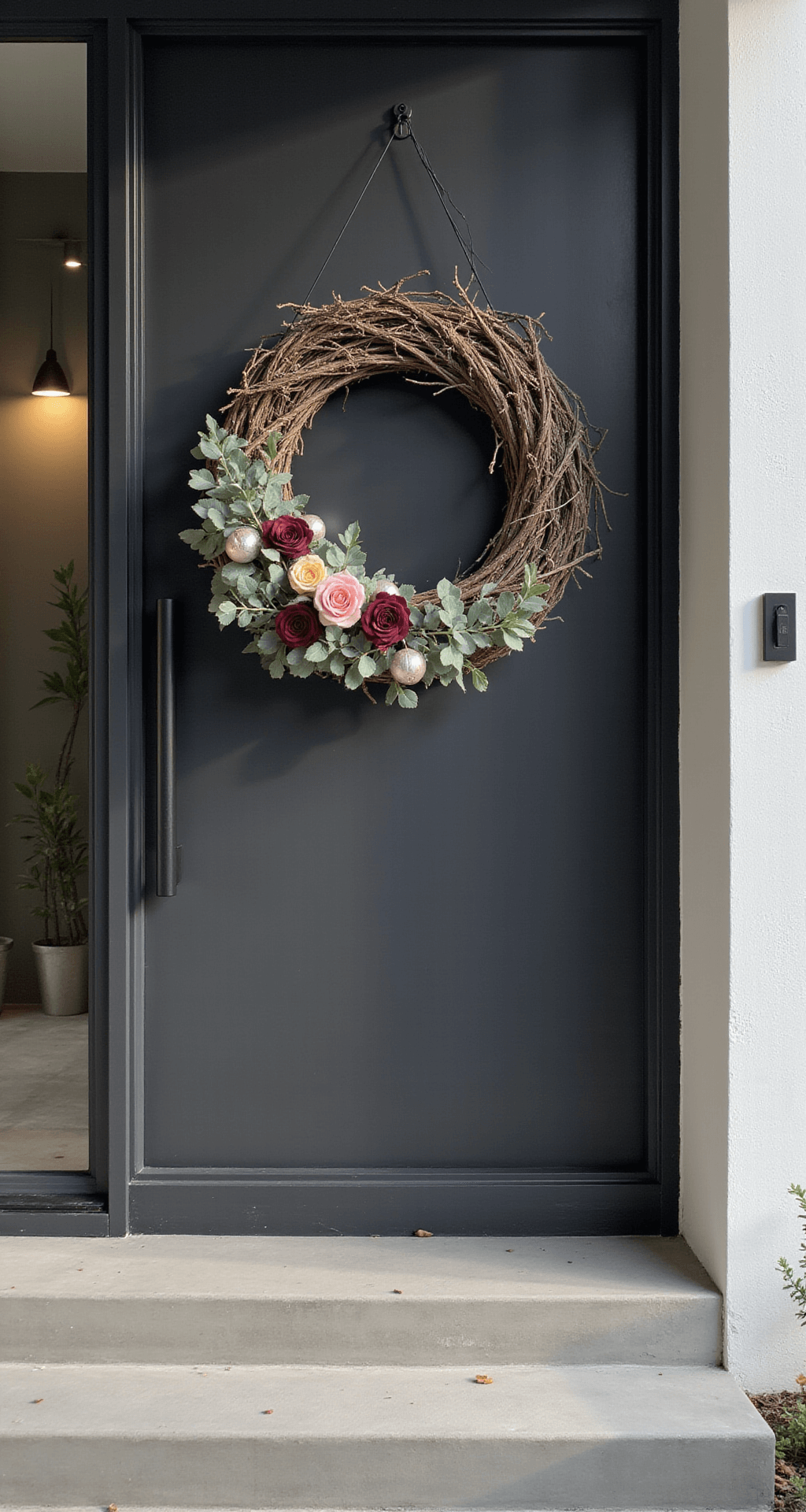
Take two grapevine wreaths of slightly different sizes. Layer them together. Add mixed gourds and small pumpkins. Secure everything with floral wire.
The Color Combination You’re Probably Ignoring
Orange and rust are fine. They’re safe. They’re also boring.
Here’s the color palette that stopped traffic on my street:
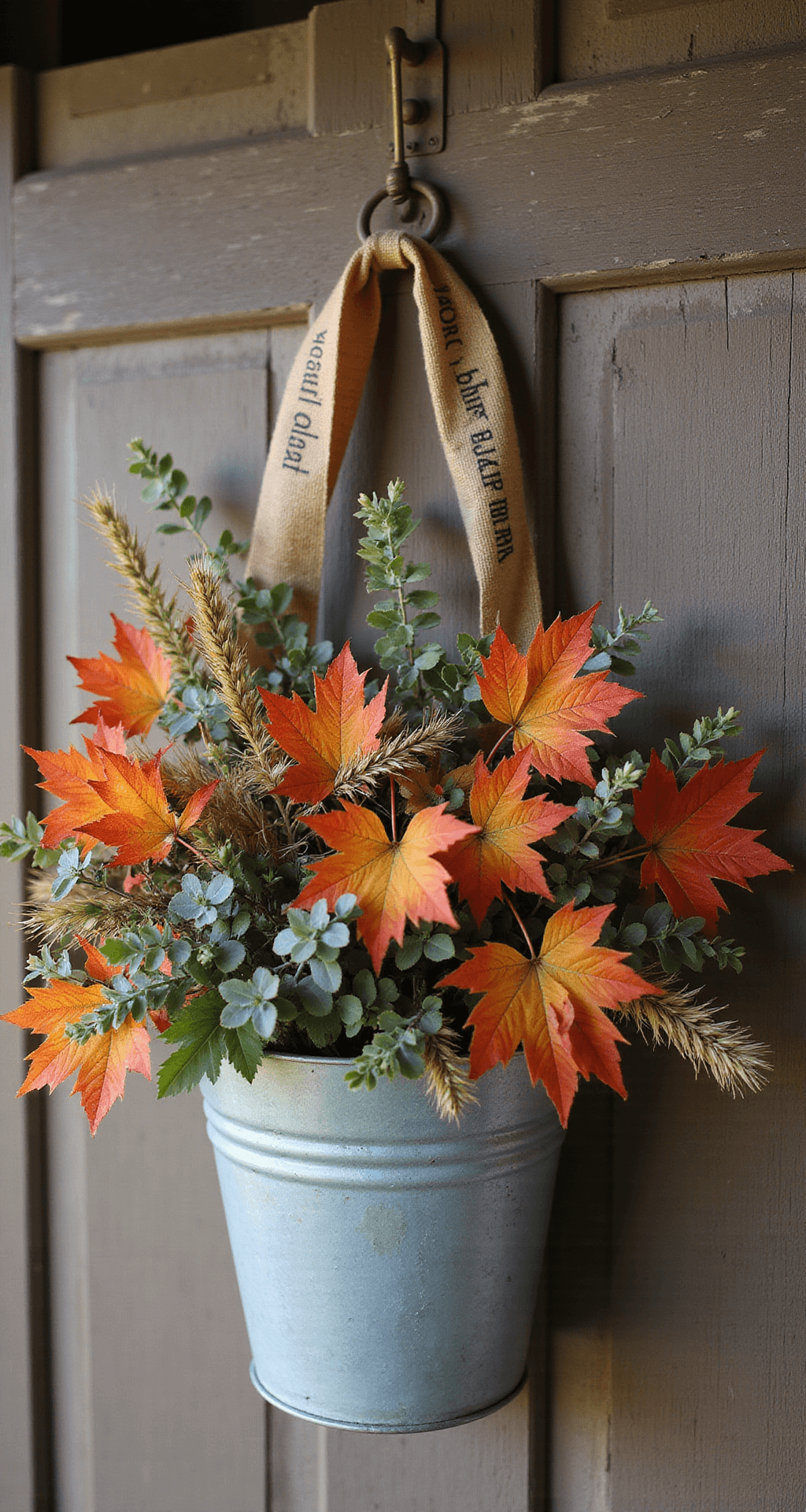
Dusty pink ribbon with dark pink and magenta roses.
I know what you’re thinking. Pink for fall? Trust me on this.
The key is using dusty, muted pinks—not bright bubblegum shades. Pair them with sage green accents. Maybe some silver eucalyptus. Add a few burgundy touches if you’re feeling adventurous.
The DIY Wreaths That Actually Look Professional
I’ve made some truly ugly wreaths in my time.
A turkey wreath that looked more like a misshapen blob. A pumpkin arrangement that fell apart within a week. A scarecrow situation that I don’t even want to discuss.
But these DIY options consistently turn out well:
- 3D pumpkin wreaths using fabric strips on foam forms
- Fall gnome wreaths with felt beards and plaid hats
- Tri-colored bubble wreaths in sage green, silver, and beige
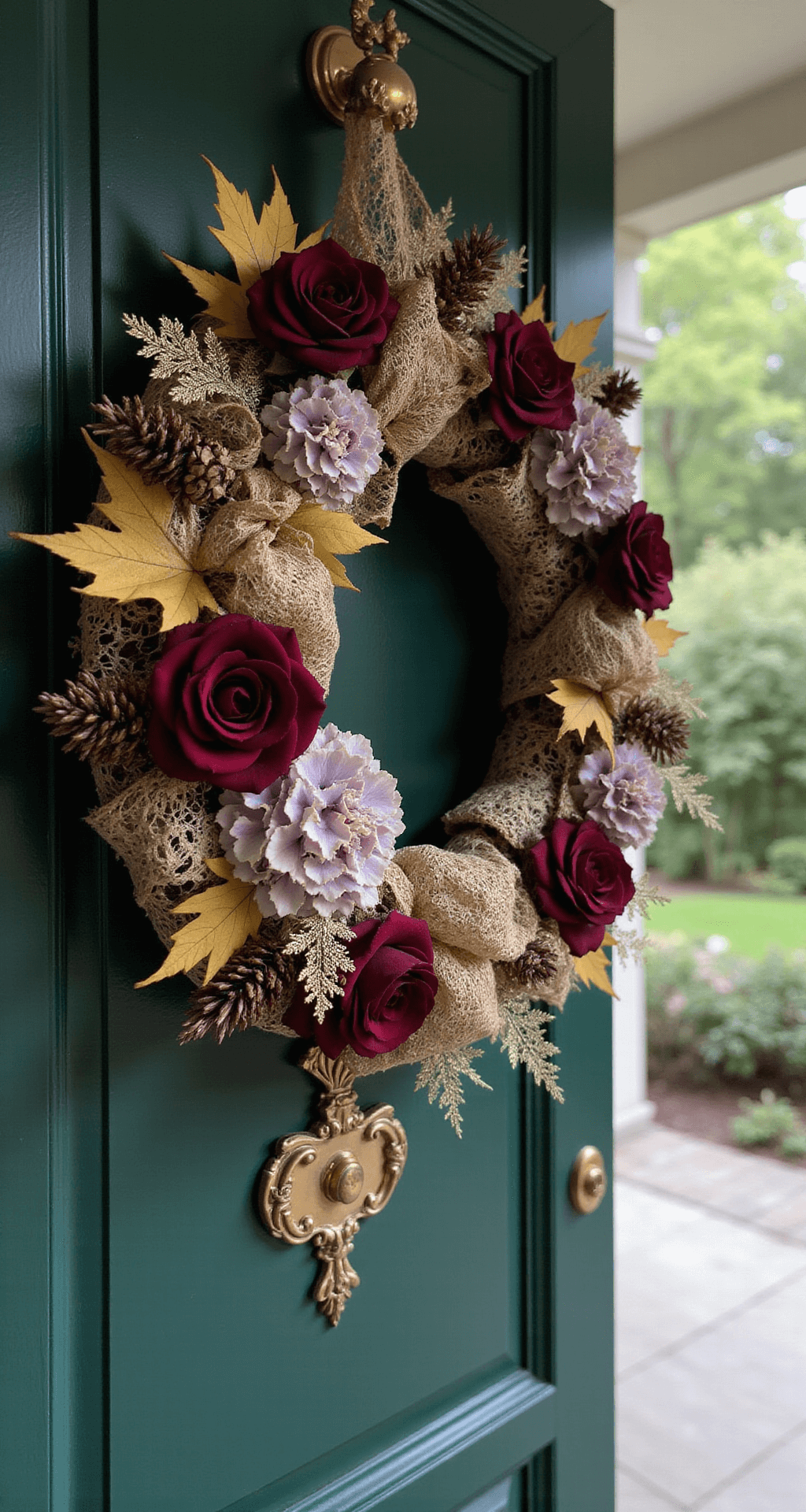
The bubble wreath technique is forgiving for beginners. You basically scrunch mesh ribbon into loops and secure them to a wire wreath form. Even if your loops are different sizes, it still looks intentionally textured.
The Timing Strategy That Extends Your Wreath Investment
This changed everything for me.
Instead of buying one wreath for the entire fall season, I create two versions using the same base.
Here’s the rotation:
Early autumn (September to mid-October):
- Neutral greens
- White pumpkins
- Eucalyptus
- Cream-colored accents
Late autumn (late October through November):
- Deep reds and burnt orange
- Traditional pumpkins
- Rustic branches
- Gold metallic touches
I keep the same wreath base and simply swap out the decorative elements. This takes maybe twenty minutes and makes your door look current throughout the season.
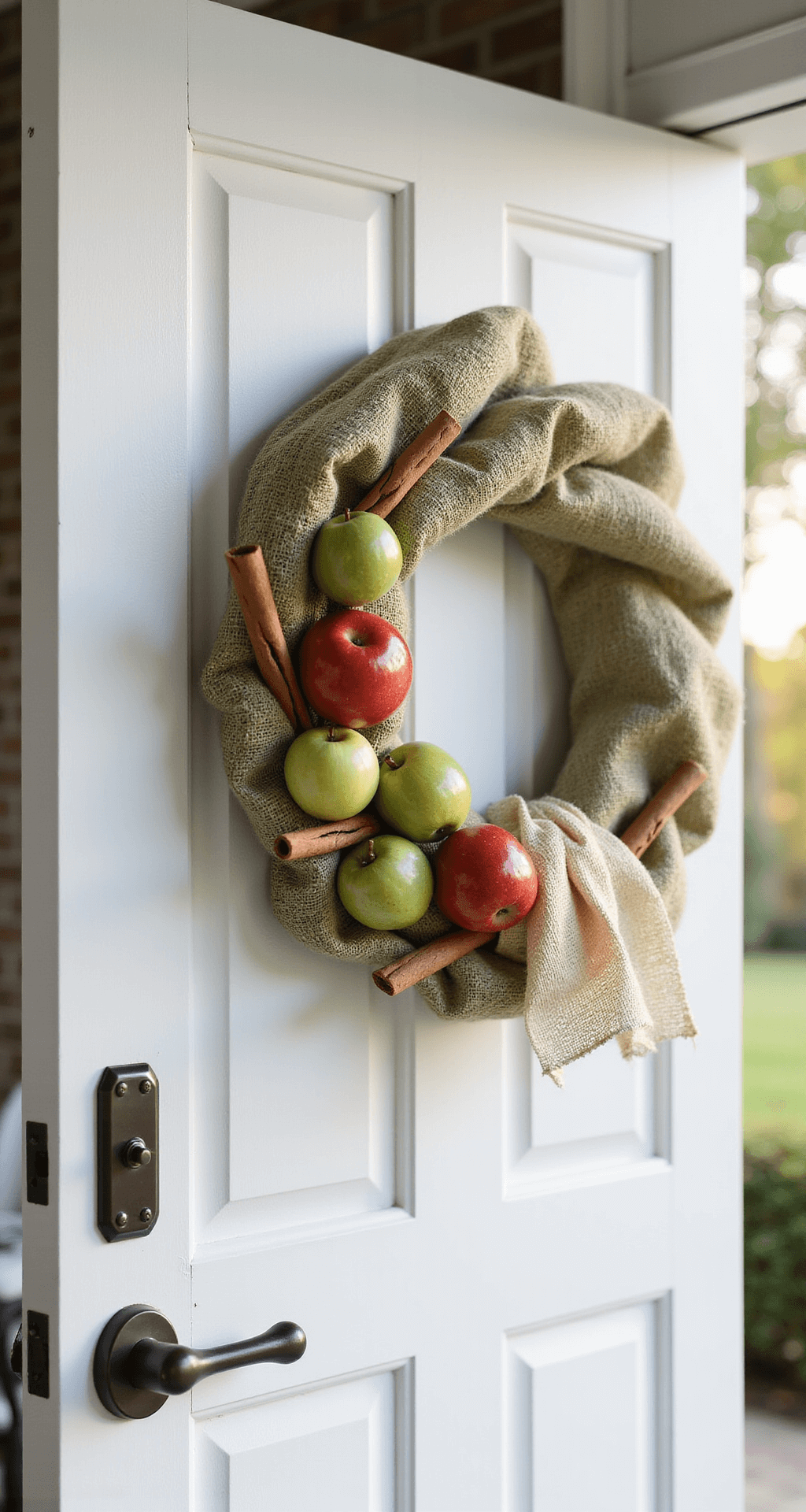
The Apple Orchard Approach
If you want farmhouse charm without the cliché, go with apple-themed designs.
Real talk: I tried using actual apples once. They rotted within two weeks, attracted fruit flies, and created a situation I’d rather